Filter by

Chapter 12 Bridging the Divide Imagining Across Experiential Perspectives
Ch. 12 Can one have imaginative access to experiential perspectives vastly different from one s own? Can one successfully imagine what it s like to live a life very different from one s own? These questions are particularly pressing in contemporary society as we try to bridge racial, ethnic, and gender divides. Yet philosophers have often expressed considerable pessimism in this regard. It is o…
- Edition
- -
- ISBN/ISSN
- 9780367480561,
- Collation
- Pages 24
- Series Title
- -
- Call Number
- 303 KIND c

The Politics of Contemporary Art Biennials: Spectacles of Critique, Theory an…
Contemporary art biennials are sites of prestige, innovation and experimentation, where the category of art is meant to be in perpetual motion, rearranged and redefined, opening itself to the world and its contradictions. They are sites of a seemingly peaceful cohabitation between the elitist and the popular, where the likes of Jeff Koons encounter the likes of Guy Debord, where Angela Davis an…
- Edition
- -
- ISBN/ISSN
- 9781317290834
- Collation
- -
- Series Title
- -
- Call Number
- -

The Dissolution of Mind: A Fable of How Experience Gives Rise to Cognition
This book presents an original thesis about the notion of sensory experience and of the mind’s architecture, which is grounded in current trends in cognitive science and philosophy of mind. Presented in the form of a dialogue, the book explores some of the psychological and philosophical consequences that the author derives from his proposal.
- Edition
- -
- ISBN/ISSN
- 9789042013704
- Collation
- -
- Series Title
- -
- Call Number
- -
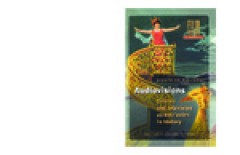
Audiovisions: Cinema and Television as Entr'actes in History
The production, distribution, and perception of moving images are undergoing a radical transformation. Ever-faster computers, digital technology, and microelectronic are joining forces to produce advanced audiovision -the media vanishing point of the 20th century. Very little will remain unchanged. The classic institutions for the mediation of film - cinema and television - are revealed to be n…
- Edition
- -
- ISBN/ISSN
- 9789053563137
- Collation
- -
- Series Title
- -
- Call Number
- -
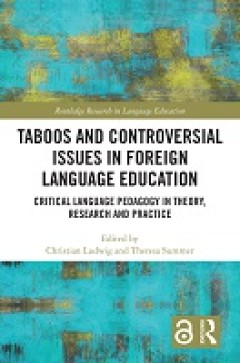
Taboos and Controversial Issues in Foreign Language Education: Critical Langu…
Taboos are not a new phenomenon. Yet, taboos change over time as social customs change, discard old taboos, and create new ones. What does not change, however, is how taboos regulate the way in which we live together in different communities and how they influence our behaviours. Notwithstanding the ubiquity of all sorts of taboos in daily life, many of them do not seem to find their way into f…
- Edition
- -
- ISBN/ISSN
- 9781032116075
- Collation
- -
- Series Title
- -
- Call Number
- -
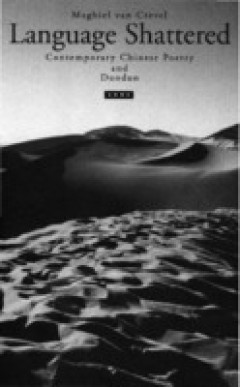
Language Shattered : Contemporary Chinese Poetry and Duoduo
Language Shattered is both a history of poetry from the People's Republic of China and a case study of the oeuvre of a leading Chinese poet. After the stifling orthodoxy of the 1950s and early 1960s, the terror of the Cultural Revolution (1966-1976) brought official Chinese literature to a total standstill. At the same time, disillusioned youths were more or less accidentally exposed to a varie…
- Edition
- -
- ISBN/ISSN
- 9789073782525
- Collation
- -
- Series Title
- -
- Call Number
- 800 CRE l
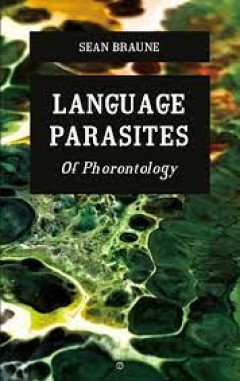
Language Parasites : of Phorontology
Who speaks when you speak? Who writes when you write? Is it “you”—is it the “I” that you think you are? Or are we the chance inheritors of an invasive, exterior parasite—a parasite that calls itself “Being” or “Language?” If our sense of self is best defined on the basis of an exterior, parasitical force that enters us from the outside, then the “self” is no longer a cen…
- Edition
- -
- ISBN/ISSN
- 9780998531861
- Collation
- 136 halaman
- Series Title
- -
- Call Number
- 400 BRA l
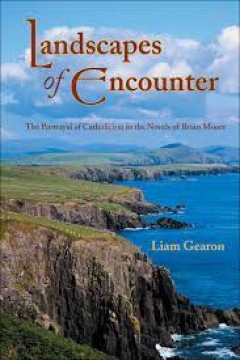
Landscapes of Encounter : The Portrayal of Catholicism in the Novels of Brian…
Brian Moore (1921-1999) is one of the few novelists whose literary portrayal of Catholicism effectively spans the period prior to and following the Second Vatican Council. His novels—from 1955’s Judith Hearne to his final work, 1997’s The Magician’s Wife—are characterized by an enormously varied portrayal of pre- and post-Vatican II Catholicism. Many critics have discussed how Moore 
- Edition
- -
- ISBN/ISSN
- 9781552386637
- Collation
- 312 halaman
- Series Title
- -
- Call Number
- 800 GEA l
Language Between God and the Poet : Ma‘na in the Eleventh Century
How does language work? How does language produce truth and beauty? Eleventh-century Arabic scholarship has detailed answers to these universal questions. Language Between God and the Poets reads the theory of four major scholars and asks how the conceptual vocabulary they shared enabled them to create theory in lexicography, theology, logic, and poetics. Their ideas engaged God and poetry at t…
- Edition
- -
- ISBN/ISSN
- 9780520970144
- Collation
- 322 halaman
- Series Title
- Berkeley Series in Postclassical Islamic Scholarship
- Call Number
- 800 KEY l
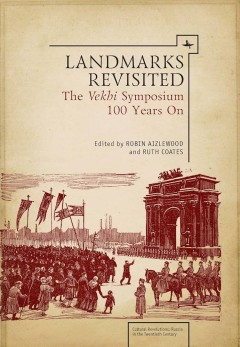
Landmarks Revisited : The Vekhi Symposium One Hundred Years On
The symposium entitled Vekhi, or Landmarks, is one of the most famous publications in Russian intellectual and political history. Its fame rests on the critique it offers of the phenomenon of the Russian intelligentsia. It was published in 1909, under the editorship of Mikhail Gershenzon, as a polemical response to the revolution of 1905, the failed outcome of which was deemed by all the Landma…
- Edition
- -
- ISBN/ISSN
- 9781618117021
- Collation
- 324 halaman
- Series Title
- Cultural Revolutions: Russia in the Twentieth Century
- Call Number
- 800 AIZ l
 Computer Science, Information & General Works
  Philosophy & Psychology
  Religion
  Social Sciences
  Language
  Pure Science
  Applied Sciences
  Art & Recreation
  Literature
  History & Geography