Filter by

A Certain Uncertainty: Nature's Random Ways
Based around a series of real-life scenarios, this engaging introduction to statistical reasoning will teach you how to apply powerful statistical, qualitative and probabilistic tools in a technical context. From analysis of electricity bills, baseball statistics, and stock market fluctuations, through to profound questions about physics of fermions and bosons, decaying nuclei, and climate chan…
- Edition
- -
- ISBN/ISSN
- 9781139507370
- Collation
- -
- Series Title
- -
- Call Number
- -
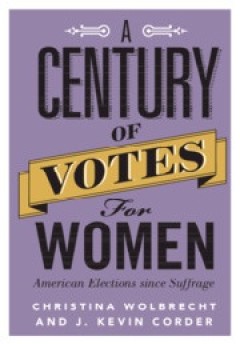
A Century of Votes for Women: American Elections Since Suffrage
How have American women voted in the first 100 years since the ratification of the Nineteenth Amendment? How have popular understandings of women as voters both persisted and changed over time? In A Century of Votes for Women, Christina Wolbrecht and J. Kevin Corder offer an unprecedented account of women voters in American politics over the last ten decades. Bringing together new and existing …
- Edition
- -
- ISBN/ISSN
- 9781316941331
- Collation
- -
- Series Title
- -
- Call Number
- -

A Century of the English Book Trade: Short Notices of All Printers, Stationer…
Edward Gordon Duff (1863–1924) was a bibliographer and librarian with a particular interest in early printed books. He was librarian of the John Rylands Library, Manchester, from 1893 to 1900, and Sandars Reader in Bibliography at Cambridge in 1899, 1904 and 1911. Alongside research and writing he also did freelance cataloguing. Duff's work set new standards of accuracy in bibliography, which…
- Edition
- -
- ISBN/ISSN
- 9780511795312
- Collation
- -
- Series Title
- -
- Call Number
- -

A Century of Dishonour: A Sketch of the United States Government's Dealings w…
Author and activist Helen Hunt Jackson (1830–85) is remembered for her work in support of Native American rights. She was also a friend and correspondent of the poet Emily Dickinson, and her own verse was praised by Ralph Waldo Emerson. Her highly popular novel Ramona (1884) addressed discrimination against Native Americans, raising public consciousness as Harriet Beecher Stowe had done for s…
- Edition
- -
- ISBN/ISSN
- 9781107295339
- Collation
- -
- Series Title
- -
- Call Number
- -
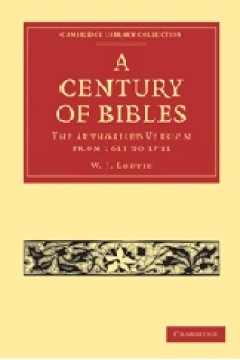
A Century of Bibles: The Authorised Version from 1611 to 1711
William John Loftie (1839–1911) wrote prolifically on topics related to travel, art, architecture, and history. In this 1872 work, his stated desire was to investigate those editions of the Authorised Version published in the century following the initial 1611 text. Noting that other historians had 'stopped short' when reaching that acknowledged culmination of English biblical scholarship, he…
- Edition
- -
- ISBN/ISSN
- 9780511694646
- Collation
- -
- Series Title
- -
- Call Number
- -
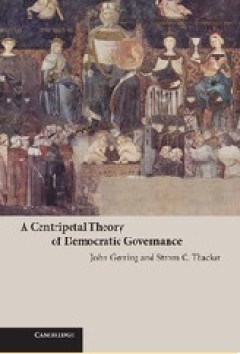
A Centripetal Theory of Democratic Governance
This book outlines the importance of political institutions in achieving good governance within a democratic polity and sets forth an argument to explore what sorts of institutions do the job best. By focusing on 'centripetal institutions', which maximize both representation and authority by bringing political energy and actors toward the centre of a polity, the authors set forth a relatively n…
- Edition
- -
- ISBN/ISSN
- 9780511756054
- Collation
- -
- Series Title
- -
- Call Number
- -

A Catalogue Raisonné of Works on the Occult Sciences: Rosicrucian Books, Ast…
Frederick Leigh Gardner (1857–1930) was a well-known British occultist who belonged to societies including the Hermetic Order of the Golden Dawn, the Freemasons, the Societas Rosicruciana in Anglia and the Theosophical Society. Born to spiritualist parents, Gardner worked as a stockbroker and later became an antiquarian bookseller. He planned a detailed catalogue of books on the occult scienc…
- Edition
- -
- ISBN/ISSN
- 9781139016834
- Collation
- -
- Series Title
- -
- Call Number
- -

A Catalogue of the Printed Books in the Library of the Dean and Chapter of York
York Minster has the largest cathedral library in England. The original library was established in the eighth century, but nothing survives from this period. A new collection was begun in 1414 when John Newton left books to the Minster, and a new library was erected. Further bequests followed - including in 1628 the important collection of Tobie Matthew, archbishop of York - which reflect the r…
- Edition
- -
- ISBN/ISSN
- 9781139542609
- Collation
- -
- Series Title
- -
- Call Number
- -

A Catalogue of the Medieval Manuscripts in the University Library, Aberdeen
M. R. James (1862–1936) is probably best remembered as a writer of chilling ghost stories, but he was an outstanding scholar of medieval literature and palaeography, who served as Provost of King's College, Cambridge, and later as Provost of Eton. His detailed descriptive catalogues of manuscripts owned by colleges, cathedrals and museums are still sought after by scholars today. This catalog…
- Edition
- -
- ISBN/ISSN
- 9780511920127
- Collation
- -
- Series Title
- -
- Call Number
- -

Initial Airworthiness: Determining the Acceptability of New Airborne Systems
Designed as an introduction for both advanced students in aerospace engineering and existing aerospace engineers, this book covers both engineering theory and professional practice in establishing the airworthiness of new and modified aircraft. Initial Airworthiness includes: · how structural, handling, and systems evaluations are carried out; · the processes by which safety and fit…
- Edition
- -
- ISBN/ISSN
- 978-3-319-11408-8
- Collation
- XV, 319
- Series Title
- -
- Call Number
- 520 GRA i
 Computer Science, Information & General Works
 Philosophy & Psychology
 Religion
 Social Sciences
 Language
 Pure Science
 Applied Sciences
 Art & Recreation
 Literature
 History & Geography