Filter by

Before and After Gender : Sexual Mythologies of Everyday Life
Written in the early 1970s amidst widespread debate over the causes of gender inequality, Marilyn Strathern's Before and After Gender was intended as a widely accessible analysis of gender as a powerful cultural code and sex as a defining mythology. But when the series for which it was written unexpectedly folded, the manuscript went into storage, where it remained for more than four decades. T…
- Edition
- -
- ISBN/ISSN
- 978-0-9861325-3-7
- Collation
- -
- Series Title
- -
- Call Number
- 305.3 STR b

The Medieval Kirk, Cemetery and Hospice at Kirk Ness, North Berwick
Between 1999-2006 Addyman Archaeology carried out extensive archaeological excavations on the peninsular site of Kirk Ness, North Berwick, during the building, landscaping and extension of the Scottish Seabird Centre. This book presents the results of these works but its scope is much broader. Against the background of important new discoveries made at the site it brings together and re-examine…
- Edition
- -
- ISBN/ISSN
- 9780000000906
- Collation
- -
- Series Title
- -
- Call Number
- -

Becoming Donor-Conceived : The Transformation of Anonymity in Gamete Donation
While it has been argued that anonymity in gamete donation has been brought to an end by legal changes and technological developments, Amelie Baumann suggests that this is in fact still in transformation. By focusing on the narratives of those who were conceived with anonymously donated gametes in the UK and Germany, she examines this transformative process and the role which donor-conceived pe…
- Edition
- -
- ISBN/ISSN
- 978-3-8394-5731-3
- Collation
- -
- Series Title
- -
- Call Number
- 571.845 BAU b

Beauvoir in Time
Beauvoir in Time situates Simone de Beauvoir's The Second Sex in the historical context of its writing and in later contexts of its international reception, from then till now. The book takes up three aspects of Beauvoir's work more recent feminists find embarrassing: "bad sex," "dated" views about lesbians, and intersections with race and class. Through close reading of Beauvoir's writing in m…
- Edition
- -
- ISBN/ISSN
- 978-90-04-43121-8
- Collation
- -
- Series Title
- Value Inquiry Book Series : Value Inquiry Book Series volume 348
- Call Number
- -

Classifying the Zhuangzi Chapters
The relationships, both historical and philosophical, among the Zhuangzi’s Inner, Outer, and Miscellaneous chapters are the subject of ancient and enduring controversy.
- Edition
- -
- ISBN/ISSN
- 9780472901340
- Collation
- -
- Series Title
- -
- Call Number
- 305.8 SAV c

Classification of Lithic Artefacts from the British Late Glacial and Holocene…
A system for the hierarchical Classification of Lithic Artefacts from the British Late Glacial and Holocene Periods is offered in this book.
- Edition
- -
- ISBN/ISSN
- 9780000000806
- Collation
- -
- Series Title
- -
- Call Number
- 930.1 BAL c

Classical Heritage and European Identities; The Imagined Geographies of Danis…
Classical Heritage and European Identities examines how the heritages of classical antiquity have been used to construct European identities, and especially the concept of citizenship, in Denmark from the eighteenth century to the present day.
- Edition
- -
- ISBN/ISSN
- 9780429847943, 0429847947
- Collation
- -
- Series Title
- -
- Call Number
- 930.1 AND c

Classic Concepts in Anthropology
The late anthropologist Valerio Valeri (1944–98) was best known for his substantial writings on societies of Polynesia and eastern Indonesia.
- Edition
- -
- ISBN/ISSN
- 9780990505082
- Collation
- -
- Series Title
- -
- Call Number
- 301 COL

The Class Structure of Capitalist Societies; Volume 1: A Space of Bounded Var…
This first volume of The Class Structure of Capitalist Societies offers a bold and wide-ranging assessment of the shape and effects of class systems across a diverse range of capitalist nations.
- Edition
- -
- ISBN/ISSN
- 0429800886, 9780429800887
- Collation
- -
- Series Title
- -
- Call Number
- 301 ATK t
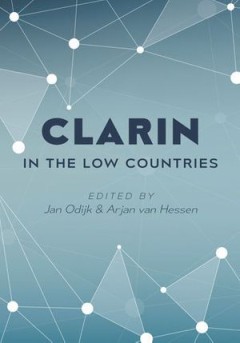
CLARIN in the Low Countries
This book describes the results of activities undertaken to construct the CLARIN research infrastructure in the Low Countries, i.e., in the Netherlands and in Flanders (the Dutch-speaking part of Belgium). CLARIN is a European research infrastructure for humanities and social science researchers that work with natural language data
- Edition
- -
- ISBN/ISSN
- 9781911529255
- Collation
- -
- Series Title
- -
- Call Number
- 301 ODI c
 Computer Science, Information & General Works
  Philosophy & Psychology
  Religion
  Social Sciences
  Language
  Pure Science
  Applied Sciences
  Art & Recreation
  Literature
  History & Geography