Filter by
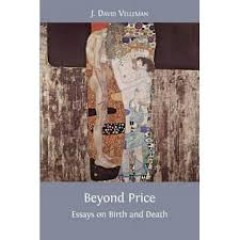
Beyond Price : Essays on Birth and Death
In this chapter I argue that a widely recognized right to die would have the paradoxical effect of harming some people who never exercise it as well as some who exercise it and are better off for doing so. Even more paradoxically, recognition of such a right would make it difficult if not impossible to define a class of people to whom it should be accorded in practice.
- Edition
- -
- ISBN/ISSN
- 9782821876330
- Collation
- -
- Series Title
- -
- Call Number
- -

Foundations for Moral Relativism
In this new edition of Foundations for Moral Relativism a distinguished moral philosopher tames a bugbear of current debate about cultural difference. J. David Velleman shows that different communities can indeed be subject to incompatible moralities, because their local mores are rationally binding. At the same time, he explains why the mores of different communities, even when incompatible, a…
- Edition
- edisi 2
- ISBN/ISSN
- 9781783740345
- Collation
- -
- Series Title
- -
- Call Number
- -

Beyond Price: Essays On Birth And Death
In nine lively essays, bioethicist J. David Velleman challenges the prevailing consensus about assisted suicide and reproductive technology, articulating an original approach to the ethics of creating and ending human lives. He argues that assistance in dying is appropriate only at the point where talk of suicide is not, and he raises moral objections to anonymous donor conception. In their pla…
- Edition
- -
- ISBN/ISSN
- 9781783741694
- Collation
- -
- Series Title
- -
- Call Number
- -
 Computer Science, Information & General Works
  Philosophy & Psychology
  Religion
  Social Sciences
  Language
  Pure Science
  Applied Sciences
  Art & Recreation
  Literature
  History & Geography