Filter by
Computational Applications for the Evaluation and Simulation of the Thermal T…
- Edition
- -
- ISBN/ISSN
- 978-1-83969-767-8
- Collation
- -
- Series Title
- -
- Call Number
- -
Phenotypic Analysis of Pigeon Pea Reveal Genotypic Variability under Differen…
- Edition
- -
- ISBN/ISSN
- 978-1-83969-490-5
- Collation
- -
- Series Title
- -
- Call Number
- -
Critical Studies on the Kinetics, Isotherms and Activation Energy of Sorption…
- Edition
- -
- ISBN/ISSN
- 978-1-83968-895-9
- Collation
- -
- Series Title
- -
- Call Number
- -
Phytocosmetics and Phytopharmaceuticals from African Medicinal Plants
- Edition
- -
- ISBN/ISSN
- 978-1-80356-020-5
- Collation
- -
- Series Title
- -
- Call Number
- -

Neuropsychiatric Symptoms in Demyelination Disorders
- Edition
- -
- ISBN/ISSN
- 978-1-83968-653-5
- Collation
- -
- Series Title
- -
- Call Number
- -
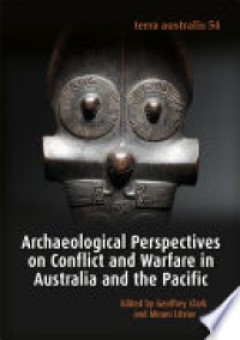
Archaeological Perspectives on Conflict and Warfare in Australia and the Pacific
When James Boswell famously lamented the irrationality of war in 1777, he noted the universality of conflict across history and across space – even reaching what he described as the gentle and benign southern ocean nations. This volume discusses archaeological evidence of conflict from those southern oceans, from Palau and Guam, to Australia, Vanuatu and Tonga, the Marquesas, Easter Island an…
- Edition
- -
- ISBN/ISSN
- 9781760464899
- Collation
- 280 p
- Series Title
- -
- Call Number
- 355.00994

Honiara : Village-City of Solomon Islands
Nahona`ara—means ‘facing the `ara’, the place where the southeast winds meet the land just west of Point Cruz. Nahona`ara became Honiara, the capital city of Solomon Islands with a population of 160,000, the only significant urban centre in a nation of 721,000 people. Honiara: Village-City of Solomon Islands views Honiara in several ways: first as Tandai traditional land; then as cocon…
- Edition
- -
- ISBN/ISSN
- 9781760465070
- Collation
- -
- Series Title
- -
- Call Number
- 995.93

Woman between two kingdoms : Dara Rasami and the making of modern Thailand
Woman Between Two Kingdoms explores the story of Dara Rasami, one of 153 wives of King Chulalongkorn of Siam in Thailand during the late nineteenth and early twentieth centuries. Born in a kingdom near Siam called Lan Na, Dara served as both hostage and diplomat for her family and nation. Thought of as a ""harem"" by the West, Siam's Inner Palace actually formed a nexus between the domestic and…
- Edition
- -
- ISBN/ISSN
- 9781501755507
- Collation
- xii + 180 p
- Series Title
- -
- Call Number
- 305.309593

Inside Asylum Bureaucracy: Organizing Refugee Status Determination in Austria
Based on a case study on the former Austrian Federal Asylum Agency, the book provides sociological insights on state action in the administration of asylum in a European context. It offers a novel perspective on public administration by complementing the approaches of street-level bureaucracy and organizational sociology with theories of social practice and structuration. The study deals with t…
- Edition
- Ed. 1
- ISBN/ISSN
- 9783319633060
- Collation
- 219
- Series Title
- IMISCOE Research Series
- Call Number
- 304.83 DAH i

The Tibetan Nun Mingyur Peldrön: A Woman of Power and Privilege
Born to a powerful family and educated at the prominent Mindröling Monastery, the Tibetan Buddhist nun and teacher Mingyur Peldrön (1699–1769) leveraged her privileged status and overcame significant adversity, including exile during a civil war, to play a central role in the reconstruction of her religious community. Alison Melnick Dyer employs literary and historical analysis, centered on…
- Edition
- Ed. 1
- ISBN/ISSN
- 9780295750378, 9780295750354
- Collation
- 242
- Series Title
- -
- Call Number
- 959 MEL t
 Computer Science, Information & General Works
  Philosophy & Psychology
  Religion
  Social Sciences
  Language
  Pure Science
  Applied Sciences
  Art & Recreation
  Literature
  History & Geography