Filter by

Settlers of Unassigned Lands
In these seven stories spanning the Midwest to California, Charles McLeod brings us characters estranged from their homelands and locked in conflict with their past and present selves. In “How to Start Your Own Midwestern Ghost Town,” an unnamed narrator hatches a plan to capitalize on rural decay. A porn star trying to transition to the mainstream does an interview with a German reporter i…
- Edition
- -
- ISBN/ISSN
- 9780472900183
- Collation
- -
- Series Title
- -
- Call Number
- 823 MCL s
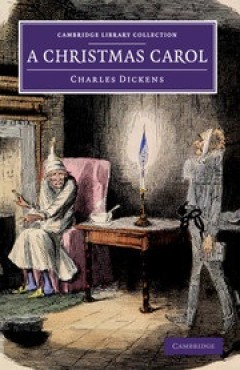
A Christmas Carol: Being a Ghost Story of Christmas
Charles Dickens (1812–70) was an established novelist when he decided to produce a Christmas story, which was written in only six weeks and published at the end of 1843. The book was an immediate bestseller, and had it not been for the very high production costs of the specially commissioned illustrations and the decorative binding, it would have been a great commercial success. This strategi…
- Edition
- -
- ISBN/ISSN
- 9781139541190
- Collation
- -
- Series Title
- -
- Call Number
- -

A Child's History of England: Volume 1
This three-volume history of England from before the Roman conquest through to the Glorious Revolution of 1688 was originally serialised in Charles Dickens' magazine Household Words between 1851 and 1853. The text was published in book form in the same period, although each volume was post-dated to the following year. Dickens dedicated the work to his own children, intending it to be a stepping…
- Edition
- -
- ISBN/ISSN
- 9781107775428
- Collation
- -
- Series Title
- -
- Call Number
- -

A Child's History of England: Volume 3
This three-volume history of England from before the Roman conquest through to the Glorious Revolution of 1688 was originally serialised in Charles Dickens' magazine Household Words between 1851 and 1853. The text was published in book form in the same period, although each volume was post-dated to the following year. Dickens dedicated the work to his own children, intending it to be a stepping…
- Edition
- -
- ISBN/ISSN
- 9781107775459
- Collation
- -
- Series Title
- -
- Call Number
- -
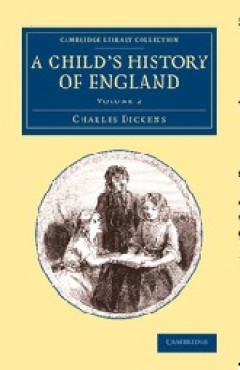
A Child's History of England
This three-volume history of England from before the Roman conquest through to the Glorious Revolution of 1688 was originally serialised in Charles Dickens' magazine Household Words between 1851 and 1853. The text was published in book form in the same period, although each volume was post-dated to the following year. Dickens dedicated the work to his own children, intending it to be a stepping…
- Edition
- -
- ISBN/ISSN
- 9781107775435
- Collation
- -
- Series Title
- -
- Call Number
- -

A Chemical and Medical Report of the Properties of the Mineral Waters: Of Bux…
In medical terms, 'mineral water' was, in the early nineteenth century, any water that appeared to have an effect on human health. British physicians often prescribed mineral waters from particular locations - most commonly those at Bath - for a variety of illnesses. However, there was little available information on the chemical composition of these waters, and extant manuals were often inaccu…
- Edition
- -
- ISBN/ISSN
- 9781139839273
- Collation
- -
- Series Title
- -
- Call Number
- -

A Catalogue of the Bradshaw Collection of Irish Books in the University Libra…
University Librarian at Cambridge from 1867 until his death, Henry Bradshaw (1831–86) had inherited from his banker father an important library of Irish printed books and pamphlets assembled in the early nineteenth century. Having added to it, Bradshaw generously presented the collection to the University Library in 1870, and it has been expanding ever since. Published in 1916, this three-vol…
- Edition
- -
- ISBN/ISSN
- 9781107446304
- Collation
- -
- Series Title
- -
- Call Number
- -

A Description of Westminster Bridge
The construction of the first Westminster Bridge, upon which Wordsworth composed his famous sonnet, presented many challenges in terms of the materials and methods with which a sturdy bridge could be built in tidal water and on a gravelly riverbed. A number of candidates presented their surveys to the commissioners of the bridge, but it was the Swiss-born Charles Labelye (1705–62) who was app…
- Edition
- -
- ISBN/ISSN
- 9781107297074
- Collation
- -
- Series Title
- Cambridge Library Collection - Technology
- Call Number
- -
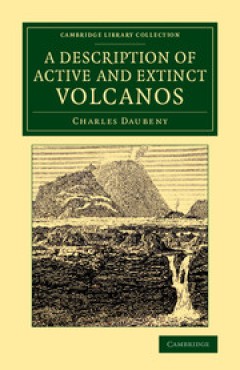
A Description of Active and Extinct Volcanos
First published in 1826, at a time when the earth sciences were in a state of confusion and controversy, this pioneering study of volcanic action by Charles Daubeny (1795–1867) was significant in promoting the scientific method and the science of geology, at the same time establishing the author's international reputation. Having studied medicine, Daubeny increasingly turned his attention to …
- Edition
- -
- ISBN/ISSN
- 9781107478671
- Collation
- -
- Series Title
- Cambridge Library Collection - Earth Science
- Call Number
- -
writing spaces : readings on writing spaces volume 1
Writing Spaces: Readings on Writing offer multiple perspectives on a wide-range of topics about writing, much like the model made famous by Wendy Bishop’s “The Subject Is . . .” series. In each chapter, authors present their unique views, insights, and strategies for writing by addressing the undergraduate reader directly. Drawing on their own experiences, these teachers-as-writers invite…
- Edition
- 1
- ISBN/ISSN
- 978-1-60235-185-1
- Collation
- -
- Series Title
- -
- Call Number
- 808
 Computer Science, Information & General Works
  Philosophy & Psychology
  Religion
  Social Sciences
  Language
  Pure Science
  Applied Sciences
  Art & Recreation
  Literature
  History & Geography