Filter by

DNA and the Criminal Justice System: The Technology of Justice
AnnotationOCLC-licensed vendor bibliographic record.
- Edition
- -
- ISBN/ISSN
- 9780262310604
- Collation
- 1 online resource (xviii, 414 pages) :illustrations.
- Series Title
- -
- Call Number
- -

No quarter!
LibriVox recording of No Quarter! by Thomas Mayne Reid. Read in English by Shasta; W. P. Costello; chuckconvr; Anita Sloma-Martinez; John; BourbonReader; BrittanyRill; ZoinkMeister Patrick; Sandra Cullum; Mischella; mokka; Matthew Reece; KevinS There is no page in England’s history so bright, nor of which Englishmen have such reason to be proud, as that covering the period between 1640 and …
- Edition
- -
- ISBN/ISSN
- -
- Collation
- viii, 456 p. 19 cm
- Series Title
- -
- Call Number
- -

Thrown on the world
- Edition
- -
- ISBN/ISSN
- -
- Collation
- 341 p
- Series Title
- -
- Call Number
- srlf_ucla:LAGE-758060
- Edition
- -
- ISBN/ISSN
- -
- Collation
- 341 p
- Series Title
- -
- Call Number
- srlf_ucla:LAGE-758060
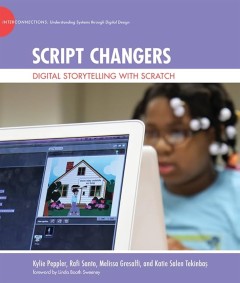
Script Changers: Digital Storytelling with Scratch
Helping students create interactive and animated stories about positive change in their communities.OCLC-licensed vendor bibliographic record.
- Edition
- -
- ISBN/ISSN
- 9780262319980
- Collation
- 1 online resource (xxxviii, 311 pages) :illustrations.
- Series Title
- -
- Call Number
- -
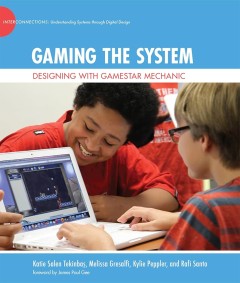
Gaming the System: Designing with Gamestar Mechanic
Understanding games as systems, with complex interactions of game elements and rules.Gaming the System demonstrates the nature of games as systems, how game designers need to think in terms of complex interactions of game elements and rules, and how to identify systems concepts in the design process. The activities use Gamestar Mechanic, an online game design environment with a systems thinking…
- Edition
- -
- ISBN/ISSN
- 9780262319959
- Collation
- 1 online resource (xxxvi, 266 pages :color illustrations.
- Series Title
- -
- Call Number
- -
Three little maids
- Edition
- -
- ISBN/ISSN
- -
- Collation
- 315 p. : 19 cm,A novel
- Series Title
- -
- Call Number
- SRLF:LAGE-3323960
- Edition
- -
- ISBN/ISSN
- -
- Collation
- 315 p. : 19 cm,A novel
- Series Title
- -
- Call Number
- SRLF:LAGE-3323960
Crowdsourcing
Ever since the term "crowdsourcing" was coined in 2006 by Wired writer Jeff Howe, group activities ranging from the creation of the Oxford English Dictionary to the choosing of new colors for M & Ms have been labeled with this most buzz-generating of media buzzwords. In this accessible but authoritative account, grounded in the empirical literature, Daren Brabham explains what crowdsourcing is,…
- Edition
- -
- ISBN/ISSN
- 026231424X
- Collation
- 1 online resource.
- Series Title
- -
- Call Number
- -
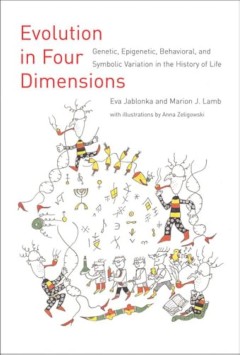
Genetic, Epigenetic, Behavioral, and Symbolic
First edition published: Cambridge, Massachusetts : MIT Press, 2005.A pioneering proposal for a pluralistic extension of evolutionary theory, now updated to reflect the most recent research. This new edition of the widely read Evolution in Four Dimensions has been revised to reflect the spate of new discoveries in biology since the book was first published in 2005, offering corrections, an upda…
- Edition
- Revised edition.
- ISBN/ISSN
- 9780262322676
- Collation
- 1 online resource :illustrations.
- Series Title
- -
- Call Number
- -
Thoughts : poems, pictures in the fire
- Edition
- -
- ISBN/ISSN
- -
- Collation
- 23 p
- Series Title
- -
- Call Number
- srlf_ucla:LAGE-1291128
- Edition
- -
- ISBN/ISSN
- -
- Collation
- 23 p
- Series Title
- -
- Call Number
- srlf_ucla:LAGE-1291128
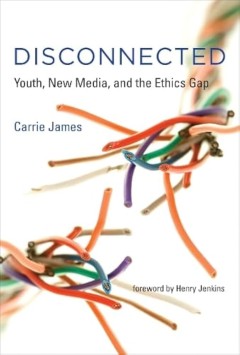
Disconnected: Youth, New Media, and the Ethics Gap
How young people think about the moral and ethical dilemmas they encounter when they share and use online content and participate in online communities."Drawing on extensive interviews with young people between the ages of 10 and 25, James describes the nature of their thinking about privacy, property, and participation online. She identifies three ways that young people approach online activit…
- Edition
- -
- ISBN/ISSN
- 9780262325561
- Collation
- 1 online resource (xxix, 167 pages).
- Series Title
- -
- Call Number
- -
 Computer Science, Information & General Works
  Philosophy & Psychology
  Religion
  Social Sciences
  Language
  Pure Science
  Applied Sciences
  Art & Recreation
  Literature
  History & Geography