Filter by

The locative syntax of experiencers
Experiencers—grammatical participants that undergo a certain psychological change or are in such a state—are grammatically special. As objects (John scared Mary; loud music annoys me), experiencers display two peculiar clusters of nonobject properties across different languages: their syntax is often typical of oblique arguments and their semantic scope is typical of subjects. In The Locati…
- Edition
- -
- ISBN/ISSN
- 9780262259026
- Collation
- 1 online resource (vi, 165 pages) :illustrations.
- Series Title
- -
- Call Number
- -
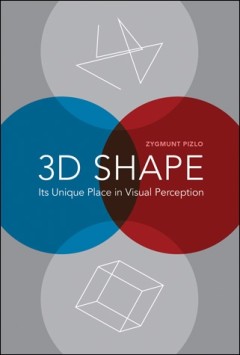
3D shape : Its Unique Place in Visual Perception
A new account of how we perceive the 3D shapes of objects and how to design machines that can see shapes the way we do.
- Edition
- -
- ISBN/ISSN
- -
- Collation
- 1 online resource (xiv, 278 pages) : illustrations
- Series Title
- -
- Call Number
- -

A logical theory of causality
"The first book that provides a systematic and rigorous logical theory of causality"--OCLC-licensed vendor bibliographic record.
- Edition
- -
- ISBN/ISSN
- 0262366207
- Collation
- 1 online resource.
- Series Title
- -
- Call Number
- -

In praise of reason / In Praise of Reason:
- Edition
- -
- ISBN/ISSN
- -
- Collation
- 1 online resource (xii, 166 pages)
- Series Title
- -
- Call Number
- -
- Edition
- -
- ISBN/ISSN
- -
- Collation
- 1 online resource (xii, 166 pages)
- Series Title
- -
- Call Number
- -

Playful Visions: Optical Toys and the Emergence of Children's Media Culture
In the nineteenth century, the kaleidoscope, the thaumatrope, the zoetrope, the stereoscope, and other optical toys were standard accessories of a middle-class childhood, used both at home and at school. In Playful Visions, Meredith Bak argues that the optical toys of the nineteenth century were the “new media” of their era, teaching children to be discerning consumers of media—and also p…
- Edition
- -
- ISBN/ISSN
- 9780262358040
- Collation
- 1 online resource
- Series Title
- -
- Call Number
- -

Sport 2.0 :
Ramifications of the convergence of sports and digital technology, from athlete and spectator experience to the role of media innovation at the Olympics.
- Edition
- -
- ISBN/ISSN
- -
- Collation
- 1 online resource (x, 274 pages)
- Series Title
- -
- Call Number
- -

The configuration space method for kinematic design of mechanisms / Kinematic…
A novel algorithmic approach to mechanism design based on a geometric representation of kinematic function called configuration space partitions.;"This book presents the configuration space method for computer-aided design of mechanisms with changing part contacts. Configuration space is a complete and compact geometric representation of part motions and part interactions that supports the core…
- Edition
- -
- ISBN/ISSN
- -
- Collation
- 1 online resource (xiv, 195 pages) :
- Series Title
- -
- Call Number
- -

The Promise of Artificial Intelligence: Reckoning and Judgment
An argument that—despite dramatic advances in the field—artificial intelligence is nowhere near developing systems that are genuinely intelligent. In this provocative book, Brian Cantwell Smith argues that artificial intelligence is nowhere near developing systems that are genuinely intelligent. Second wave AI, machine learning, even visions of third-wave AI: none will lead to human-level i…
- Edition
- -
- ISBN/ISSN
- 9780262355209
- Collation
- -
- Series Title
- -
- Call Number
- -

From Darwin to Derrida: Selfish Genes, Social Selves, and the Meanings of Life
How the meaningless process of natural selection produces purposeful beings who find meaning in the world. In From Darwin to Derrida, evolutionary biologist David Haig explains how a physical world of matter in motion gave rise to a living world of purpose and meaning. Natural selection, a process without purpose, gives rise to purposeful beings who find meaning in the world. The key to this…
- Edition
- -
- ISBN/ISSN
- 9780262358026
- Collation
- -
- Series Title
- -
- Call Number
- -
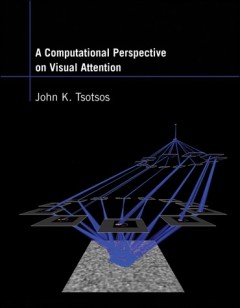
A computational perspective on visual attention
Although William James declared in 1890, "Everyone knows what attention is," today there are many different and sometimes opposing views on the subject. This fragmented theoretical landscape may be because most of the theories and models of attention offer explanations in natural language or in a pictorial manner rather than providing a quantitative and unambiguous statement of the theory. They…
- Edition
- -
- ISBN/ISSN
- 9780262295420
- Collation
- 1 online resource (xvi, 308 pages) :illustrations (some color)
- Series Title
- -
- Call Number
- -
 Computer Science, Information & General Works
 Philosophy & Psychology
 Religion
 Social Sciences
 Language
 Pure Science
 Applied Sciences
 Art & Recreation
 Literature
 History & Geography