Filter by
Bicycling Science (Fourth Edition)
The bicycle is almost unique among human-powered machines in that it uses human muscles in a near-optimum way. This essential volume offers a comprehensive account of the history of bicycles, how human beings propel them, what makes them go faster—and what keeps them from going even faster. Over the years, and through three previous editions, Bicycling Science has become the bible of technica…
- Edition
- -
- ISBN/ISSN
- 9780262357531
- Collation
- -
- Series Title
- -
- Call Number
- -

Ever Smaller: Nature's Elementary Particles, From the Atom to the Neutrino an…
The elementary particles of matter hold the secrets of Nature together with the fundamental forces. In Ever Smaller, neutrino physicist Antonio Ereditato describes the amazing discoveries of the “particle revolution,” explaining ideas, theories, experiments, and unanswered questions in particle physics in a way that is accessible (and enjoyable) for the general reader. Ereditato shows us th…
- Edition
- -
- ISBN/ISSN
- 9780262358231
- Collation
- -
- Series Title
- -
- Call Number
- -

Cosmic Odyssey: How Intrepid Astronomers at Palomar Observatory Changed our V…
Ever since 1936, pioneering scientists at Palomar Observatory in Southern California have pushed against the boundaries of the known universe, making a series of dazzling discoveries that changed our view of the cosmos: quasars, colliding galaxies, supermassive black holes, brown dwarfs, supernovae, dark matter, the never-ending expansion of the universe, and much more. In Cosmic Odyssey, astro…
- Edition
- -
- ISBN/ISSN
- 9780262359665
- Collation
- -
- Series Title
- -
- Call Number
- -
The Next 500 Years: Engineering Life to Reach New Worlds
Inevitably, life on Earth will come to an end, whether by climate disaster, cataclysmic war, or the death of the sun in a few billion years. To avoid extinction, we will have to find a new home planet, perhaps even a new solar system, to inhabit. In this provocative and fascinating book, Christopher Mason argues that we have a moral duty to do just that. As the only species aware that life on E…
- Edition
- -
- ISBN/ISSN
- 9780262360050
- Collation
- -
- Series Title
- -
- Call Number
- -
The Beauty of Chemistry: Art, Wonder, and Science
Chemistry is not just about microscopic atoms doing inscrutable things; it is the process that makes flowers and galaxies. We rely on it for bread-baking, vegetable-growing, and producing the materials of daily life. In stunning images and illuminating text, this book captures chemistry as it unfolds. Using such techniques as microphotography, time-lapse photography, and infrared thermal imagin…
- Edition
- -
- ISBN/ISSN
- 9780262363525
- Collation
- -
- Series Title
- -
- Call Number
- -

Helmholtz and the Conservation of Energy: Contexts of Creation and Reception
In 1847, Herman Helmholtz, arguably the most important German physicist of the nineteenth century, published his formulation of what became known as the conservation of energy—unarguably the most important single development in physics of that century, transforming what had been a conglomeration of separate topics into a coherent field unified by the concept of energy. In Helmholtz and the Co…
- Edition
- -
- ISBN/ISSN
- 9780262363839
- Collation
- -
- Series Title
- -
- Call Number
- -

Literature and Medicine in the Nineteenth-Century Periodical Press : Blackwoo…
In the early nineteenth century, Edinburgh was the leading centre of medical education and research in Britain. It also laid claim to a thriving periodical culture, which served as a significant medium for the dissemination and exchange of medical and literary ideas throughout Britain, the colonies, and beyond. Literature and Medicine in the Nineteenth-Century Periodical Press explores the rela…
- Edition
- -
- ISBN/ISSN
- 9781474405614
- Collation
- 256 halaman
- Series Title
- Edinburgh Critical Studies in Romanticism
- Call Number
- 800 COY l
Literature and Sustainability : Exploratory Essays
Sustainability has become a key socio-political issue over recent years. However, whilst the literary-critical community has advanced enthusiastically on an exciting range of environmentally-based analyses (most obviously through the work of ecocriticism), its response specifically to sustainability—as an attempt to reconceptualise the way we live, as an idea with a particular history, a…
- Edition
- -
- ISBN/ISSN
- 9780719099670
- Collation
- -
- Series Title
- -
- Call Number
- 800 JOH l
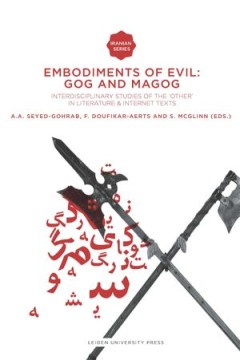
Embodiments of Evil : Gog and Magog : interdisciplinary Studies of The "Other…
Gog and Magog, as archetypes of evil, have dwelt in our consciousness since their threatening appearance in the Bible and Quran. Maps, literature and texts ranging from Medieval Europe, the Byzantine and Arab world, in Berber, Persian and Indonesian traditions, to contemporary internet texts: all use these imaginary monstrous creatures. The figures are constantly reinterpreted as the enemies of…
- Edition
- -
- ISBN/ISSN
- 9789087280901
- Collation
- -
- Series Title
- -
- Call Number
- 800 SEY e

The Federalist Papers
The Federalist, commonly referred to as The Federalist Papers, is a series of 85 essays written by Alexander Hamilton, John Jay and James Madison between October 1787 and May 1788. The essays were published anonymously, under the pen name "Publius," in various New York state newspapers of the time. "The Federalist Papers were written and published to urge New Yorkers to ratify the proposed U…
- Edition
- -
- ISBN/ISSN
- -
- Collation
- -
- Series Title
- -
- Call Number
- 340 HAM f
 Computer Science, Information & General Works
  Philosophy & Psychology
  Religion
  Social Sciences
  Language
  Pure Science
  Applied Sciences
  Art & Recreation
  Literature
  History & Geography