Filter by
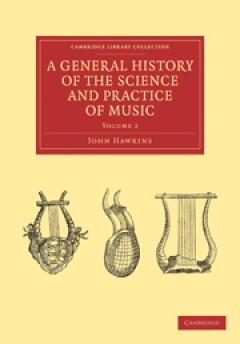
A General History of the Science and Practice of Music
Sir John Hawkins (1719–1789), lawyer, friend of Samuel Johnson and member of the Academy of Ancient Music, published his pioneering five-volume history in 1776 just after the first volume of Burney's. Hawkins' work suffered badly in the resulting competition between the two, partly because of his difficult personality, partly because of the scholarly style of the writing contrasting with Burn…
- Edition
- -
- ISBN/ISSN
- 9780511997525
- Collation
- -
- Series Title
- Cambridge Library Collection - Music
- Call Number
- -

Sex Discrimination in Uncertain Times
This collection of essays arose from a conference held to mark the silver anniversary of the Australian Sex Discrimination Act (1984). The collection has two aims: first; to honour the contributions of both the spirited individuals who valiantly fought for the enactment of the legislation against the odds, and those who championed the new law once it was passed; secondly, to present a stock-tak…
- Edition
- -
- ISBN/ISSN
- 9781921666773
- Collation
- -
- Series Title
- -
- Call Number
- 362 SEX
Court Reform
Three types of strategies have been common for court reform programmes: the ‘holistic’, the ‘tactical’, and the ‘strategic’ approach. This Research and Policy Note discusses strategic court reform and its underlying ideas. Its main intention is to alert those involved in judicial reform to some of the pitfalls and choices connected to particular types of interventions. The concludin…
- Edition
- -
- ISBN/ISSN
- 9789087280505
- Collation
- -
- Series Title
- -
- Call Number
- 340 BED c

Whistleblowing in the Australian Public Sector : Enhancing the theory and pra…
Of the many challenges in public sector management, few are as complex as the management of whistleblowing. Because it can lead to the discovery and rectification of wrongdoing, public interest whistleblowing is widely acknowledged as being positive for organisations and for society at large. However, the conflicts and reprisal risks often associated with whistleblowing also support a widesprea…
- Edition
- -
- ISBN/ISSN
- 9781921536199
- Collation
- -
- Series Title
- -
- Call Number
- 658 BRO w
Patentability of Chemical Selection inventions : The Olanzapine and Escitalop…
The thesis is a response to the recent decisions of the German Federal Court of Justice on the patentability requirements of selection inventions, namely, the Olanzapine and Escitalopram decisions. This thesis provides an overview on the technology and patenting practice, followed by the discussion of jurisprudence on the patentability requirements for selection inventions in major jurisdiction…
- Edition
- 1
- ISBN/ISSN
- 9783845232188
- Collation
- -
- Series Title
- -
- Call Number
- 340 AHN p
Patents and Public Health : Legalising the Policy Thoughts in the Doha TRIPS …
Do patents rules prevent countries from acquiring affordable medicines? A number of legal experts and governments have felt that the WTO, in particular the TRIPS Agreement, forces countries to favour patents over public health. The WTO sought to settle this dispute by concluding the Public Health Declaration. This book closely analyses the legal situation within the WTO prior to the Declaration…
- Edition
- 1
- ISBN/ISSN
- 9783845212654
- Collation
- -
- Series Title
- -
- Call Number
- 340 LAW p

The Principle of Purpose Limitation in Data Protection Laws : The Risk-based …
Dating back to the early discussions regarding the concept of data protection, the so-called “principle of purpose limitation” is one of the fundamental principles of data protection law.¹ The principle essentially requires that personal data may only be processed for the original purpose of collection of the data,² or in the words of the OECD Privacy Guidelines, at least, so long as it i…
- Edition
- 1
- ISBN/ISSN
- 9783845290843
- Collation
- -
- Series Title
- -
- Call Number
- 340 GRA p
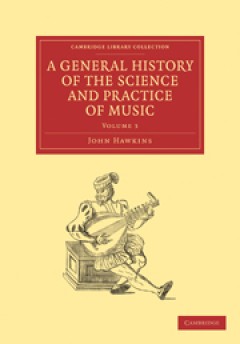
A General History of the Science and Practice of Music
Sir John Hawkins (1719–1789), lawyer, friend of Samuel Johnson and member of the Academy of Ancient Music, published his pioneering five-volume history in 1776 just after the first volume of Burney's. Hawkins' work suffered badly in the resulting competition between the two, partly because of his difficult personality, partly because of the scholarly style of the writing contrasting with Burn…
- Edition
- -
- ISBN/ISSN
- 9780511997532
- Collation
- -
- Series Title
- Cambridge Library Collection - Music
- Call Number
- -
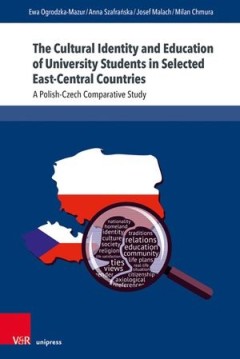
The Cultural Identity and Education of University Students in Selected East-C…
In Polish and Czech pedagogy, there have not been many studies on the social, cultural and educational functioning of academic youth in a culturally diversified environment. The analysis of identity behaviours presented by university students from the Polish-Czech borderland and of their learning potentialities will provide a chance for mutual recognition, understanding and the enrichment of bo…
- Edition
- -
- ISBN/ISSN
- 9780000000773
- Collation
- 238 halaman
- Series Title
- -
- Call Number
- 370 OGR c
Promoting a Second-Tier Protection Regime for Innovation of Small and Medium-…
Intellectual Property law is a dynamic field; its ever-changing landscape challenges us to constantly revisit the existing laws and policies. Although ideological currents of a second-tier patent (STP) regime are sweeping through the South Asian region in recent years, the concept of utility model or petty patent remains a largely unexplored option in Sri Lanka and in other parts of the South A…
- Edition
- 1
- ISBN/ISSN
- 9783845259505
- Collation
- -
- Series Title
- -
- Call Number
- 340 HEW p
 Computer Science, Information & General Works
 Philosophy & Psychology
 Religion
 Social Sciences
 Language
 Pure Science
 Applied Sciences
 Art & Recreation
 Literature
 History & Geography