Filter by
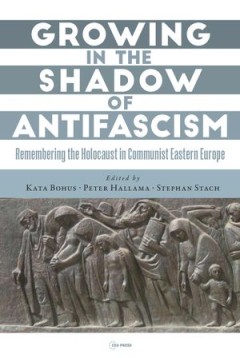
Growing in the shadow of antifascism : remembering the Holocaust in State-…
Reined into the service of the Cold War confrontation, antifascist ideology overshadowed the narrative about the Holocaust in the communist states of Eastern Europe. This led to the Western notion that in the Soviet Bloc there was a systematic suppression of the memory of the mass murder of European Jews. Going beyond disputing the mistaken opposition between “communist falsification” of hi…
- Edition
- -
- ISBN/ISSN
- 9789633864364
- Collation
- -
- Series Title
- -
- Call Number
- 940.53 GRO

QEEG Characteristics and Biofeedback Modalities in Children with ADHD
QEEG Characteristics and Biofeedback Modalities in Children with ADHD
- Edition
- -
- ISBN/ISSN
- 9789533078687
- Collation
- -
- Series Title
- -
- Call Number
- -
Psychosocial Intervention for Co-Existing MDD and PTSD
Psychosocial Intervention for Co-Existing MDD and PTSD
- Edition
- -
- ISBN/ISSN
- 9789535111474
- Collation
- -
- Series Title
- -
- Call Number
- -

Playing the Waves
Dogma95 has been heralded as the European alternative to the Hollywood Blockbuster. For many critics and film lovers, Dogma95 and Von Trier's films have become synonymous with the notions usually associated with independent film making: low budgets and realism. Von Trier's approach to film making, however, takes cinema beyond the traditional confines of film aesthetics and radically transposes …
- Edition
- -
- ISBN/ISSN
- 9789053569795
- Collation
- -
- Series Title
- -
- Call Number
- -

Grey matters : a guide to collaborative research with seniors
This study marks a major step in making collaboration between seniors, academic researchers, and community researchers a reality. Many aging adults are motivated to undertake research projects in later life or even return to university after retirement. Grey Matters is the result of a pilot project developed to study the effectiveness of collaborative research involving seniors. Because the pro…
- Edition
- -
- ISBN/ISSN
- 978-1-55238-536-4
- Collation
- -
- Series Title
- -
- Call Number
- 300.72 MAR g

The Great Forest : An Appalachian Story
The very ancient Eastern forest of North America is characterized by an extraordinary variety of plants, animals, and human communities. Published in 1985 and edited by Barry M. Buxton (1st edition) and Sam Gray (2nd edition), contributors to A Great Forest: An Appalachian Story, include Sam Gray and Michael Ann Williams; Ann Rogers; Tyler Blethen and Curtis Wood; Ronald D. Eller; and Harley E.…
- Edition
- -
- ISBN/ISSN
- 9781469638454
- Collation
- -
- Series Title
- -
- Call Number
- 577.3 GRE
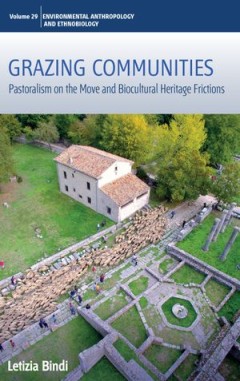
Grazing Communities : Pastoralism on the Move and Biocultural Heritage Frictions
Pastoralism is a diffused and ancient form of human subsistence and probably one of the most studied by anthropologists at the crossroads between continuities and transformations. The present critical discourse on sustainable and responsible development implies a change of practices, a huge socio-economic transformation, and the return of new shepherds and herders in different European regions.…
- Edition
- -
- ISBN/ISSN
- 9781800736672
- Collation
- -
- Series Title
- -
- Call Number
- 253 GRA
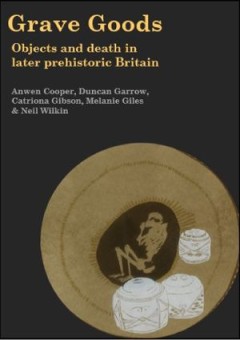
Grave Goods : Objects and Death in Later Prehistoric Britain
Britain is internationally renowned for the high quality and exquisite crafting of its later prehistoric grave goods (c. 4000 BC to AD 43). Many of prehistoric Britain's most impressive artefacts have come from graves. Interred with both inhumations and cremations, they provide some of the most durable and well-preserved insights into personal identity and the prehistoric life-course, yet they …
- Edition
- -
- ISBN/ISSN
- 978-1-78925-748-9
- Collation
- -
- Series Title
- -
- Call Number
- 363.7 COO g
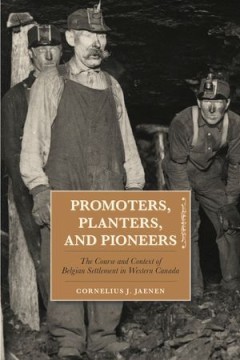
Promoters, Planters, and Pioneers The Course and Context of Belgian Settleme…
In this comprehensive study of Belgian settlement in western Canada, Cornelius Jaenen shows that Belgian immigration was unique in its character and brought with it significant benefits out of proportion to its comparatively small numbers. Canadas first Immigration Act (1869) included Belgium among the “preferred countries” from which immigrants should be sought, but unlike many other Europ…
- Edition
- -
- ISBN/ISSN
- 9781552385708
- Collation
- -
- Series Title
- -
- Call Number
- -
Visualising Facebook
Since the growth of social media, human communication has become much more visual. This book presents a scholarly analysis of the images people post on a regular basis to Facebook. By including hundreds of examples, readers can see for themselves the differences between postings from a village north of London, and those from a small town in Trinidad. Why do women respond so differently to becom…
- Edition
- -
- ISBN/ISSN
- 9781911307402
- Collation
- -
- Series Title
- -
- Call Number
- -
 Computer Science, Information & General Works
  Philosophy & Psychology
  Religion
  Social Sciences
  Language
  Pure Science
  Applied Sciences
  Art & Recreation
  Literature
  History & Geography