Filter by

Escape from Empire: The Developing World's Journey through Heaven and Hell
In Escape from Empire, Alice Amsden argues that the more freedom a developing country has to determine its own policies, the faster its economy will grow. America's recent inflexibility - as it has single-mindedly imposed the same rules, laws, and institutions on all developing economies under its influence - has been the backdrop to the rise of two new giants, China and India, who have built e…
- Edition
- -
- ISBN/ISSN
- 9780262267113
- Collation
- 1 online resource (vi, 197 pages) :illustrations
- Series Title
- -
- Call Number
- -
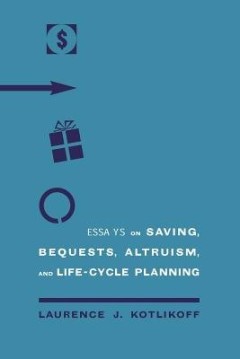
Essays on Saving, Bequests, Altruism, and Life-cycle Planning
"The MIT Press"This collection of essays, coauthored with other distinguished economists, offers new perspectives on saving, intergenerational economic ties, retirement planning, and the distribution of wealth. The book links life-cycle microeconomic behavior to important macroeconomic outcomes, including the roughly 50 percent postwar decline in America's rate of saving and its increasing weal…
- Edition
- -
- ISBN/ISSN
- 9780262277525
- Collation
- 1 online resource (256 pages)
- Series Title
- -
- Call Number
- -
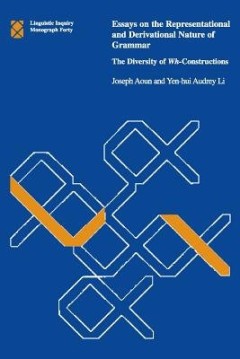
Essays on the Representational and Derivational Nature of Grammar: The Divers…
This book can be read on two levels: as a novel empirical study of wh- interrogatives and relative constructions in a variety of languages and as a theoretical investigation of chain formation in grammar.The book is divided into two parts. Part I investigates the distribution and interpretation of multiple wh- interrogative constructions, focusing on the workings of Superiority. Part II investi…
- Edition
- -
- ISBN/ISSN
- 9780262267229
- Collation
- 1 online resource (vii, 289 pages).
- Series Title
- -
- Call Number
- -
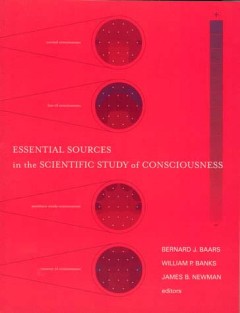
Essential Sources in the Scientific Study of Consciousness
"A Bradford book."Consciousness is at the very core of the human condition. Yet only in recent decades has it become a major focus in the brain and behavioral sciences. Scientists now know that consciousness involves many levels of brain functioning, from brainstem to cortex. The almost seventy articles in this book reflect the breadth and depth of this burgeoning field. The many topics covered…
- Edition
- -
- ISBN/ISSN
- 9780262267502
- Collation
- 1 online resource (xiii, 1192 pages) :illustrations
- Series Title
- -
- Call Number
- -
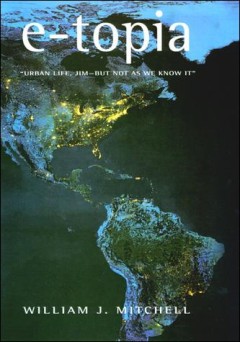
e-topia: "Urban Life, Jim—But Not As We Know It"
How an electronically connected world will shape cities and urban relationships of the future. The global digital network is not just a delivery system for email, Web pages, and digital television. It is a whole new urban infrastructure—one that will change the forms of our cities as dramatically as railroads, highways, electric power supply, and telephone networks did in the past. In this…
- Edition
- -
- ISBN/ISSN
- 9780262279963
- Collation
- -
- Series Title
- -
- Call Number
- -

The jungle trappers : a tale of the Indian jungle
- Edition
- -
- ISBN/ISSN
- -
- Collation
- 352 p. : 21 cm
- Series Title
- -
- Call Number
- -
- Edition
- -
- ISBN/ISSN
- -
- Collation
- 352 p. : 21 cm
- Series Title
- -
- Call Number
- -
The industrial arts, historical sketches;
- Edition
- -
- ISBN/ISSN
- -
- Collation
- vi, vii, 276 p,Pref. signed: W.M. [i.e. William Maskell]
- Series Title
- -
- Call Number
- -
- Edition
- -
- ISBN/ISSN
- -
- Collation
- vi, vii, 276 p,Pref. signed: W.M. [i.e. William Maskell]
- Series Title
- -
- Call Number
- -
Lakmé; opera in three acts
- Edition
- -
- ISBN/ISSN
- -
- Collation
- 47 p,French and English on opposite pages,Libretto (by Gondinet and Gille) based on "Le mariage de L
- Series Title
- -
- Call Number
- -
- Edition
- -
- ISBN/ISSN
- -
- Collation
- 47 p,French and English on opposite pages,Libretto (by Gondinet and Gille) based on "Le mariage de L
- Series Title
- -
- Call Number
- -
A journal kept by Miss Sarah Foote (Mrs. Sarah Foote Smith) while journeying …
- Edition
- -
- ISBN/ISSN
- -
- Collation
- Introduction signed : Chester W. Smith,With autograph of Olive Percival
- Series Title
- -
- Call Number
- -
- Edition
- -
- ISBN/ISSN
- -
- Collation
- Introduction signed : Chester W. Smith,With autograph of Olive Percival
- Series Title
- -
- Call Number
- -
 Computer Science, Information & General Works
  Philosophy & Psychology
  Religion
  Social Sciences
  Language
  Pure Science
  Applied Sciences
  Art & Recreation
  Literature
  History & Geography