Filter by

Behavioural biology, conservation genomics, and population viability
A better question might be: “what is the aim of conservation biology?” We can consider the central purpose of conservation efforts to be the maintenance of the evolutionary potential of species and ecosystems. Evolutionary potential is being able to continue evolving, to be viable and to be sustainable
- Edition
- -
- ISBN/ISSN
- 9781032077192, 9781032077161
- Collation
- 9
- Series Title
- -
- Call Number
- -
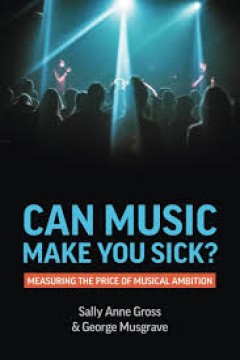
Can Music Make You Sick?
“Musicians often pay a high price for sharing their art with us. Underneath the glow of success can often lie loneliness and exhaustion, not to mention the basic struggles of paying the rent or buying food. Sally Anne Gross and George Musgrave raise important questions – and we need to listen to what the musicians have to tell us about their working conditions and their mental health.” Em…
- Edition
- -
- ISBN/ISSN
- -
- Collation
- -
- Series Title
- -
- Call Number
- -
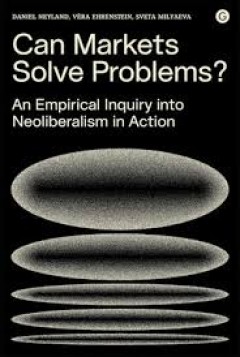
Can Markets Solve Problems?
A provocative analysis of market-based interventions into public problems and the consequences.Market-based interventions have been used in attempts to solve numerous public problems, from education to healthcare and from climate change to privacy. Scholars have responded persuasively through critiques of neoliberalism. In Can Markets Solve Problems? Daniel Neyland, Véra Ehrenstein, and Sveta …
- Edition
- -
- ISBN/ISSN
- 9781912685158
- Collation
- -
- Series Title
- -
- Call Number
- -

Can Language be Planned?
This book is intended to serve several purposes: to demonstrate the need for a multidisciplinary approach to language planning, to awaken the interest of all the social sciences to the role of language in modernization, to interest social scientists in the theoretical gain to be had from the study of language planning, to help widen the field of sociolinguistics by interesting linguists in peop…
- Edition
- -
- ISBN/ISSN
- 9780824880712
- Collation
- -
- Series Title
- -
- Call Number
- -

Can integrated titles improve the viewing experience?
Historically a dubbing country, Germany is not well-known for subtitled productions. But while dubbing is predominant in Germany, more and more German viewers prefer original and subtitled versions of their favourite shows and films. Conventional subtitling, however, can be seen as a strong intrusion into the original image that can not only disrupt but also destroy the director’s intended sh…
- Edition
- -
- ISBN/ISSN
- 9783961100651
- Collation
- -
- Series Title
- -
- Call Number
- -

Can Fixing Dinner Fix the Planet?
How can consumers, nations, and international organizations work together to improve food systems before our planet loses its ability to sustain itself and its people?Do we have the right to eat wrongly?As the world's agricultural, environmental, and nutritional needs intersect—and often collide—how can consumers, nations, and international organizations work together to reverse the damage …
- Edition
- -
- ISBN/ISSN
- 9781421441146
- Collation
- -
- Series Title
- -
- Call Number
- -

Can BRICS De-dollarize the Global Financial System?
This study develops a 'Pathways to De-dollarization' framework and applies it to analyze the institutional and market mechanisms that BRICS (Brazil-Russia-India-China-South Africa) countries have created at the BRICS, sub-BRICS, and BRICS Plus levels. This title is also available as Open Access on Cambridge Core.
- Edition
- -
- ISBN/ISSN
- 9781009014625
- Collation
- -
- Series Title
- -
- Call Number
- -
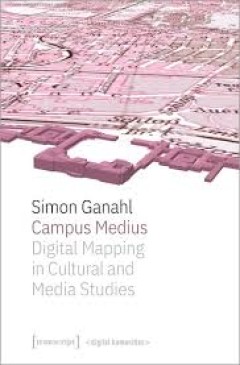
Campus Medius: Digital Mapping in Cultural and Media Studies
Campus Medius explores and expands the possibilities of digital cartography in cultural and media studies. Simon Ganahl documents the development of the project from a historical case study to a mapping platform. Based on the question of what a media experience is, the concepts of the apparatus (dispositif) and the actor-network are translated into a data model. A time-space of twenty-four hour…
- Edition
- -
- ISBN/ISSN
- 9783837656015
- Collation
- -
- Series Title
- -
- Call Number
- -

Camphill and the Future
A free open access ebook is available upon publication. Learn more at www.luminosoa.org. The Camphill movement, one of the world’s largest and most enduring networks of intentional communities, deserves both recognition and study. Founded in Scotland at the beginning of the Second World War, Camphill communities still thrive today, encompassing thousands of people living in more than one hund…
- Edition
- -
- ISBN/ISSN
- 9780520975354
- Collation
- -
- Series Title
- -
- Call Number
- -
Campbell and the Colleges
Based on the Reed Lectures from 1971, Gresham, the twelfth president of Bethany College, explores how the school's founder Alexander Campbell articulated his philosophy of education. He then, demonstrates how leaders affiliated with Disciples of Christ went on to found other institutions of higher education. This study shows the variety of entrepreneurial institutions begun within the Stone-Cam…
- Edition
- -
- ISBN/ISSN
- 9781684265121
- Collation
- -
- Series Title
- -
- Call Number
- -
 Computer Science, Information & General Works
  Philosophy & Psychology
  Religion
  Social Sciences
  Language
  Pure Science
  Applied Sciences
  Art & Recreation
  Literature
  History & Geography