Filter by

The Troll Inside You: Paranormal Activity in the Medieval North
What do medieval Icelanders mean when they say “troll”? What did they see when they saw a troll? What did the troll signify to them? And why did they see them? The principal subject of this book is the Norse idea of the troll, which the author uses to engage with the larger topic of paranormal experiences in the medieval North. The texts under study are from 13th-, 14th-, and 15th-century I…
- Edition
- -
- ISBN/ISSN
- 9781947447011
- Collation
- -
- Series Title
- -
- Call Number
- -

Quantum Language and the Migration of Scientific Concepts
The principles of quantum physics—and the strange phenomena they describe—are represented most precisely in highly abstract algebraic equations. Why, then, did these mathematically driven concepts compel founders of the field, particularly Erwin Schrödinger, Niels Bohr, and Werner Heisenberg, to spend so much time reflecting on ontological, epistemological, and linguistic concerns? What is…
- Edition
- -
- ISBN/ISSN
- 9780262345118
- Collation
- -
- Series Title
- -
- Call Number
- -

Rock, Bone, and Ruin: An Optimist's Guide to the Historical Sciences
The “historical sciences”—geology, paleontology, and archaeology—have made extraordinary progress in advancing our understanding of the deep past. How has this been possible, given that the evidence they have to work with offers mere traces of the past? In Rock, Bone, and Ruin, Adrian Currie explains that these scientists are “methodological omnivores,” with a variety of strategies …
- Edition
- -
- ISBN/ISSN
- 9780262344142
- Collation
- -
- Series Title
- -
- Call Number
- -

Materials in Eighteenth-Century Science: A Historical Ontology
In the eighteenth century, chemistry was the science of materials. Chemists treated mundane raw materials and chemical substances as multidimensional objects of inquiry that could be investigated in both practical and theoretical contexts—as useful commodities, perceptible objects of nature, and entities with hidden and imperceptible features. In this history of materials, Ursula Klein and Wo…
- Edition
- -
- ISBN/ISSN
- 9780262277266
- Collation
- -
- Series Title
- -
- Call Number
- -
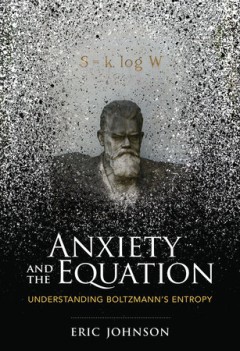
Anxiety and the Equation: Understanding Boltzmann's Entropy
Ludwig Boltzmann's grave in Vienna's Central Cemetery bears a cryptic epitaph: S = k log W. This equation was Boltzmann's great discovery, and it contributed significantly to our understanding of the second law of thermodynamics. In Anxiety and the Equation, Eric Johnson tells the story of a man and his equation: the anxiety-plagued nineteenth-century physicist who did his most important work a…
- Edition
- -
- ISBN/ISSN
- 9780262348539
- Collation
- -
- Series Title
- -
- Call Number
- -
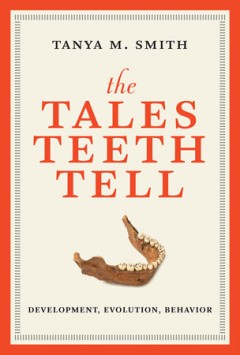
The Tales Teeth Tell: Development, Evolution, Behavior
Our teeth have intriguing stories to tell. These sophisticated time machines record growth, diet, and evolutionary history as clearly as tree rings map a redwood's lifespan. Each day of childhood is etched into tooth crowns and roots—capturing birth, nursing history, environmental clues, and illnesses. The study of ancient, fossilized teeth sheds light on how our ancestors grew up, how we evo…
- Edition
- -
- ISBN/ISSN
- 9780262348928
- Collation
- -
- Series Title
- -
- Call Number
- -

Alice and Bob Meet the Wall of Fire: The Biggest Ideas in Science from
If you're a science and data nerd like me, you may be interested in Alice and Bob Meet the Wall of Fire... from Quanta Magazine and Thomas Lin.”—Bill Gates These stories reveal the latest efforts to untangle the mysteries of the universe. Bringing together the best and most interesting science stories appearing in Quanta Magazine over the past five years, Alice and Bob Meet the Wall of F…
- Edition
- -
- ISBN/ISSN
- 9780262350518
- Collation
- -
- Series Title
- -
- Call Number
- -
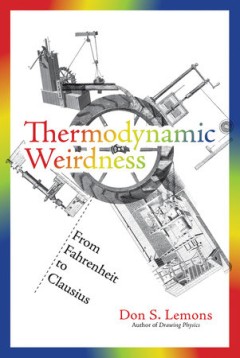
Thermodynamic Weirdness: From Fahrenheit to Clausius
Students of physics, chemistry, and engineering are taught classical thermodynamics through its methods—a “problems first” approach that neglects the subject's concepts and intellectual structure. In Thermodynamic Weirdness, Don Lemons fills this gap, offering a nonmathematical account of the ideas of classical thermodynamics in all its non-Newtonian “weirdness.” By emphasizing the id…
- Edition
- -
- ISBN/ISSN
- 9780262351324
- Collation
- -
- Series Title
- -
- Call Number
- -

Einstein's Wife: The Real Story of Mileva Einstein-Marić
Albert Einstein's first wife, Mileva Einstein-Marić, was forgotten for decades. When a trove of correspondence between them beginning in their student days was discovered in 1986, her story began to be told. Some of the tellers of the “Mileva Story” made startling claims: that she was a brilliant mathematician who surpassed her husband, and that she made uncredited contributions to his mos…
- Edition
- -
- ISBN/ISSN
- 9780262352062
- Collation
- -
- Series Title
- -
- Call Number
- -

Celestial Calculations: A Gentle Introduction to Computational Astronomy
Our knowledge of the universe is expanding rapidly, as space probes launched decades ago begin to send information back to earth. There has never been a better time to learn about how planets, stars, and satellites move through the heavens. This book is for amateur astronomers who want to move beyond pictures of constellations in star guides and solve the mysteries of a starry night. It is a bo…
- Edition
- -
- ISBN/ISSN
- 9780262351768
- Collation
- -
- Series Title
- -
- Call Number
- -
 Computer Science, Information & General Works
  Philosophy & Psychology
  Religion
  Social Sciences
  Language
  Pure Science
  Applied Sciences
  Art & Recreation
  Literature
  History & Geography