Filter by
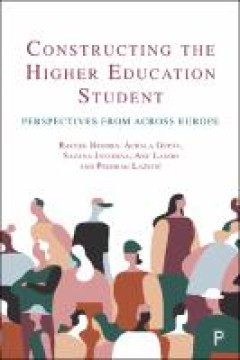
Constructing the Higher Education Student
EPDF available Open Access under CC-BY-NC-ND licence. Amid debates about the future of both higher education and Europeanisation, this book is the first full-length exploration of how Europe’s 35 million students are understood by key social actors across different nations.
- Edition
- -
- ISBN/ISSN
- 9781447359623
- Collation
- 224
- Series Title
- -
- Call Number
- -
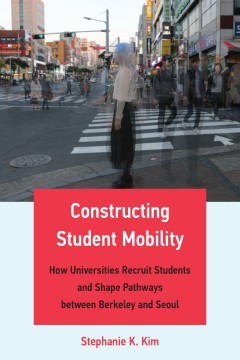
Constructing Student Mobility
How universities in the US and South Korea compete for global student markets—and how university financials shape students' lives.The popular image of the international student in the American imagination is one of affluence, access, and privilege, but is that image accurate? In this provocative book, higher education scholar Stephanie Kim challenges this view, arguing that universities -- no…
- Edition
- -
- ISBN/ISSN
- 9780262373371, 9780262545143
- Collation
- 226
- Series Title
- -
- Call Number
- -

Constructing Space, Changing Reality of Israel through Film
This article investigates the ways in which filmmakers frame reality through cinematic space, mediating issues of conflict and reconciliation and of religion and identity(ies) within Israel. Cinematic space depicts and expresses borders through elements of film language.
- Edition
- -
- ISBN/ISSN
- -
- Collation
- 105-123
- Series Title
- -
- Call Number
- -
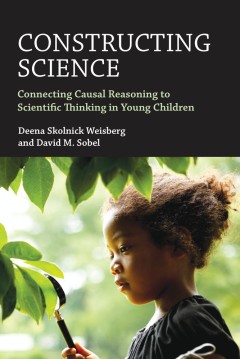
Constructing Science
An examination of children's causal reasoning capacities and how those capacities serve as the foundation of their scientific thinking. Young children have remarkable capacities for causal reasoning, which are part of the foundation of their scientific thinking abilities.
- Edition
- -
- ISBN/ISSN
- 9780262370615, 9780262044684
- Collation
- 392
- Series Title
- -
- Call Number
- -

Constructing Roma Migrants
It outlines the creation and implementation of Roma policies at the European level, provides a systematic understanding of identity-based exclusion and explores concrete case studies that reveal how integration and immigration policies work in practice.
- Edition
- -
- ISBN/ISSN
- -
- Collation
- 242
- Series Title
- -
- Call Number
- -
Constructing Nineteenth-Century Religion
Examines the ways in which religion was constructed as a category and region of experience in nineteenth-century literature and culture.
- Edition
- -
- ISBN/ISSN
- 9780814213971
- Collation
- -
- Series Title
- -
- Call Number
- -

Constructing Muslims in France - Discourse, Public Identity, and the Politics…
The standing of French Muslims is undercut by a predominant and persistent elite public discourse that frames Muslims as failed and incomplete French citizens. This situation fosters the very separations, exclusions, and hierarchies it claims to deplore as Muslims face discrimination in education, housing, and employment.
- Edition
- -
- ISBN/ISSN
- 9781439910290;9781439910306
- Collation
- 232
- Series Title
- -
- Call Number
- -

Constructing Modern Identities
The emergence of Jewish student associations in 1881 provided a forum for Jews to openly proclaim their religious heritage. By examining the lives and social dynamics of Jewish university students, Keith Pickus shows how German Jews rearranged their self-images and redefined what it meant to be Jewish
- Edition
- -
- ISBN/ISSN
- 9780814343517
- Collation
- -
- Series Title
- -
- Call Number
- -

Constructing Intersex
liegt die erste Biographieforschung mit intergeschlechtlichen Menschen im deutschsprachigen Raum vor. Auf Basis von Interviews stellt Anja Gregor heraus, welche schwerwiegenden Folgen bestimmte medizinische Pathologisierungs- und Zurichtungspraktiken für die Biographien der Betroffenen haben
- Edition
- -
- ISBN/ISSN
- 9783839432648, 9783837632644
- Collation
- 348
- Series Title
- -
- Call Number
- -

Constructing Identities over Time
Jekatyerina Dunajeva explores how two dominant stereotypes—“bad Gypsies” and “good Roma”—took hold in formal and informal educational institutions in Russia and Hungary. She shows that over centuries “Gypsies” came to be associated with criminality, lack of education, and backwardness.
- Edition
- -
- ISBN/ISSN
- -
- Collation
- -
- Series Title
- -
- Call Number
- -
 Computer Science, Information & General Works
 Philosophy & Psychology
 Religion
 Social Sciences
 Language
 Pure Science
 Applied Sciences
 Art & Recreation
 Literature
 History & Geography