Filter by
Two Studies on Ming History
In the first study of Two Studies on Ming History , Charles O. Hucker presents an account of a military campaign that provides insight into the nature of civil officials' authority, decision-making, and relationship with the Ming court. In the spring and summer of 1556, a Chinese renegade named Hsü Hai led an invading group of Japanese and Chinese soldiers on a plundering foray through the nor…
- Edition
- -
- ISBN/ISSN
- -
- Collation
- -
- Series Title
- -
- Call Number
- 900
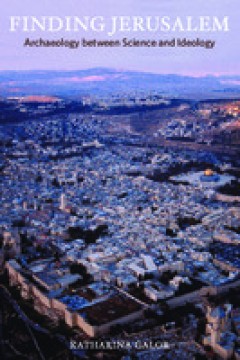
Finding Jerusalem: Archaeology between Science and Ideology
Archaeological discoveries in Jerusalem capture worldwide attention in various media outlets. The continuing quest to discover the city’s physical remains is not simply an attempt to define Israel’s past or determine its historical legacy. In the context of the ongoing Israeli-Palestinian conflict, it is also an attempt to legitimate—or undercut—national claims to sovereignty. Bridging …
- Edition
- -
- ISBN/ISSN
- 9780520968073
- Collation
- -
- Series Title
- -
- Call Number
- 900

Authority and Performance : Sociological Perspectives on the Council of Chalc…
One can hardly exaggerate the importance of the church councils in the 5th and 6th centuries. They provide us with great insights into the situation in the late Roman Empire and particularly into the role of the Church at that time. Because of the rich source materials, the dramatic course it took and its overall historical relevance, the Council of Chalcedon (AD 451) is one of the most importa…
- Edition
- -
- ISBN/ISSN
- 9783525208687
- Collation
- -
- Series Title
- -
- Call Number
- 900 AMI a

Carl Friedrich von Weizsäcker : Pioneer of Physics, Philosophy, Religion, Po…
This book offers a collection of texts by Carl Friedrich von Weizsaecker (1912-2007), a major German universal scientist who was a pioneer in physics, philosophy, religion, politics and peace research. He started as an assistant to the physicist, Werner Heisenberg, held professorships in theoretical physics (Strasbourg), physics (Goettingen) and philosophy (Hamburg) and was a co-director (with …
- Edition
- 1
- ISBN/ISSN
- -
- Collation
- XXVIII, 166
- Series Title
- SpringerBriefs on Pioneers in Science and Practice
- Call Number
- 900
Planning London for the Post-War Era 1945-1960
This book deals with the formation of the post-Second World War reconstruction and planning machinery in Great Britain, the re-planning efforts undertaken in post-war London, and in particular the redevelopment programme regarding its central area in the form of the comprehensive development projects. Originating from a PhD Thesis, the book recreates the atmosphere following step by step argume…
- Edition
- 1
- ISBN/ISSN
- 978-3-319-07647-8
- Collation
- XXI, 215
- Series Title
- Springer Geography
- Call Number
- 941 MAR p

Place Names in Africa; Colonial Urban Legacies, Entangled Histories
This volume examines the discursive relations between indigenous, colonial and post-colonial legacies of place-naming in Africa in terms of the production of urban space and place. It is conducted by tracing and analysing place-naming processes, particularly in sub-Saharan Africa during colonial times (British, French, Belgian, Portuguese), with a considerable attention to both the pre-colonial…
- Edition
- 1
- ISBN/ISSN
- 978-3-319-32485-2
- Collation
- XVII, 229
- Series Title
- -
- Call Number
- 939.7 BIG p
Degrees of affinity : studies in comparative literature and translation
This book combines two collections of essays written by the late professor Zuoliang Wang, works that explore the affinity between literatures and peoples, with special attention given to that between Chinese literature and western literature in the 20th century, and which underscore the role of translation therein. Both collections have been previously published in book form: Degrees of Affinit…
- Edition
- 1
- ISBN/ISSN
- 9783662454756
- Collation
- vi, 193 pages
- Series Title
- China Academic Library
- Call Number
- 920
Continuing professional education in Australia : a tale of missed opportunities
This book offers a history of Continuing Professional Development (CPD) in the Australian context. It presents an approach that links the development of CPD to a series of 'missed opportunities' and the identification of three key themes (mandatory CPD, competencies and regulation/registration) as well as with national regulation for select health professions. It not only relates the evolution …
- Edition
- 1
- ISBN/ISSN
- 9789811018329
- Collation
- XXI, 257
- Series Title
- -
- Call Number
- 994

Counter-hegemonic Resistance in China's Hong Kong Visualizing Protest in the …
This book and associated collection of visual data and sociological observations examine how the Hong Kong Special Administrative Region (SAR) has been visually re-imagined, transformed, and utilized by its subalterns in the post-Handover period to reproduce their aspirations and demands for greater democracy and social justice while simultaneously contesting the hegemonic pressure exerted by C…
- Edition
- 1
- ISBN/ISSN
- 9789812872357
- Collation
- IX, 396
- Series Title
- -
- Call Number
- 951
Economic history of energy and environment
This book is the first volume of a monograph series published by the Socio-Economic History Society, Japan. The purpose of the series is to make works by Japanese scholars accessible to a wider readership and to increase the knowledge of scholars in this field, particularly in relation to Asia. This volume includes four chapters on energy and the environment of Japan, China, and Britain, and fo…
- Edition
- 1
- ISBN/ISSN
- 9784431555070
- Collation
- xii, 134 pages
- Series Title
- -
- Call Number
- 951
 Computer Science, Information & General Works
  Philosophy & Psychology
  Religion
  Social Sciences
  Language
  Pure Science
  Applied Sciences
  Art & Recreation
  Literature
  History & Geography