Text
Invisible Mind: Flexible Social Cognition and Dehumanization
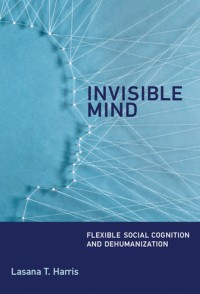
In Invisible Mind, Lasana Harris takes a social neuroscience approach to explaining the worst of human behavior. How can a person take part in racially motivated violence and then tenderly cradle a baby or lovingly pet a puppy? Harris argues that our social cognition—the ability to infer the mental states of another agent—is flexible. That is, we can either engage or withhold social cognition. If we withhold social cognition, we dehumanize the other person. Integrating theory from a range of disciplines—social, developmental, and cognitive psychology, evolutionary anthropology, philosophy, economics, and law—with neuroscience data, Harris explores how and why we engage or withhold social cognition. He examines research in these different disciplines and describes biological processes that underlie flexible social cognition, including brain, genetic, hormonal, and physiological mechanisms.
Availability
No copy data
Detail Information
- Series Title
-
-
- Call Number
-
-
- Publisher
- : The MIT Press., 2017
- Collation
-
-
- Language
-
English
- ISBN/ISSN
-
9780262339049
- Classification
-
NONE
- Content Type
-
text
- Media Type
-
computer
- Carrier Type
-
online resource
- Edition
-
-
- Subject(s)
-
-
- Specific Detail Info
-
-
- Statement of Responsibility
-
-
Other Information
- Cataloger
-
arin
- Source
-
-
- Validator
-
-
- Digital Object Identifier (DOI)
-
https://doi.org/10.7551/mitpress/10067.001.0001
- Journal Volume
-
-
- Journal Issue
-
-
- Subtitle
-
-
- Parallel Title
-
-
Other version/related
No other version available
File Attachment
Comments
You must be logged in to post a comment
 Computer Science, Information & General Works
  Philosophy & Psychology
  Religion
  Social Sciences
  Language
  Pure Science
  Applied Sciences
  Art & Recreation
  Literature
  History & Geography