Electronic Resource
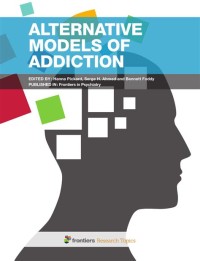
Alternative Models of Addiction
For much of the 20th century, theories of addictive behaviour and motivation were polarized between two models. The first model viewed addiction as a moral failure for which addicts are rightly held responsible and judged accordingly. The second model, in contrast, viewed addiction as a specific brain disease caused by neurobiological adaptations occurring in response to chronic drug or alcohol use, and over which addicts have no choice or control. As our capacity to observe neurobiological phenomena improved, the second model became scientific orthodoxy, increasingly dominating addiction research and informing public understandings of addiction. More recently, however, a dissenting view has emerged within addiction research, based partly on new scientific research and partly on progress in philosophical and psychological understandings of relevant mental phenomena. This view does not revert to treating addiction as a moral failure, but nonetheless holds that addictive behaviour is fundamentally motivated by choice and subject to at least a degree of voluntary control. On this alternative model of addiction, addictive behaviour is an instrumental means to ends that are desired by the individual, although much controversy exists with respect to the rationality or irrationality of these ends, the degree and nature of the voluntary control of addictive behaviour and motivation, the explanation of the difference between addictive and non-addictive behaviour and motivation, and, lastly, the extent to which addictive behaviour and motivation is correctly characterised as pathological or diseased. This research topic includes papers in the traditions of neuroscience, psychology, philosophy, law and social science that explore alternative understandings of addiction.
Availability
No copy data
Detail Information
- Series Title
-
-
- Call Number
-
-
- Publisher
- : Frontiers Media SA., 2015
- Collation
-
173 hlm; ill., lamp.,
- Language
-
English
- ISBN/ISSN
-
9782889197132
- Classification
-
NONE
- Content Type
-
tactile text
- Media Type
-
computer
- Carrier Type
-
online resource
- Edition
-
-
- Subject(s)
- Specific Detail Info
-
-
- Statement of Responsibility
-
Bennett Foddy Serge H. Ahmed Hanna Pickard
Other Information
- Cataloger
-
ida
- Source
-
http://journal.frontiersin.org/researchtopic/1036/alternative-models-of-addiction
- Validator
-
-
- Digital Object Identifier (DOI)
-
10.3389/978-2-88919-713-2
- Journal Volume
-
-
- Journal Issue
-
-
- Subtitle
-
-
- Parallel Title
-
-
Other version/related
No other version available
File Attachment
Comments
You must be logged in to post a comment
 Computer Science, Information & General Works
  Philosophy & Psychology
  Religion
  Social Sciences
  Language
  Pure Science
  Applied Sciences
  Art & Recreation
  Literature
  History & Geography