Text
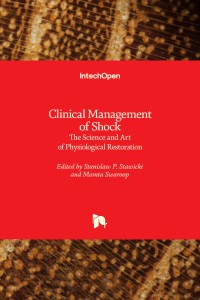
Clinical Management of Shock
Shock is a physiological state of war! From a healthcare provider perspective, the word “shock” is associated with a mixed array of feelings, including dread, well-founded fear, and deep respect. The physiological state of shock is well recognized for the associated destructive consequences, and its successful management requires prompt identification, immediate action, and sustained effort by all members of the healthcare team. This mindset of advanced preparation and constant readiness constitutes the foundation of the modern approach toward shock – early detection and prompt treatment for optimal outcomes. Despite the heterogeneity of “shock” as a clinico-pathological entity, there are some common threads that permeate all forms and manifestations of shock, with apparent increase in observed commonalities in the more advanced (and often irreversible) stages of the systemic syndrome. When faced with shock, the body and its systems do their best to compensate for the maldistribution of oxygen and nutrients. This is known as the so-called compensated shock. Beyond that, the body loses its ability to adjust any further, thus descending into “uncompensated shock,” with a refractory state characterized by vasoplegia and irreversible cardiovascular failure. As the reader journeys through the chapters of the book, he or she will read about various biomarkers and endpoints of resuscitation, explore different types of shock (e.g., septic, hemorrhagic, anaphylactic) and learn about some of the less often discussed topics such as neurogenic and spinal shock, as well as the amniotic fluid embolism. Our goals were to keep things clinically relevant and practically oriented, thus enabling the reader to apply the newly acquired knowledge in their everyday clinical routines. As the reader progresses through the book, we hope to help stimulate further discourse and innovative thinking about the topic. In this context, it is critical that basic, translational, and clinical research on shock continues to advance. Only through ongoing scientific progress can we help improve outcomes for patients with both rare and common forms of shock.
Availability
No copy data
Detail Information
- Series Title
-
-
- Call Number
-
-
- Publisher
- https://www.intechopen.com/ : InTechOpen., 2020
- Collation
-
-
- Language
-
English
- ISBN/ISSN
-
9781838811716
- Classification
-
-
- Content Type
-
text
- Media Type
-
computer
- Carrier Type
-
online resource
- Edition
-
-
- Subject(s)
- Specific Detail Info
-
-
- Statement of Responsibility
-
Stawicki, Stanislaw P.
Other Information
- Cataloger
-
-
- Source
-
https://directory.doabooks.org/handle/20.500.12854/67569
- Validator
-
Suwardi
- Digital Object Identifier (DOI)
-
10.5772/intechopen.73805
- Journal Volume
-
-
- Journal Issue
-
-
- Subtitle
-
-
- Parallel Title
-
-
Other version/related
No other version available
File Attachment
Comments
You must be logged in to post a comment
 Computer Science, Information & General Works
 Philosophy & Psychology
 Religion
 Social Sciences
 Language
 Pure Science
 Applied Sciences
 Art & Recreation
 Literature
 History & Geography