Filter by

Constructed and Floating Wetlands for Sustainable Water Reclamation
Constructed wetland (CW) is a popular sustainable best management practice for treating different wastewaters. While there are many articles on the removal of pollutants from different wastewaters, a comprehensive and critical review on the removal of pollutants other than nutrients that occur in agricultural field runoff and wastewater from animal facilities, including pesticides, insectic…
- Edition
- -
- ISBN/ISSN
- 9783036532141, 9783036532158
- Collation
- 214
- Series Title
- -
- Call Number
- -
Considerations with water for turfgrass in arid environments
Golf course managers in arid environments must manage every drop of water like it is their last. Water restrictions continue to tighten and water costs are increasing exponentially in many areas
- Edition
- -
- ISBN/ISSN
- 9781801465106
- Collation
- 26
- Series Title
- -
- Call Number
- -

Chapter The North-east Atlantic Margin
The Irish–Scottish margin is geologically and oceanographically heterogeneous. Source waters of subpolar and subtropical origin interact with banks, seamounts, submarine canyon systems, escarpments, and mound provinces resulting in rich and diverse benthic communities that are influenced by local and regional hydrodynamics (e.g., internal waves, tides, and local turbulence). Reef habitats for…
- Edition
- -
- ISBN/ISSN
- 9781032426969
- Collation
- -
- Series Title
- -
- Call Number
- -

Chapter Sugar Beet Tolerance to Drought: Physiological and Molecular Aspects
Drought often reduces sugar beet yield in the Balkan agroecological region. Climate forecasts indicate that this negative trend of drought periods will continue. Tolerance to drought is a complex trait, which comprises involvement of both physiological and molecular mechanisms in plants. This research was conducted on 11 sugar beet genotypes, which showed different tolerance to drought in the f…
- Edition
- -
- ISBN/ISSN
- -
- Collation
- -
- Series Title
- -
- Call Number
- -

Chapter Strengths and Weaknesses for Climate Change: Adaptation in Water Gove…
This chapter comparatively analyses the policy and governance contexts of six European regions that are affected by different hydrological impacts of climate change. The results demonstrate that a major governance strength across regions lies in the organization of management capacities to deal with existing water-related risks. For example, the Dutch context focuses on water safety, Cyprus has…
- Edition
- -
- ISBN/ISSN
- -
- Collation
- -
- Series Title
- -
- Call Number
- -
Chapter 5 Introduction to Temple Rituals
The Introduction will discuss secondary writings on temples as a place for public worship of the deity which is done through several daily, monthly and annual rituals performed in different spaces in the temple complex. Moving away from the ethnographic and textual studies of Hindu rituals which focus on contemporary ritual praxis, this chapter examines temple rituals in a historical context wi…
- Edition
- -
- ISBN/ISSN
- 9780367563158
- Collation
- -
- Series Title
- -
- Call Number
- -

Chapter 4 Nanomaterials
- Edition
- -
- ISBN/ISSN
- 9781032359014
- Collation
- -
- Series Title
- -
- Call Number
- -
- Edition
- -
- ISBN/ISSN
- 9781032359014
- Collation
- -
- Series Title
- -
- Call Number
- -
Introduction to Section 4 Water
These include the connection;between cities and surrounding landscapes, across different boundaries and scales; the persistence;of environmental and development inequities; and the growing impacts of global;climate change, including how physical conditions and social implications are being anticipated;and addressed.
- Edition
- -
- ISBN/ISSN
- 9780367471149, 9781032189949
- Collation
- 7
- Series Title
- -
- Call Number
- -

Beyond Waters Archaeology and Environmental History of the Amazonian Inland
This book is one of the outcomes of the project Cultivated Wilderness: Socio-economic development and environmental change in pre-Columbian Amazonia (http://www.cultivated-wilderness.org/). The project has particularly focused on the previously relatively unknown prehistory of the Amazonian hinterland. Our work has revealed that pre-Columbian settlements in the Santarém region in the State of …
- Edition
- -
- ISBN/ISSN
- 9789185245607
- Collation
- 129
- Series Title
- -
- Call Number
- -
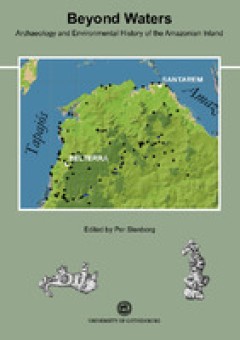
Beyond Waters
Ethnohistorical sources indicate that the Tapajó occupied a large area on the lower Amazon in the 16th century, the present day location of the city of Santarém. Curt Nimuendaju found 41 archaeological sites containing the same types of artefacts that were also found in the hinterland in the 1920s, attesting that the Tapajó dominated a much larger territory
- Edition
- -
- ISBN/ISSN
- 9789185245607
- Collation
- 129
- Series Title
- -
- Call Number
- -
 Computer Science, Information & General Works
  Philosophy & Psychology
  Religion
  Social Sciences
  Language
  Pure Science
  Applied Sciences
  Art & Recreation
  Literature
  History & Geography