Filter by

Chapter Systematizing Virtual Reconstruction of Lost or Never Built Architect…
The volume, dedicated to the 44th International Conference of the Italian Union for Drawing, investigates the theme of ‘Transitions’, which particularly effectively represents our time and the current condition of the discipline of Drawing. The term, beyond its generic meaning of an intermediate stage in a process in which a condition changes from one state to another, has always been used …
- Edition
- -
- ISBN/ISSN
- 9788835155119
- Collation
- -
- Series Title
- -
- Call Number
- -
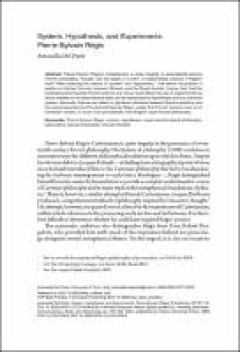
Chapter System, Hypothesis, and Experiments: Pierre-Sylvain Régis
Pierre-Sylvain Régis’s Cartesianism is quite singular in seventeenth-century French philosophy. Though, can we speak of a form of experimental science in Régis’s work? After exploring his notions of ‘system’ and ‘hypothesis’, I will define his position in relation to Claude Perrault, Jacques Rohault, and the Royal Society. I argue, first, that the contrasts which traverse French s…
- Edition
- -
- ISBN/ISSN
- -
- Collation
- -
- Series Title
- -
- Call Number
- -
Chapter System Engineering Method for System Design
- Edition
- -
- ISBN/ISSN
- -
- Collation
- -
- Series Title
- -
- Call Number
- -
- Edition
- -
- ISBN/ISSN
- -
- Collation
- -
- Series Title
- -
- Call Number
- -
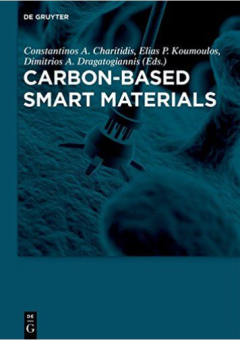
Carbon-Based Smart Materials
Menyajikan teknologi dan konsep kunci untuk menghasilkan bahan pintar yang sesuai dan struktur cerdas untuk penginderaan, teknologi informasi dan komunikasi, aplikasi biomedis (pemberian obat, terapi hipertermia), penyembuhan diri, memori fleksibel, dan teknologi konstruksi. Perkembangan baru dari proses produksi yang ramah lingkungan, hemat biaya, dan dapat diskalakan dibahas oleh para ahli di…
- Edition
- -
- ISBN/ISSN
- 9783110479133
- Collation
- 1 online resource ( 182 p.)
- Series Title
- -
- Call Number
- 620.112 CHA c
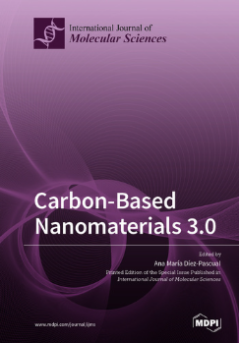
Carbon-Based Nanomaterials 3.0
Bahan nano berbasis karbon adalah alat luar biasa dengan sifat luar biasa (kekuatan mekanik tinggi, konduktivitas tinggi, sifat optik yang menarik, keserbagunaan kimiawi, dll.). Di antara mereka, graphene dan tabung nano karbon adalah yang paling sering digunakan dari sudut pandang praktis. Bahan nano karbon ini dapat disintesis dengan beberapa metode, termasuk pendekatan top–down dan bottomâ…
- Edition
- -
- ISBN/ISSN
- 9783036565507
- Collation
- 1 online resource (224 p.)
- Series Title
- -
- Call Number
- 620.115 PAS c
Carbon-Based Nanomaterials 2.0
Cetak ulang ini mengumpulkan kontribusi dari para peneliti terkenal di bidangnya, menawarkan kumpulan kemajuan terkini dalam persiapan, karakterisasi, dan penerapan bahan nano berbasis karbon, termasuk tabung nano karbon, fullerene, dan graphene serta turunannya. Penyelidikan pada jenis bahan nano ini telah meningkat luar biasa selama beberapa tahun terakhir berkat sifat mekanik, termal, optik,…
- Edition
- -
- ISBN/ISSN
- 9783036565484
- Collation
- online resource ( 250 p.)
- Series Title
- -
- Call Number
- 620.115 PAS c
Carbon-Based Materials
Bahan karbon baru dengan sifat mekanik, listrik, kimia, dan optik yang lebih baik diprediksi dan dianggap sangat menjanjikan untuk aplikasi praktis. Bahan berbasis karbon dalam bentuk film, kain, aerogel, atau bahan mikrostruktur dikenal dengan luas permukaan dan volume pori yang besar, bobot yang ringan, dan morfologi struktural yang sangat beragam. Struktur unik seperti itu kemudian dapat dig…
- Edition
- -
- ISBN/ISSN
- 9783036534404
- Collation
- 1 online resource ( 192 p.)
- Series Title
- -
- Call Number
- 620.19 BAI c
Carbon Fibers
Hebatnya, struktur yang benar-benar baru masih ditemukan untuk bahan yang terbuat dari satu elemen: karbon. Mungkin ada 'revolusi' dalam bahan khusus karbon. Memang, baru-baru ini, dua hadiah Nobel diberikan untuk bentuk karbon baru: untuk fullerene pada tahun 1996, dan untuk graphene pada tahun 2010. Dan keajaiban dan keindahan tabung nano karbon telah menarik perhatian dunia ilmiah selama leb…
- Edition
- -
- ISBN/ISSN
- 9783906980706
- Collation
- online resource ( 192 p.)
- Series Title
- -
- Call Number
- 620.19 FIB c
Carbohydrates: The yet to be tasted sweet spot of immunity
Karbohidrat adalah bio-molekul yang sangat melimpah; mereka ada di semua permukaan sel mamalia serta di permukaan sel bakteri. Pada mamalia, sebagian besar protein yang disekresikan adalah glikosilasi, dengan komponen glikan terdiri dari sejumlah besar massa glikoprotein. Meskipun, bertahun-tahun yang lalu peristiwa pengenalan karbohidrat-protein ditunjukkan sebagai terlibat dalam pengenalan di…
- Edition
- -
- ISBN/ISSN
- 9782889196258
- Collation
- online resource ( 93 p.)
- Series Title
- Frontiers dalam Imunologi
- Call Number
- 616.079 COO c

Chapter 5 Upland leaders of the internal frontier and Ming governance of west…
This book examines how the Ming state transformed the multi-ethnic society of Yunnan into a province. Yunnan had remained outside the ambit of central government when ruled by the Dali kingdom, 937-1253, and its foundation as a province by the Yuan regime in 1276 did not disrupt Dali kingdom style political, social and religious institutions. It was the Ming state in the fourteenth to seventeen…
- Edition
- -
- ISBN/ISSN
- 9780367353360
- Collation
- 42 hlm.
- Series Title
- -
- Call Number
- -
 Computer Science, Information & General Works
  Philosophy & Psychology
  Religion
  Social Sciences
  Language
  Pure Science
  Applied Sciences
  Art & Recreation
  Literature
  History & Geography