Filter by

Wartime Schooling and Education Policy in the Second World War Catholic Educ…
This book deals with the development of private secondary schooling during the Second World War in Belgium. It focuses on how the German occupier used education to gain acceptance of the regime, and discusses the attitudes of Belgian education authorities, schools, teachers and pupils towards the German occupation. Suggesting that the occupation forced Belgian education authorities, such as the…
- Edition
- -
- ISBN/ISSN
- 978-1-137-52011-1
- Collation
- -
- Series Title
- -
- Call Number
- -

Reformed theology today: Practical-theological, missiological and ethical per…
This book is unique and of great importance for theologians from diverse traditions but who all share the relevance of the academic Reformed discourse. The book focuses on, and forms part of celebrating 500 years since the start of the Reformation during the 16th century. Its purpose is to commemorate the quincentenary anniversary of the Reformation in Europe and to indicate the way in which th…
- Edition
- Ed. 1
- ISBN/ISSN
- 9781928396307
- Collation
- 241
- Series Title
- -
- Call Number
- 201.178 REF r
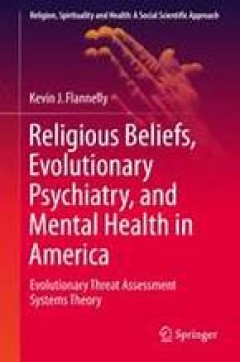
Religious Beliefs, Evolutionary Psychiatry, and Mental Health in America
This book provides a new perspective on the association between religious beliefs and mental health. The book is divided into five parts, the first of which traces the development of theories of organic evolution in the cultural and religious context before Charles Darwin. Part II describes the major evolutionary theories that Darwin proposed in his three books on evolution, and the religious, …
- Edition
- 1
- ISBN/ISSN
- 978-3-319-52488-7
- Collation
- Kedokteran
- Series Title
- Religion, Spirituality and Health: A Social Scientific Approach
- Call Number
- 617

Kimbanguism: An African Understanding of the Bible
From the early days of Christianity in Sub-Saharan Africa, a Eurocentric view of Christian teaching was a primary tool in the subjugation and domination of native populations. Since 1921 Kimbanguism, an African Initiated Church, has advocated a reconstruction of Blackness by appropriating the parameters of Christian identity. The prophet Simon Kimbangu, the founder of the movement, has inspired…
- Edition
- Ed. 1
- ISBN/ISSN
- 9780271079707
- Collation
- -
- Series Title
- Signifying (on) Scriptures
- Call Number
- 290 MOK k
Reassembling Democracy: Ritual as Cultural Resource
Diverse processes of democratic participation - and exclusion - are closely bound by ritual acts and complexes. This collection is the result of collaborations and conversations between international researchers who have focused on the use of those cultural resources identifiable as “ritual” as they reassemble democracy. The main question integrating the collection concerns the ways in whic…
- Edition
- -
- ISBN/ISSN
- 9781350123014
- Collation
- -
- Series Title
- -
- Call Number
- -

Domestic Devotions in the Early Modern World
This volume sets out to explore the world of domestic devotions and is premised on the assumption that the home was a central space of religious practice and experience throughout the early modern world. The contributions to this book, which deal with themes dating from the fifteenth to the eighteenth century, tell of the intimate relationship between humans and the sacred within the walls of t…
- Edition
- Ed. 1
- ISBN/ISSN
- 9789004375888
- Collation
- 378
- Series Title
- Intersections, 59/2
- Call Number
- 200 DOM d
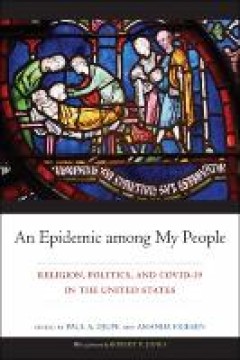
An Epidemic among My People Religion, Politics, and COVID-19 in the United S…
The pandemic presented religion as a paradox: faith is often crucial for helping people weather life’s troubles and make difficult decisions, but how can religion continue to deliver these benefits and provide societal structure without social contact? The topical volume, An Epidemic among My People explains how the COVID-19 pandemic stress tested American religious communities and created a …
- Edition
- Ed. 1
- ISBN/ISSN
- 9781439923399, 9781439923405
- Collation
- -
- Series Title
- -
- Call Number
- 200.2 EPI e

Handbook of Leaving Religion
The Handbook of Leaving Religion introduces a neglected field of research with the aim to outline previous and contemporary research, and suggest how the topic of leaving religion should be studied in the future. The handbook consists of three sections covering: 1) Major debates about leaving religion; 2) Case studies and empirical insights; and 3) Theoretical and methodological approaches. Sec…
- Edition
- Ed. 1
- ISBN/ISSN
- 9789004331471
- Collation
- -
- Series Title
- -
- Call Number
- 200.2 HAN h

Interpreting and Living God's Law at Qumran: Migsat Ma'ase Ha-Torah, Some of …
The text Miq?at Ma?a?e Ha-Torah, Some of the Works of the Torah (4QMMT), is one of the most interesting texts among the famous Dead Sea Scrolls discovered near the settlement of Khirbet Qumran and its vicinity in the middle of the twentieth century and by now published in full. It is a writing in the form of a letter by an unknown author to an equally unknown addressee, written in second person…
- Edition
- Ed. 1
- ISBN/ISSN
- 9783161553059, 9783161597060
- Collation
- -
- Series Title
- -
- Call Number
- 200.2 INT i
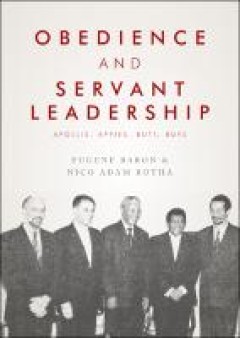
Obedience and Servant Leadership: Apollis, Appies, Buti, Buys
In celebrating a quarter of a century of the Uniting Reformed Church in Southern Africa (URSCA) (1994 2019), quite a few well-organised activities and events took place. These activities reflect a mix of serious academic seminars and liturgical celebrations of which the ones in the Cape, both in Belhar and at the University of the Western Cape (UWC) warrant special mention. In his sermon based …
- Edition
- Ed. 1
- ISBN/ISSN
- 9781928424772, 9781928424765
- Collation
- 284
- Series Title
- -
- Call Number
- 221 OBE o
 Computer Science, Information & General Works
 Philosophy & Psychology
 Religion
 Social Sciences
 Language
 Pure Science
 Applied Sciences
 Art & Recreation
 Literature
 History & Geography