Filter by

The Undiscovered Country Essays in Canadian Intellectual Culture
In this sequence of essays, Ian Angus engages with themes of identity, power, and the nation as they emerge in contemporary English Canadian philosophical thought, seeking to prepare the groundwork for a critical theory of neoliberal globalization. The essays are organized into three parts. The opening part offers a nuanced critique of the Hegelian confidence and progressivism that has come to …
- Edition
- -
- ISBN/ISSN
- 9781927356326.01
- Collation
- -
- Series Title
- -
- Call Number
- 306 pages

To Know Our Many Selves From the Study of Canada to Canadian Studies
To Know Our Many Selves profiles the history of Canadian Studies, which began as early as the 1840s with the Study of Canada. Professor Dirk Hoerder discusses this comprehensive examination of culture by highlighting its unique interdisciplinary approach, which included both sociological and political angles. Years later, as the study of other ethnicities was added to the cultural story of Cana…
- Edition
- -
- ISBN/ISSN
- 9781897425725.01
- Collation
- -
- Series Title
- -
- Call Number
- 450 pages

Sociocultural Systems Principles of Structure and Change
Macrosociology—the study of large-scale social structures and the fundamental principles of social organization—was the style of sociology practiced by the founders of the discipline. Today, the social theories of Karl Marx, Max Weber, Émile Durkheim, and Herbert Spencer (among others) are commonly studied as part of the history of the field, but, although the macrosociological approach th…
- Edition
- -
- ISBN/ISSN
- 9781927356203.01
- Collation
- -
- Series Title
- -
- Call Number
- 6 x 9, 404 pages
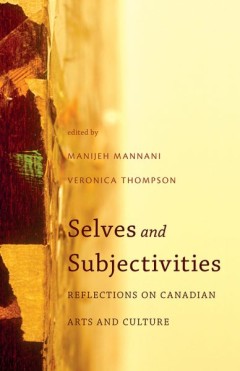
Selves and Subjectivities Reflections on Canadian Arts and Culture
Long a topic of intricate political and social debate, Canadian identity has come to be understood as fragmented, amorphous, and unstable, a multifaceted and contested space only tenuously linked to traditional concepts of the nation. As Canadians, we are endlessly defining ourselves, seeking to locate our sense of self in relation to some Other. By examining how writers and performers have con…
- Edition
- -
- ISBN/ISSN
- 9781926836492.01
- Collation
- -
- Series Title
- -
- Call Number
- 275 pages

Family Issues on Marriage, Divorce, and Older Adults in Japan With Special A…
This book provides insightful sociological analyses of Japanese demography and families, paying attention not only to national average data, but also to regional variations and community level analyses. In analyzing Japanese family issues such as demographic changes, courtship and marriage, international marriage, divorce, late-life divorce, and the elderly living alone, this book emphasizes th…
- Edition
- -
- ISBN/ISSN
- 978-981-287-185-5
- Collation
- XIX, 184
- Series Title
- -
- Call Number
- -

Imperfection
Known for his exploration of the relationship between Buddhism and violent ethnic conflict in modern Sri Lanka, as well as his contribution to the study of Northern Ireland and the complex relationships among religion, literature, and ethnicity, Grant provides the reader with an analysis of the widespread rise of religious extremism across the globe. Referencing Plato, Van Gogh, Jesus, and the …
- Edition
- -
- ISBN/ISSN
- 9781926836751.01
- Collation
- -
- Series Title
- Cultural Dialectics
- Call Number
- 240 pages

Without Apology
Without Apology seeks to address this issue by gathering the voices of activists, feminists, and scholars as well as abortion providers and clinic support staff alongside the stories of women whose experience with abortion is more personal. With the particular aim of moving beyond the polarizing rhetoric that has characterized the issue of abortion and reproductive justice for so long, Without …
- Edition
- -
- ISBN/ISSN
- 9781771991599.01
- Collation
- -
- Series Title
- -
- Call Number
- 366 pages

We Are Coming Home Repatriation and the Restoration of Blackfoot Cultural Co…
In 1990, Gerald Conaty was hired as senior curator of ethnology at the Glenbow Museum, with the particular mandate of improving the museum’s relationship with Aboriginal communities. That same year, the Glenbow had taken its first tentative steps toward repatriation by returning sacred objects to First Nations’ peoples. These efforts drew harsh criticism from members of the provincial gover…
- Edition
- -
- ISBN/ISSN
- 9781771990172.01
- Collation
- -
- Series Title
- -
- Call Number
- 304 pages
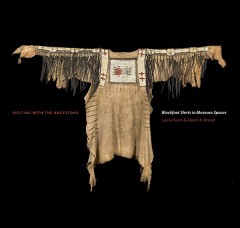
Visiting With the Ancestors Blackfoot Shirts in Museum Spaces
In 2010, five magnificent Blackfoot shirts, now owned by the University of Oxford’s Pitt Rivers Museum, were brought to Alberta to be exhibited at the Glenbow Museum, in Calgary, and the Galt Museum, in Lethbridge. The shirts had not returned to Blackfoot territory since 1841, when officers of the Hudson’s Bay Company acquired them. The shirts were later transported to England, where they h…
- Edition
- -
- ISBN/ISSN
- 9781771990370.01
- Collation
- -
- Series Title
- -
- Call Number
- 10.5 x 10, 232 pages

The Undiscovered Country Essays in Canadian Intellectual Culture
In this sequence of essays, Ian Angus engages with themes of identity, power, and the nation as they emerge in contemporary English Canadian philosophical thought, seeking to prepare the groundwork for a critical theory of neoliberal globalization. The essays are organized into three parts. The opening part offers a nuanced critique of the Hegelian confidence and progressivism that has come to …
- Edition
- -
- ISBN/ISSN
- 9781927356326.01
- Collation
- -
- Series Title
- Cultural Dialectics
- Call Number
- 306 pages
 Computer Science, Information & General Works
  Philosophy & Psychology
  Religion
  Social Sciences
  Language
  Pure Science
  Applied Sciences
  Art & Recreation
  Literature
  History & Geography