Filter by

Reading the Entrails An Alberta Ecohistory
Before the fall of Imperial Rome, priests cast the guts of sacrificial animals on the temple floor, claiming to be able to divine the future from these entrails. By probing the remains of Alberta’s past sacrifices (reading the entrails), the author believes we might dimly see an apparition of Alberta’s future. This controversial book vividly portrays the history of land and life in Alberta …
- Edition
- -
- ISBN/ISSN
- 9781552386712
- Collation
- -
- Series Title
- -
- Call Number
- -
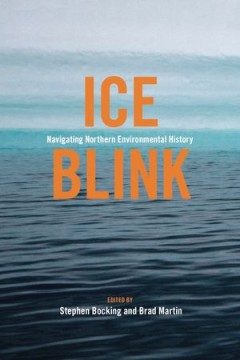
Ice Blink Navigating Northern Environmental History
Northern Canada’s distinctive landscapes, its complex social relations and the contested place of the North in contemporary political, military, scientific and economic affairs have fueled recent scholarly discussion. At the same time, both the media and the wider public have shown increasing interest in the region. This timely volume extends our understanding of the environmental history of …
- Edition
- -
- ISBN/ISSN
- 9781552388556
- Collation
- -
- Series Title
- -
- Call Number
- -

Environmental Activism on the Ground
Environmental Activism on the Ground draws upon a wide range of interdisciplinary scholarship to examine small scale, local environmental activism, paying particular attention to Indigenous experiences. It illuminates the questions that are central to the ongoing evolution of the environmental movement while reappraising the history and character of late twentieth and early twenty-first environ…
- Edition
- -
- ISBN/ISSN
- 9781773850054
- Collation
- -
- Series Title
- -
- Call Number
- -
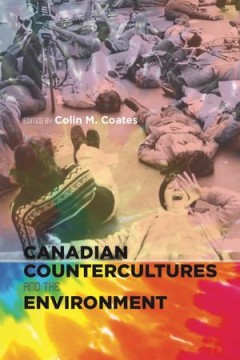
Canadian Countercultures and the Environment
Studies of the radical environmental politics of the 1960s have tended to downplay the extent to which much of that countercultural intellectual and social ferment continued into the 1970s and 1980s. Canadian Countercultures and the Environment adds to our knowledge of this understudied period. This collection contributes a sustained analysis of the beginning of major environmental debates in t…
- Edition
- -
- ISBN/ISSN
- 9781552388150
- Collation
- -
- Series Title
- -
- Call Number
- -

Extractive Industries
New initiatives recognize that resource wealth can provide a means, when properly used, for poorer nations to decisively break with poverty by diversifying economies and funding development spending. Extractive Industries: The Management of Resources as a Driver of Sustainable Development explores the challenges and opportunities facing developing countries in using oil, gas, and mining to achi…
- Edition
- -
- ISBN/ISSN
- 9780198817369
- Collation
- -
- Series Title
- -
- Call Number
- -

More Crop Per Drop
This volume is an analytical summary and a critical synthesis of research at the International Water Management Institute over the past decade under its evolving research paradigm known popularly as 'more crop per drop'. The research synthesized here covers the full range of issues falling in the larger canvas of water-food-health-environment interface. Besides its immediate role in sharing kno…
- Edition
- -
- ISBN/ISSN
- 9781780402284
- Collation
- -
- Series Title
- -
- Call Number
- -

Global Trends & Challenges in Water Science, Research and Management
The global water challenge is unprecedented. Climate change, rapid urbanisation, increasing consumption and demand for food and energy, and changing land use, will leave few countries and communities unaffected. The demand for water and sanitation services is greater than it has ever been, and water has never been higher on the agenda. The Sustainable Development Goals (SDGs) not only provide a…
- Edition
- -
- ISBN/ISSN
- -
- Collation
- -
- Series Title
- -
- Call Number
- -
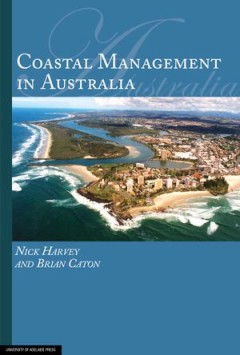
Coastal Management in Australia
The coast is one of our most valuable assets but how is it being treated and what is being done to look after it? Coastal Management in Australia is the first book to provide a comprehensive overview of this important subject. Interesting case studies are used to illustrate human impact on coastal processes as well as demonstrating the global significance of the coast and the international impe…
- Edition
- -
- ISBN/ISSN
- 9780980723038
- Collation
- -
- Series Title
- -
- Call Number
- -
Adaptive Collaborative Management in Forest Landscapes
This book examines the value of Adaptive Collaborative Management for facilitating learning and collaboration with local communities and beyond, utilising detailed studies of forest landscapes and communities. Many forest management proposals are based on top-down strategies, such as the Million Tree Initiatives, Forest Landscape Restoration (FLR) and REDD+, often neglecting local communities. …
- Edition
- -
- ISBN/ISSN
- 9781000483017, 1000483010
- Collation
- -
- Series Title
- -
- Call Number
- -
Landscape Experiences As a Cultural Ecosystem Service in a Nordic Context
Cultural ecosystem services in the form of experiences derived from landscapes are potentially important, but often overlooked. Given the large and unprecedented landscape changes many of the Nordic countries are undergoing, there is a need to find ways of including people’s preferences and the value of landscape impacts in policy assessments and decision-making processes. The project aim has…
- Edition
- -
- ISBN/ISSN
- 9789289342391
- Collation
- -
- Series Title
- -
- Call Number
- -
 Computer Science, Information & General Works
 Philosophy & Psychology
 Religion
 Social Sciences
 Language
 Pure Science
 Applied Sciences
 Art & Recreation
 Literature
 History & Geography