Filter by

The Road to Universal Logic Festschrift for 50th Birthday of Jean-Yves Bézi…
This is the first volume of a collection of papers in honor of the fiftieth birthday of Jean-Yves Béziau. These 25 papers have been written by internationally distinguished logicians, mathematicians, computer scientists, linguists and philosophers, including Arnon Avron, John Corcoran, Wilfrid Hodges, Laurence Horn, Lloyd Humbertsone, Dale Jacquette, David Makinson, Stephen Read, and Jan WoleÅ…
- Edition
- -
- ISBN/ISSN
- 978-3-319-10193-4
- Collation
- -
- Series Title
- -
- Call Number
- -

New Perspectives on the History of Life Sciences and Agriculture
This volume explores problems in the history of science at the intersection of life sciences and agriculture, from the mid-eighteenth to the mid-twentieth century. Taking a comparative national perspective, the book examines agricultural practices in a broad sense, including the practices and disciplines devoted to land management, forestry, soil science, and the improvement and management of c…
- Edition
- 1
- ISBN/ISSN
- 1385-0180
- Collation
- VII, 509
- Series Title
- Archimedes
- Call Number
- -

G.W. Leibniz, Interrelations between Mathematics and Philosophy
Up to now there have been scarcely any publications on Leibniz dedicated to investigating the interrelations between philosophy and mathematics in his thought. In part this is due to the previously restricted textual basis of editions such as those produced by Gerhardt. Through recent volumes of the scientific letters and mathematical papers series of the Academy Edition scholars have obtained …
- Edition
- -
- ISBN/ISSN
- 978-94-017-9664-4
- Collation
- -
- Series Title
- -
- Call Number
- -

New Mathematical Cuneiform Texts
This monograph presents in great detail a large number of both unpublished and previously published Babylonian mathematical texts in the cuneiform script. It is a continuation of the work A Remarkable Collection of Babylonian Mathematical Texts (Springer 2007) written by Jöran Friberg, the leading expert on Babylonian mathematics. Focussing on the big picture, Friberg explores in this book …
- Edition
- 1
- ISBN/ISSN
- 978-3-319-44596-0
- Collation
- XVII, 553
- Series Title
- -
- Call Number
- -

New Insights From Recent Studies in Historical Astronomy: Following in the Fo…
This book contains papers from a conference held to celebrate the 70th birthday of one of the world’s foremost astronomical historians, Professor F. Richard Stephenson, the latest recipient of the American Astronomical Society’s highest award for research in astronomical history, the LeRoy Doggett Prize. Reflecting Professor Stephenson’s extensive research portfolio, this book brings toge…
- Edition
- 1
- ISBN/ISSN
- 978-3-319-07613-3
- Collation
- XXX, 350
- Series Title
- Astrophysics and Space Science Proceedings
- Call Number
- -

The West and Beyond New Perspectives on an Imagined Region
The West and Beyond explores the state of Western Canadian history, showcasing the research interests of a new generation of scholars while charting new directions for the future and stimulating further interrogation of our past. This dynamic collection encourages dialogue among generations of historians of the West, and among practitioners of diverse approaches to the past. It also reflects a …
- Edition
- Alvin Finkel, Sarah Carter, and Peter Fortna
- ISBN/ISSN
- 9781897425800.01
- Collation
- -
- Series Title
- The West Unbound: Social and Cultural Studies
- Call Number
- 461 pages

We Are Coming Home Repatriation and the Restoration of Blackfoot Cultural Co…
In 1990, Gerald Conaty was hired as senior curator of ethnology at the Glenbow Museum, with the particular mandate of improving the museum’s relationship with Aboriginal communities. That same year, the Glenbow had taken its first tentative steps toward repatriation by returning sacred objects to First Nations’ peoples. These efforts drew harsh criticism from members of the provincial gover…
- Edition
- Gerald T. Conaty
- ISBN/ISSN
- 9781771990172.01
- Collation
- -
- Series Title
- -
- Call Number
- -
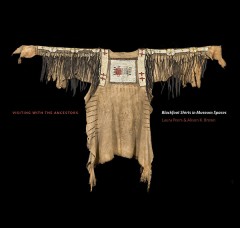
Visiting With the Ancestors Blackfoot Shirts in Museum Spaces
In 2010, five magnificent Blackfoot shirts, now owned by the University of Oxford’s Pitt Rivers Museum, were brought to Alberta to be exhibited at the Glenbow Museum, in Calgary, and the Galt Museum, in Lethbridge. The shirts had not returned to Blackfoot territory since 1841, when officers of the Hudson’s Bay Company acquired them. The shirts were later transported to England, where they h…
- Edition
- -
- ISBN/ISSN
- 9781771990370.01
- Collation
- -
- Series Title
- -
- Call Number
- 10.5 x 10, 232 pages
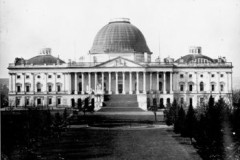
U.S. History I
covers the chronological history of the United States from before Discovery through Reconstruction
- Edition
- -
- ISBN/ISSN
- -
- Collation
- -
- Series Title
- -
- Call Number
- 973 VER u

Views From Fort Battleford Constructed Visions of an Anglo-Canadian West
The Myth of the Mounties as neutral arbiters between Aboriginal peoples and incoming settlers remains a cornerstone of the western Canadian narrative of a peaceful frontier experience that differs dramatically from its American equivalent. Walter Hildebrandt eviscerates this myth, placing the NWMP and early settlement in an international framework of imperialist plunder and the imposition of co…
- Edition
- -
- ISBN/ISSN
- 9781897425459
- Collation
- -
- Series Title
- -
- Call Number
- -
 Computer Science, Information & General Works
  Philosophy & Psychology
  Religion
  Social Sciences
  Language
  Pure Science
  Applied Sciences
  Art & Recreation
  Literature
  History & Geography