Filter by

Distributed reduplication
A convincing account of reduplicative phenomena has been a longstanding problem for rule-based theories of morphophonology. Many scholars believe that derivational phonology is incapable in principle of analyzing reduplication. In Distributed Reduplication, John Frampton demonstrates the adequacy of rule-based theories by providing a general account within that framework and illustrating his pr…
- Edition
- -
- ISBN/ISSN
- 9780262258777
- Collation
- 1 online resource (xiv, 228 pages) :illustrations.
- Series Title
- -
- Call Number
- -

Moral psychology, The Neuroscience of Morality: Emotion, Brain Disorders, and…
"For much of the twentieth century, philosophy and science went their separate ways. In moral philosophy, fear of the so-called naturalistic fallacy kept moral philosophers from incorporating developments in biology and psychology. Since the 1990s, however, many philosophers have drawn on recent advances in cognitive psychology, brain science, and evolutionary psychology to inform their work. T…
- Edition
- -
- ISBN/ISSN
- -
- Collation
- -
- Series Title
- -
- Call Number
- -

Access denied : Access Denied:
- Edition
- -
- ISBN/ISSN
- -
- Collation
- 1 online resource (xv, 449 pages) :
- Series Title
- -
- Call Number
- -
- Edition
- -
- ISBN/ISSN
- -
- Collation
- 1 online resource (xv, 449 pages) :
- Series Title
- -
- Call Number
- -

The locative syntax of experiencers
Experiencers—grammatical participants that undergo a certain psychological change or are in such a state—are grammatically special. As objects (John scared Mary; loud music annoys me), experiencers display two peculiar clusters of nonobject properties across different languages: their syntax is often typical of oblique arguments and their semantic scope is typical of subjects. In The Locati…
- Edition
- -
- ISBN/ISSN
- 9780262259026
- Collation
- 1 online resource (vi, 165 pages) :illustrations.
- Series Title
- -
- Call Number
- -
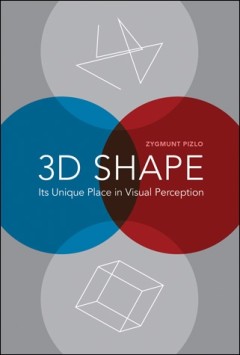
3D shape : Its Unique Place in Visual Perception
A new account of how we perceive the 3D shapes of objects and how to design machines that can see shapes the way we do.
- Edition
- -
- ISBN/ISSN
- -
- Collation
- 1 online resource (xiv, 278 pages) : illustrations
- Series Title
- -
- Call Number
- -
In praise of reason / In Praise of Reason:
- Edition
- -
- ISBN/ISSN
- -
- Collation
- 1 online resource (xii, 166 pages)
- Series Title
- -
- Call Number
- -
- Edition
- -
- ISBN/ISSN
- -
- Collation
- 1 online resource (xii, 166 pages)
- Series Title
- -
- Call Number
- -

Advances in neural information processing systems 19 Proceedings of the 2006 …
The annual Neural Information Processing Systems (NIPS) conference is the flagship meeting on neural computation and machine learning. This volume contains the papers presented at the December 2006 meeting, held in Vancouver.
- Edition
- -
- ISBN/ISSN
- -
- Collation
- 1 online resource (xxiv, 1643 pages) : illustrations.
- Series Title
- -
- Call Number
- -

Sport 2.0 :
Ramifications of the convergence of sports and digital technology, from athlete and spectator experience to the role of media innovation at the Olympics.
- Edition
- -
- ISBN/ISSN
- -
- Collation
- 1 online resource (x, 274 pages)
- Series Title
- -
- Call Number
- -

The configuration space method for kinematic design of mechanisms / Kinematic…
A novel algorithmic approach to mechanism design based on a geometric representation of kinematic function called configuration space partitions.;"This book presents the configuration space method for computer-aided design of mechanisms with changing part contacts. Configuration space is a complete and compact geometric representation of part motions and part interactions that supports the core…
- Edition
- -
- ISBN/ISSN
- -
- Collation
- 1 online resource (xiv, 195 pages) :
- Series Title
- -
- Call Number
- -

From Darwin to Derrida: Selfish Genes, Social Selves, and the Meanings of Life
How the meaningless process of natural selection produces purposeful beings who find meaning in the world. In From Darwin to Derrida, evolutionary biologist David Haig explains how a physical world of matter in motion gave rise to a living world of purpose and meaning. Natural selection, a process without purpose, gives rise to purposeful beings who find meaning in the world. The key to this…
- Edition
- -
- ISBN/ISSN
- 9780262358026
- Collation
- -
- Series Title
- -
- Call Number
- -
 Computer Science, Information & General Works
 Philosophy & Psychology
 Religion
 Social Sciences
 Language
 Pure Science
 Applied Sciences
 Art & Recreation
 Literature
 History & Geography