Filter by
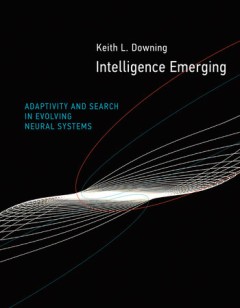
Intelligence emerging : adaptivity and search in evolving neural systems
"Emergence--the formation of global patterns from solely local interactions--is a frequent and fascinating theme in the scientific literature both popular and academic. In this book, Keith Downing undertakes a systematic investigation of the widespread (if often vague) claim that intelligence is an emergent phenomenon. Downing focuses on neural networks, both natural and artificial, and how the…
- Edition
- -
- ISBN/ISSN
- 0262328666
- Collation
- 1 online resource (xxii, 475 pages) :illustrations
- Series Title
- -
- Call Number
- -

Engineers and the making of the Francoist regime
In the 20th century, science and technology became central to territorial transformation and in turn to state building. This was no less true for the Francoist regime. Engineers were not just working 'under' the dictatorship, but became active participants within it. This book traces concrete material objects in their way from laboratories onto the Spanish landscape. The material history of the…
- Edition
- -
- ISBN/ISSN
- 9780262323222
- Collation
- 1 online resource (xiii, 298 pages) :illustrations, maps.
- Series Title
- -
- Call Number
- -

Cultural evolution : society, technology, language, and religion
Over the past few decades, a growing body of research has emerged from a variety of disciplines to highlight the importance of cultural evolution in understanding human behavior. Wider application of these insights, however, has been hampered by traditional disciplinary boundaries. To remedy this, in this volume leading researchers from theoretical biology, developmental and cognitive psycholog…
- Edition
- -
- ISBN/ISSN
- 9781461950356
- Collation
- 1 online resource (xi, 485 pages) :illustrations.
- Series Title
- -
- Call Number
- -
Documenting and Assessing Learning in Informal and Media-Rich Environments
An extensive review of the literature on learning assessment in informal settings, expert discussion of key issues, and a new model for good assessment practice. Today educational activities take place not only in school but also in after-school programs, community centers, museums, and online communities and forums. The success and expansion of these out-of-school initiatives depends on our…
- Edition
- -
- ISBN/ISSN
- 9780262328692
- Collation
- -
- Series Title
- -
- Call Number
- -
An introduction to neural networks
An Introduction to Neural Networks falls into a new ecological niche for texts. Based on notes that have been class-tested for more than a decade, it is aimed at cognitive science and neuroscience students who need to understand brain function in terms of computational modeling, and at engineers who want to go beyond formal algorithms to applications and computing strategies. It is the only cur…
- Edition
- -
- ISBN/ISSN
- 9780262315883
- Collation
- 1 online resource (xi, 650 pages) : illustrations
- Series Title
- -
- Call Number
- 001 AND i

A History of Chile, 1808–2002
A History of Chile chronicles the nation's political, social, and economic evolution from its independence until the early years of the Lagos regime. Employing primary and secondary materials, it explores the growth of Chile's agricultural economy, during which the large landed estates appeared; the nineteenth-century wheat and mining booms; the rise of the nitrate mines; their replacement by c…
- Edition
- -
- ISBN/ISSN
- 9780511991189
- Collation
- -
- Series Title
- Cambridge Latin American Studies
- Call Number
- -
An introduction to natural computation
This book provides a comprehensive introduction to the computational material that forms the underpinnings of the currently evolving set of brain models. It is now clear that the brain is unlikely to be understood without recourse to computational theories. The theme of An Introduction to Natural Computation is that ideas from diverse areas such as neuroscience, information theory, and optim…
- Edition
- -
- ISBN/ISSN
- 0585087660
- Collation
- 1 online resource (xxii, 307 pages) :illustrations.
- Series Title
- -
- Call Number
- 001 BAL i

An introduction to fuzzy sets : analysis and design
The concept of fuzzy sets is one of the most fundamental and influential tools in computational intelligence. Fuzzy sets can provide solutions to a broad range of problems of control, pattern classification, reasoning, planning, and computer vision. This book bridges the gap that has developed between theory and practice. The authors explain what fuzzy sets are, why they work, when they should …
- Edition
- -
- ISBN/ISSN
- 9780262281348
- Collation
- 1 online resource (xxiv, 465 pages) :illustrations.
- Series Title
- -
- Call Number
- 001 PED i

An introduction to genetic algorithms
"A Bradford book."Genetic algorithms have been used in science and engineering as adaptive algorithms for solving practical problems and as computational models of natural evolutionary systems. This brief, accessible introduction describes some of the most interesting research in the field and also enables readers to implement and experiment with genetic algorithms on their own. It focuses in d…
- Edition
- -
- ISBN/ISSN
- 9780262280013
- Collation
- 1 online resource (viii, 205 pages) :illustrations.
- Series Title
- -
- Call Number
- 510 MIT i

A History of Chile 1808–2018
As Chile has continued to grow and prosper in the twenty-first century, this new edition of the definitive history of the country brings the story of its political, social and cultural development up to date. It describes how Ricardo Lagos and Michelle Bachelet, both highly educated Socialists, modernized the country and integrated new interests into Chilean political life, and how the billiona…
- Edition
- -
- ISBN/ISSN
- 9781009170222
- Collation
- -
- Series Title
- Cambridge Latin American Studies
- Call Number
- -
 Computer Science, Information & General Works
 Philosophy & Psychology
 Religion
 Social Sciences
 Language
 Pure Science
 Applied Sciences
 Art & Recreation
 Literature
 History & Geography