Filter by

Visual Reconstruction
Visual Reconstruction presents a unified and highly original approach to the treatment of continuity in vision. It introduces, analyzes, and illustrates two new concepts. The first -- the weak continuity constraint -- is a concise, computational formalization of piecewise continuity. It is a mechanism for expressing the expectation that visual quantities such as intensity, surface color, and su…
- Edition
- -
- ISBN/ISSN
- 9780262255769
- Collation
- 1 online resource (225 pages) :illustrations.
- Series Title
- -
- Call Number
- -

The Environmental Humanities: A Critical Introduction
A concise overview of this multidisciplinary field, presenting key concepts, central issues, and current research, along with concrete examples and case studies. The emergence of the environmental humanities as an academic discipline early in the twenty-first century reflects the growing conviction that environmental problems cannot be solved by science and technology alone. This book offers…
- Edition
- -
- ISBN/ISSN
- 9780262342292
- Collation
- -
- Series Title
- -
- Call Number
- 004 DAU a

Computational Psychiatry: New Perspectives on Mental Illness
Psychiatrists and neuroscientists discuss the potential of computational approaches to address problems in psychiatry including diagnosis, treatment, and integration with neurobiology."Modern psychiatry is at a crossroads, as it attempts to balance neurological analysis with psychological assessment. Computational neuroscience offers a new lens through which to view such thorny issues as diagno…
- Edition
- -
- ISBN/ISSN
- 9780262337854
- Collation
- 1 online resource.
- Series Title
- -
- Call Number
- -

Vision how it works and what can go wrong
"Over the past fifty years, enormous progress has been made in understanding visual mechanisms and treating eye disorders. And yet the scientist is not always aware of the latest clinical advances and the clinician is often not up to date on the basic scientific discoveries. Writing in nontechnical language, John and Joseph Dowling, a neuroscientist and an ophthalmologist, examine vision from b…
- Edition
- -
- ISBN/ISSN
- 9780262333566
- Collation
- 1 online resource (xx, 204 pages) :illustrations
- Series Title
- -
- Call Number
- -

Spotify Teardown: Inside the Black Box of Streaming Music
An innovative investigation of the inner workings of Spotify that traces the transformation of audio files into streamed experience. Spotify provides a streaming service that has been welcomed as disrupting the world of music. Yet such disruption always comes at a price. Spotify Teardown contests the tired claim that digital culture thrives on disruption. Borrowing the notion of “teardownâ…
- Edition
- -
- ISBN/ISSN
- 9780262349680
- Collation
- -
- Series Title
- -
- Call Number
- -

Visual Space Perception: A Primer
A Bradford book."OCLC-licensed vendor bibliographic record.
- Edition
- -
- ISBN/ISSN
- 9780262275316
- Collation
- 1 online resource (xvi, 238 pages) :illustrations
- Series Title
- -
- Call Number
- -
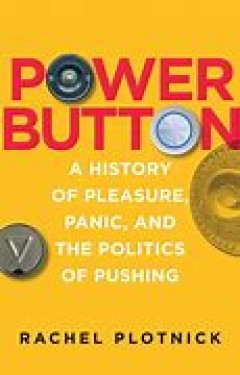
Power Button: A History of Pleasure, Panic, and the Politics of Pushing
Push a button and turn on the television; tap a button and get a ride; click a button and "like" something. The touch of a finger can set an appliance, a car, or a system in motion, even if the user doesn't understand the underlying mechanisms or algorithms. How did buttons become so ubiquitous? Why do people love them, loathe them, and fear them? In Power Button, Rachel Plotnick traces the ori…
- Edition
- -
- ISBN/ISSN
- 9780262347501
- Collation
- 1 online resource
- Series Title
- -
- Call Number
- -

Software design decoded 66 ways experts think
"What makes an expert software designer? It is more than experience or innate ability. Expert software designers have specific habits, learned practices, and observed principles that they apply deliberately during their design work. This book offers sixty-six insights, distilled from years of studying experts at work, that capture what successful software designers actually do to create great s…
- Edition
- -
- ISBN/ISSN
- 9780262337519
- Collation
- 1 online resource (66 pages) :illustrations.
- Series Title
- -
- Call Number
- -

Pesticide drift and the pursuit of environmental justice
"In this book, Jill Lindsey Harrison considers political conflicts over pesticide drift in California, using them to illuminate the broader problem and its potential solutions. The fact that pesticide pollution and illnesses associated with it disproportionately affect the poor and the powerless raises questions of environmental justice (and political injustice). Despite California's impressive…
- Edition
- -
- ISBN/ISSN
- 9780262298766
- Collation
- 1 online resource (xvii, 277 pages) :illustrations, maps.
- Series Title
- -
- Call Number
- -

The man who saw tomorrow :the life and inventions of Stanford R. Ovshinsky
The first full-length biography of a brilliant, self-taught inventor whose innovations in information and energy technology continue to shape our world.OCLC-licensed vendor bibliographic record.
- Edition
- -
- ISBN/ISSN
- 9780262345033
- Collation
- 1 online resource
- Series Title
- -
- Call Number
- -
 Computer Science, Information & General Works
 Philosophy & Psychology
 Religion
 Social Sciences
 Language
 Pure Science
 Applied Sciences
 Art & Recreation
 Literature
 History & Geography