Filter by

Thomas Mann's War: Literature, Politics, and the World Republic of Letters
In Thomas Mann's War, Tobias Boes traces how the acclaimed and bestselling author became one of America's most prominent anti-fascists and the spokesperson for a German cultural ideal that Nazism had perverted.Thomas Mann, winner of the 1929 Nobel Prize in literature and author of such world-renowned novels as Buddenbrooks and The Magic Mountain, began his self-imposed exile in the United State…
- Edition
- -
- ISBN/ISSN
- 9781501745010
- Collation
- -
- Series Title
- -
- Call Number
- -

Deleuze and the Passions
In recent years the humanities, social sciences and neuroscience have witnessed an ‘affective turn,’ especially in discourses around post-Fordist labor, economic and ecological crises, populism and identity politics, mental health, and political struggle. This new awareness would be unthinkable without the pioneering work of Gilles Deleuze, who replaced judgment with affect as the very mate…
- Edition
- -
- ISBN/ISSN
- 9780998237541
- Collation
- -
- Series Title
- -
- Call Number
- -

Critique of Sovereignty, Book 1
Using the Western tradition of metaphysical and political thought as a backdrop, Critique of Sovereignty (a work in 4 volumes) re-examines the concept of sovereignty in order to better understand why our ethical values and technical capacities often seem so divorced from our lived realities. On the one hand, ostensibly self-enclosed entities like the nation-state and the person are rhetorically…
- Edition
- -
- ISBN/ISSN
- 9780692282403
- Collation
- -
- Series Title
- -
- Call Number
- -

Continent. Year 1
continent. Year 1: A selection of issues 1.1-1.4 collects a variety of thoughts and tropes from the 2011 issues of continent., ranging from work on Greek poetry to deep brain recordings, from speculative realism to the fragments as a unit of prose, and from queer theory to mass murder. This collection presents the fruits of an intense collaboration throughout the different zones of the Academy
- Edition
- -
- ISBN/ISSN
- 9780615736891
- Collation
- -
- Series Title
- -
- Call Number
- -
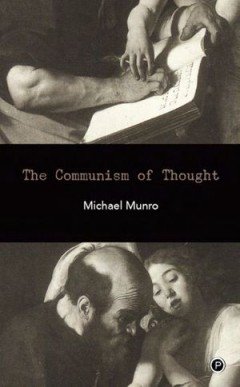
The Communism of Thought
The Communism of Thought takes as its point of departure a passage in a letter from Dionys Mascolo to Gilles Deleuze: “I have called this communism of thought in the past. And I placed it under the auspices of Hölderlin, who may have only fled thought because he was unable to live it: ‘The life of the spirit between friends, the thoughts that form in the exchange of words, by writing or in…
- Edition
- -
- ISBN/ISSN
- 9780615986968
- Collation
- -
- Series Title
- -
- Call Number
- -

Atopological Trilogy
Atopological Trilogy creates new concepts for Deleuze-Guattarian thought without any heed for sectarian, sermonising, or dutiful readings of the philosophers. In Part I of the trilogy, “Becoming-Sexual of the Sexual,” Aracagök demonstrates the ways in which quantum theory and the concept of “complementarity” inform Deleuze and Guattari’s thought, especially in relation to “becoming…
- Edition
- -
- ISBN/ISSN
- 9780692403723
- Collation
- -
- Series Title
- -
- Call Number
- -

Rancière's Sentiments
In Rancière’s Sentiments Davide Panagia explores Jacques Rancière’s aesthetics of politics as it informs his radical democratic theory of participation. Attending to diverse practices of everyday living and doing—of form, style, and scenography—in Rancière’s writings, Panagia characterizes Rancière as a sentimental thinker for whom the aesthetic is indistinguishable from the polit…
- Edition
- -
- ISBN/ISSN
- 9780822370130
- Collation
- -
- Series Title
- -
- Call Number
- -
The Correspondence of Jeremy Bentham, Volume 2
The first five volumes of the Correspondence of Jeremy Bentham contain over 1,300 letters written both to and from Bentham over a 50-year period, beginning in 1752 (aged three) with his earliest surviving letter to his grandmother, and ending in 1797 with correspondence concerning his attempts to set up a national scheme for the provision of poor relief. Against the background of the debates on…
- Edition
- -
- ISBN/ISSN
- 9781911576273
- Collation
- -
- Series Title
- -
- Call Number
- -

The Correspondence of Jeremy Bentham, Volume 1
The first five volumes of the Correspondence of Jeremy Bentham contain over 1,300 letters written both to and from Bentham over a 50-year period, beginning in 1752 (aged three) with his earliest surviving letter to his grandmother, and ending in 1797 with correspondence concerning his attempts to set up a national scheme for the provision of poor relief. Against the background of the debates on…
- Edition
- -
- ISBN/ISSN
- 9781911576037
- Collation
- -
- Series Title
- -
- Call Number
- -
The Models of Space, Time and Vision in V. Nabokov’S Fiction: Narrative Str…
Marina Grishakova belongs to the younger generation scholars of the Tartu-Moscow school of semiotics. Her book is part of a semio-narratological tradition of a single author or a single work research that tackles issues of wider theoretical import: applicability of the concept of “modeling” in the humanities, theory of mimesis and the function of experimental literature in (post)modernist c…
- Edition
- -
- ISBN/ISSN
- 9789949320684
- Collation
- -
- Series Title
- -
- Call Number
- 791 GRI m
 Computer Science, Information & General Works
  Philosophy & Psychology
  Religion
  Social Sciences
  Language
  Pure Science
  Applied Sciences
  Art & Recreation
  Literature
  History & Geography