Filter by
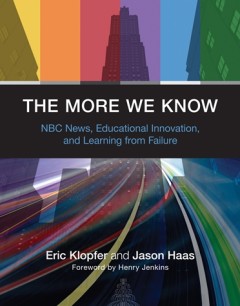
The more we know :NBC news, educational innovation, and learning from failure
"In 2006, young people were flocking to MySpace, discovering the joys of watching videos of cute animals on YouTube, and playing online games. Not many of them were watching network news on television; they got most of their information online. So when NBC and MIT launched iCue, an interactive learning venture that combined social networking, online video, and gaming in one multimedia education…
- Edition
- -
- ISBN/ISSN
- 9780262305624
- Collation
- 1 online resource (xvii, 205 pages) :illustrations
- Series Title
- -
- Call Number
- -
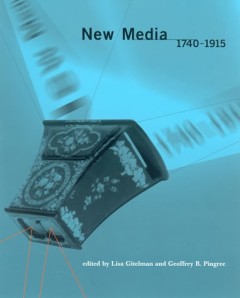
New media, 1740-1915
"Reminding us that all media were once new, this book challenges the notion that to study new media is to study exclusively today's new media. Examining a variety of media in their historic contexts, it explores those moments of transition when new media were not yet fully defined and their significance was still in flux. Examples range from familiar devices such as the telephone and phonograph…
- Edition
- -
- ISBN/ISSN
- 9780262273909
- Collation
- 1 online resource (xxxiii, 271 pages) :illustrations.
- Series Title
- -
- Call Number
- -

Optimal motherhood and other lies Facebook told us :assembling the networked …
"A look at how social media shape discourses around pregnancy and motherhood"--OCLC-licensed vendor bibliographic record.
- Edition
- -
- ISBN/ISSN
- 0262369370
- Collation
- 1 online resource.
- Series Title
- -
- Call Number
- -
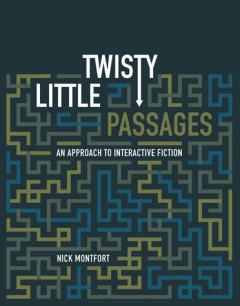
Twisty Little Passages: An Approach to Interactive Fiction
Interactive fiction--the best-known form of which is the text game or text adventure--has not received as much critical attention as have such other forms of electronic literature as hypertext fiction and the conversational programs known as chatterbots. Twisty Little Passages (the title refers to a maze in Adventure, the first interactive fiction) is the first book-length consideration of this…
- Edition
- -
- ISBN/ISSN
- 9780262297110
- Collation
- 1 online resource (xv, 286 pages)
- Series Title
- -
- Call Number
- -

Writing and Unwriting (Media) Art History: Erkki Kurenniemi in 2048
A critical mapping of the multiplicities of Finnish artist and technology pioneer Erkki Kurenniemi -- composer of electronic music, experimental filmmaker, inventor, collector, futurologist.OCLC-licensed vendor bibliographic record.
- Edition
- -
- ISBN/ISSN
- 9780262331111
- Collation
- 1 online resource (xxviii, 340 pages) :illustrations.
- Series Title
- -
- Call Number
- -
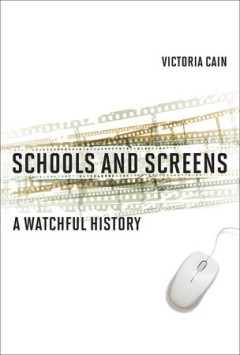
Schools and screens :a watchful history
"Cain chronicles twentieth-century schools' experiments with screen media and investigates the contests over citizenship and civic education that emerged in reaction"--OCLC-licensed vendor bibliographic record.
- Edition
- -
- ISBN/ISSN
- 9780262366267
- Collation
- 1 online resource.
- Series Title
- -
- Call Number
- -

Underground :the secret life of videocassettes in Iran
"First book length study of home video in Iran during the 1980s and 1990s, and the informal distribution infrastructure that developed in reaction to the ban on all video technology"--OCLC-licensed vendor bibliographic record.
- Edition
- -
- ISBN/ISSN
- 0262366088
- Collation
- 1 online resource.
- Series Title
- -
- Call Number
- -
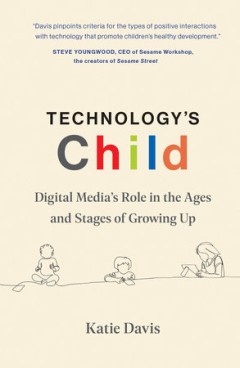
Technology's child :digital media's role in the ages and stages of growing up
"Davis addresses the "screen time" debate by recognizing that children's experiences of technology and social relationships are qualitatively distinct at different stages of development"--OCLC-licensed vendor bibliographic record.
- Edition
- -
- ISBN/ISSN
- 9780262370097
- Collation
- 1 online resource
- Series Title
- -
- Call Number
- -
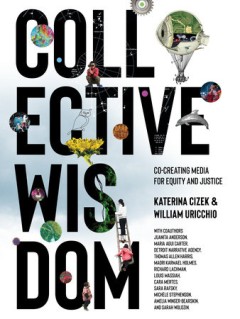
Collective wisdom :co-creating media for equity and justice
"Collective Wisdom tracks co-creation in media-making, efforts that reach beyond limits of singular authorship, an ancient and under-documented practice"--OCLC-licensed vendor bibliographic record.
- Edition
- -
- ISBN/ISSN
- 0262369869
- Collation
- 1 online resource.
- Series Title
- -
- Call Number
- -

Mechanisms :new media and the forensic imagination
"In Mechanisms, Matthew Kirschenbaum examines new media and electronic writing against the textual and technological primitives that govern writing, inscription, and textual transmission in all media: erasure, variability, repeatability, and survivability. Mechanisms is the first book in its field to devote significant attention to storage--the hard drive in particular--arguing that understandi…
- Edition
- -
- ISBN/ISSN
- 9780262302746
- Collation
- 1 online resource (xvii, 296 pages) :illustrations
- Series Title
- -
- Call Number
- -
 Computer Science, Information & General Works
  Philosophy & Psychology
  Religion
  Social Sciences
  Language
  Pure Science
  Applied Sciences
  Art & Recreation
  Literature
  History & Geography