Filter by
Making Transparency Possible: An Interdisciplinary Dialogue
Each year local and national economies throughout the world lose billions of dollars through so-called illicit financial flows. Conservative estimates indicate that over a billion dollars are diverted illegitimately out of countries in the Southern Hemisphere every year. This diversion of revenue reinforces poverty while facilitating the concentration of authority in the hands a select few thro…
- Edition
- Ed. 1
- ISBN/ISSN
- 9788202637309
- Collation
- 323
- Series Title
- -
- Call Number
- 302.2 MAK m
Universal Access in Human-Computer Interaction. Access to Learning, Health an…
The four LNCS volume set 9175-9178 constitutes the refereed proceedings of the 9th International Conference on Learning and Collaboration Technologies, UAHCI 2015, held as part of the 17th International Conference on Human-Computer Interaction, HCII 2015, in Los Angeles, CA, USA in August 2015, jointly with 15 other thematically similar conferences. The total of 1462 papers and 246 posters pres…
- Edition
- -
- ISBN/ISSN
- 978-3-319-20684-4
- Collation
- -
- Series Title
- -
- Call Number
- -
Trailblazing in Entrepreneurship: Creating New Paths for Understanding the Field
Entrepreneurship; Organization
- Edition
- Ed. 1
- ISBN/ISSN
- 9783319487014
- Collation
- -
- Series Title
- -
- Call Number
- 651.7 SHE t
Universal Access in Human-Computer Interaction. Access to Interaction 9th In…
The four LNCS volume set 9175-9178 constitutes the refereed proceedings of the 9th International Conference on Learning and Collaboration Technologies, UAHCI 2015, held as part of the 17th International Conference on Human-Computer Interaction, HCII 2015, in Los Angeles, CA, USA in August 2015, jointly with 15 other thematically similar conferences. The total of 1462 papers and 246 posters pres…
- Edition
- -
- ISBN/ISSN
- 978-3-319-20681-3
- Collation
- -
- Series Title
- -
- Call Number
- -
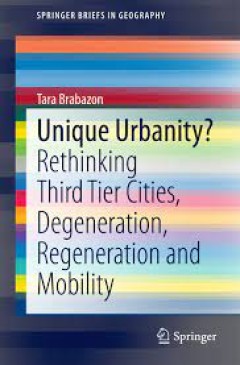
Unique Urbanity? Rethinking Third Tier Cities, Degeneration, Regeneration an…
This book investigates small cities - cities and towns that are not well known or internationally branded, but are facing structural economic and social issues after the Global Financial Crisis. They need to invent, develop and manage new reasons for their existence. The strengths and opportunities are often underplayed when compared to larger cities. These small cities do not have the profile …
- Edition
- -
- ISBN/ISSN
- 978-981-287-269-2
- Collation
- -
- Series Title
- -
- Call Number
- -

Unifying the Philosophy of Truth
- Edition
- -
- ISBN/ISSN
- 978-94-017-9673-6
- Collation
- -
- Series Title
- -
- Call Number
- -
- Edition
- -
- ISBN/ISSN
- 978-94-017-9673-6
- Collation
- -
- Series Title
- -
- Call Number
- -
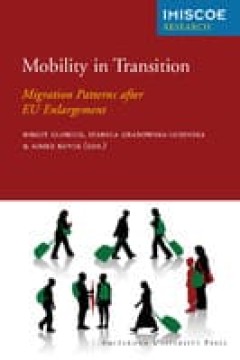
Mobility in Transition: Migration Patterns after EU Enlargement
This volume presents new research on post-accession migration from Central and Eastern Europe in the short period since the EU enlargements of 2004 and 2007. Explanations of post-accession migration patterns, trends and mechanisms delve into the complexities of these phenomena. New groups of migrants and types of migrations are identified -- such as young migrants, often students or graduates, …
- Edition
- Ed. 1
- ISBN/ISSN
- -
- Collation
- 332
- Series Title
- IMISCOE Research
- Call Number
- 301 MOB m
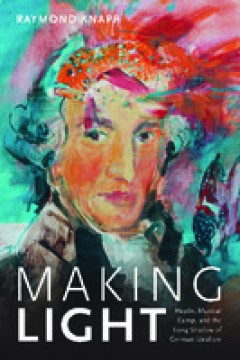
Making Light: Haydn, Musical Camp, and the Long Shadow of German Idealism
In Making Light Raymond Knapp traces the musical legacy of German Idealism as it led to the declining prestige of composers such as Haydn while influencing the development of American popular music in the nineteenth century. Knapp identifies in Haydn and in early popular American musical cultures such as minstrelsy and operetta a strain of high camp—a mode of engagement that relishes both the…
- Edition
- Ed. 1
- ISBN/ISSN
- 9780822369356; 9780822369509
- Collation
- 408
- Series Title
- -
- Call Number
- 780 KNA m
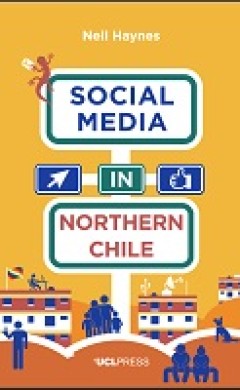
Social Media in Northern Chile
Based on 15 months of ethnographic research in the city of Alto Hospicio in northern Chile, this book describes how the residents use social media, and the consequences of this use in their daily lives. Nell Haynes argues that social media is a place where Alto Hospicio’s residents – or Hospiceños – express their feelings of marginalisation that result from living in city far from the na…
- Edition
- Ed. 1
- ISBN/ISSN
- 9781910634578, 9781910634585
- Collation
- 224
- Series Title
- Why We Post
- Call Number
- 301 HAY s
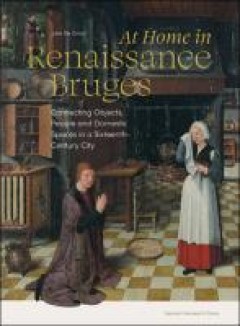
At Home in Renaissance Bruges: Connecting Objects, People and Domestic Spaces…
- Edition
- Ed. 1
- ISBN/ISSN
- -
- Collation
- -
- Series Title
- -
- Call Number
- -
- Edition
- Ed. 1
- ISBN/ISSN
- -
- Collation
- -
- Series Title
- -
- Call Number
- -
 Computer Science, Information & General Works
  Philosophy & Psychology
  Religion
  Social Sciences
  Language
  Pure Science
  Applied Sciences
  Art & Recreation
  Literature
  History & Geography