Filter by
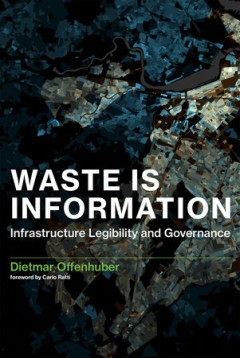
Waste Is Information: Infrastructure Legibility and Governance
The relationship between infrastructure governance and the ways we read and represent waste systems, examined through three waste tracking and participatory sensing projects. Waste is material information. Landfills are detailed records of everyday consumption and behavior; much of what we know about the distant past we know from discarded objects unearthed by archaeologists and interpreted by…
- Edition
- -
- ISBN/ISSN
- 9780262342216
- Collation
- -
- Series Title
- -
- Call Number
- -

The Papanicolaou Society of Cytopathology System for Reporting Pancreaticobil…
This text and the terminology developed by the Papanicolaou Society of Cytopathology (P.S.C.) represents an important advance in the field of pancreaticobiliary cytopathology. This textbook/atlas is designed to present a comprehensive and state of the art approach to the cytologic diagnosis and reporting of pancreaticobiliary lesions. Chapters address each of the diagnostic categories defined b…
- Edition
- 1
- ISBN/ISSN
- 978-3-319-16589-9
- Collation
- -
- Series Title
- -
- Call Number
- XV, 96, 70 illustrations in colour
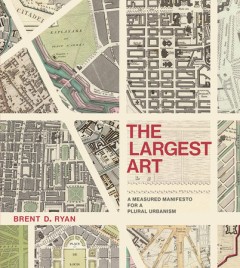
The Largest Art: A Measured Manifesto for a Plural Urbanism
Why urban design is larger than architecture: the foundational qualities of urban design, examples and practitioners Urban design in practice is incremental, but architects imagine it as scaled-up architecture—large, ready-to-build pop-up cities. This paradox of urban design is rarely addressed; indeed, urban design as a discipline lacks a theoretical foundation. In The Largest Art, Brent Ry…
- Edition
- -
- ISBN/ISSN
- 9780262341936
- Collation
- -
- Series Title
- -
- Call Number
- -

Architectural Intelligence: How Designers and Architects Created the Digital …
Architects who engaged with cybernetics, artificial intelligence, and other technologies poured the foundation for digital interactivity. In Architectural Intelligence, Molly Wright Steenson explores the work of four architects in the 1960s and 1970s who incorporated elements of interactivity into their work. Christopher Alexander, Richard Saul Wurman, Cedric Price, and Nicholas Negroponte and…
- Edition
- -
- ISBN/ISSN
- 9780262343428
- Collation
- -
- Series Title
- -
- Call Number
- -
BioMEMS
ABSTRACT Written to cover often overlooked areas in the field of bioMEMS, this volume bridges topics related to biomolecules and complex biological entities with those directly related to the design, fabrication, and characterization of the devices. Unlike other references, this text aids with the fundamental physicochemical understanding of biological processes relevant to the performance of …
- Edition
- -
- ISBN/ISSN
- 9780429066740
- Collation
- -
- Series Title
- -
- Call Number
- -

Electric Light: An Architectural History
How electric light created new spaces that transformed the built environment and the perception of modern architecture. In this book, Sandy Isenstadt examines electric light as a form of architecture—as a new, uniquely modern kind of building material. Electric light was more than just a novel way of brightening a room or illuminating a streetscape; it brought with it new ways of perceivin…
- Edition
- -
- ISBN/ISSN
- 9780262347310
- Collation
- -
- Series Title
- -
- Call Number
- -

Slab City: Dispatches from the Last Free Place
An architect and a photographer explore a community of squatters, artists, snowbirds, migrants, and survivalists inhabiting a former military base in the California desert. Under the unforgiving sun of southern California's Colorado Desert lies Slab City, a community of squatters, artists, snowbirds, migrants, survivalists, and homeless people. Called by some “the last free place” and by…
- Edition
- -
- ISBN/ISSN
- -
- Collation
- -
- Series Title
- -
- Call Number
- -

Overgrown: Practices between Landscape Architecture and Gardening
A call for landscape architects to leave the office and return to the garden. Addressing one of the most repressed subjects in landscape architecture, this book could only have been written by someone who is both an experienced gardener and a landscape architect. With Overgrown, Julian Raxworthy offers a watershed work in the tradition of Ian McHarg, Anne Whiston Spirn, Kevin Lynch, and J. B…
- Edition
- -
- ISBN/ISSN
- 9780262348263
- Collation
- -
- Series Title
- -
- Call Number
- -

Nativist and Islamist Radicalism
ABSTRACT This book analyses the factors and processes behind radicalisation of both native and self-identified Muslim youths. It argues that European youth responds differently to the challenges posed by contemporary flows of globalisation such as deindustrialisation, socio-economic, political, spatial, and psychological forms of deprivation, humiliation, and structural exclusion. The book …
- Edition
- -
- ISBN/ISSN
- 9781003309840
- Collation
- -
- Series Title
- -
- Call Number
- -
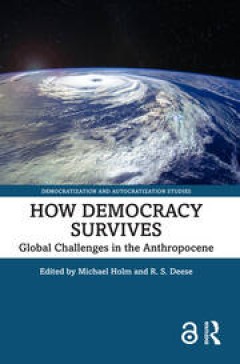
How Democracy Survives
ABSTRACT How Democracy Survives explores how liberal democracy can better adapt to the planetary challenges of our time by evolving beyond the Westphalian paradigm of the nation state. The authors bring perspectives from Africa, Asia, Europe, Latin America, and North America, their chapters engaging with the concept of transnational democracy by tracing its development in the past, assessin…
- Edition
- -
- ISBN/ISSN
- 9781003218586
- Collation
- -
- Series Title
- -
- Call Number
- -
 Computer Science, Information & General Works
 Philosophy & Psychology
 Religion
 Social Sciences
 Language
 Pure Science
 Applied Sciences
 Art & Recreation
 Literature
 History & Geography