Filter by
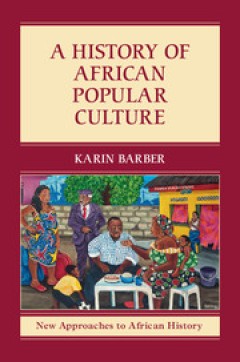
A History of African Popular Culture
Popular culture in Africa is the product of everyday life: the unofficial, the non-canonical. And it is the dynamism of this culture that makes Africa what it is. In this book, Karin Barber offers a journey through the history of music, theatre, fiction, song, dance, poetry, and film from the seventeenth century to the present day. From satires created by those living in West African coastal to…
- Edition
- -
- ISBN/ISSN
- 9781139061766
- Collation
- -
- Series Title
- New Approaches to African History
- Call Number
- -
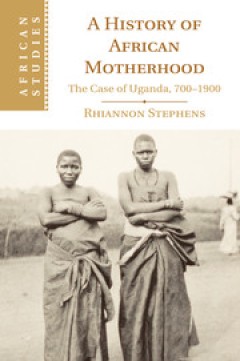
A History of African Motherhood The Case of Uganda, 700–1900
This history of African motherhood over the longue durée demonstrates that it was, ideologically and practically, central to social, economic, cultural and political life. The book explores how people in the North Nyanzan societies of Uganda used an ideology of motherhood to shape their communities. More than biology, motherhood created essential social and political connections that cut acros…
- Edition
- -
- ISBN/ISSN
- 9781139344333
- Collation
- -
- Series Title
- African Studies
- Call Number
- -
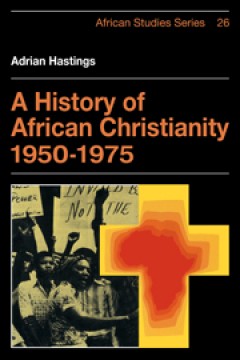
A History of African Christianity 1950–1975
The churches in Africa probably constitute the most important growth area for Christianity in the second half of the twentieth century. From being a number of rather tightly controlled 'mission fields' zealously guarded by the great missionary societies, Catholic and Protestant, they have emerged across the last decades in bewildering variety to selfhood, a membership of close on a hundred mill…
- Edition
- -
- ISBN/ISSN
- 9780511563171
- Collation
- -
- Series Title
- African Studies
- Call Number
- -
A Historical and Philosophical Sketch of the Discoveries and Settlements of t…
lthough he had never set foot in Africa, Scottish poet and linguist John Leyden (1775–1811) decided to publish in 1799 this compilation on 'discoveries and settlements' there, drawing from the published works of explorers. His aim was 'to exhibit the progress of discoveries at this period in North and West Africa', giving descriptions of places such as Guinea, the Gold Coast, and Sierra Leone…
- Edition
- -
- ISBN/ISSN
- 9781139058759
- Collation
- -
- Series Title
- Cambridge Library Collection - African Studies
- Call Number
- -
Africa and the North
An important new discussion of Africa's place in the international system. This volume discusses Africa's place in the international system, examining the way in which the Westphalian system, in light of the impact of globalization and transnational networks, continues to play a major role in the structuring of Africa's international relations. The book provides a solid empirical analysis of ke…
- Edition
- Ed. 1
- ISBN/ISSN
- 9780415333917; 9780415498869
- Collation
- -
- Series Title
- New International Relations
- Call Number
- 327 AFR a

Developing Heritage – Developing Countries: Ethiopian Nation-Building and t…
Seven Ethiopian heritage sites were among the first sites on the UNESCO World Heritage List – a stunning number for an African country at the time and the product of extended international technical assistance and tourism planning. This book unpacks the beginnings of World Heritage in development thinking and the significance of national heritage for developing countries in a global context d…
- Edition
- Ed. 1
- ISBN/ISSN
- -
- Collation
- 204
- Series Title
- Africa in Global History, 1
- Call Number
- 909.82 HUB d

A Geographical Survey of Africa Its Rivers, Lakes, Mountains, Productions, S…
James MacQueen (1778–1870) was a British geographer and also one of the most outspoken critics of the methods of the British anti-slavery campaign in the 1820s and 1830s. Although he never visited Africa, he became an acknowledged expert on the continent, through reading all available accounts, ancient and modern, as well as interviewing slave merchants while managing a sugar plantation in th…
- Edition
- -
- ISBN/ISSN
- 9781139034562
- Collation
- -
- Series Title
- Cambridge Library Collection - African Studies
- Call Number
- -

A Geographical and Commercial View of Northern Central Africa
James MacQueen (1778–1870) was a British geographer fascinated by the problem of the River Niger. He set out to try to establish (on the basis of accounts by explorers, traders and missionaries), that one and the same river flowed continuously through Africa and into the Atlantic Ocean, thus challenging long-established beliefs that African rivers either disappeared into the sand or terminate…
- Edition
- -
- ISBN/ISSN
- 9781139034579
- Collation
- -
- Series Title
- Cambridge Library Collection - African Studies
- Call Number
- -
 Computer Science, Information & General Works
  Philosophy & Psychology
  Religion
  Social Sciences
  Language
  Pure Science
  Applied Sciences
  Art & Recreation
  Literature
  History & Geography