Filter by

Chapter 35 Differentiation at the local level An overview of subnational aut…
Transnational networks of sub-national authorities are an established and growing phenomenon in Europe, where they perform a number of (soft) governance functions for their membership, often in direct connection with European Union institions. This chapter examines networks from the angle of institutional differentiation – an inherent trait of these organisations – in order to expand the an…
- Edition
- -
- ISBN/ISSN
- 9780367149659
- Collation
- -
- Series Title
- -
- Call Number
- -

An Overview of the Pre-suppression Society of Jesus in Spain
In An Overview of the Pre-suppression Society of Jesus in Spain, Patricia W. Manning offers a survey of the Society of Jesus in Spain from its origins in Ignatius of Loyola's early preaching to the aftereffects of its expulsion. Rather than nurture the nascent order, Loyola's homeland was often ambivalent. His pre-Jesuit freelance sermonizing prompted investigations. The young Society confronte…
- Edition
- -
- ISBN/ISSN
- 9789004434301
- Collation
- -
- Series Title
- -
- Call Number
- -

An Age of Crisis
Originally published in 1959. This book examines the French Enlightenment by analyzing critical thought in eighteenth-centruy France. It examines the philosophes' views on evil, free will and determinism, and human nature. This is an interesting group to look at, according to Crocker, because French Enlightenment thinkers straddled two vastly different time periods.
- Edition
- -
- ISBN/ISSN
- 9781421433905
- Collation
- 518 hlm; ill., lamp.,
- Series Title
- -
- Call Number
- -

Beyond Borders: Myotonic Dystrophies - A European Perception
Myotonic dystrophies (DMs) are pleotropic multisystemic diseases. These dominantly transmitted repeat disorders affect multiple organs of the human body at all ages—from the newborns to the elderly. DMs are highly inconsistent in terms of age at onset, severity of symptoms, and clinical patterns. Even within families, the onset and pattern of organ involvement remains enigmatic. Anticipat…
- Edition
- -
- ISBN/ISSN
- 9782889457090
- Collation
- 148
- Series Title
- -
- Call Number
- -

Arnold Geulincx Ethics
Arnold Geulincx (1624-1669) is a key figure in the history of ideas, whose concepts have been seen as precursors to those developed by Spinoza, Malebranche, Leibniz and Kant. His Ethics presents a treatment of virtue from the standpoint of occasionalist metaphysics. The great Irish writer Samuel Beckett stated that Geulincx, with his emphasis on the powerlessness and ignorance of the human cond…
- Edition
- -
- ISBN/ISSN
- 9789047411383
- Collation
- oer.unej.ac.id
- Series Title
- -
- Call Number
- -
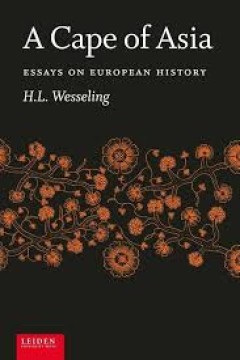
A Cape of Asia : Essays on European History
A Cape of Asia collects eighteen of Wesseling's finest essays on European History, clustered around three concerns: The Wider View, or the historical European perspective on globalization, migration and decolonization; Europe's Identity, reflecting the shift from Eurocentrism to Americanization and Europe's acceptance of Japan, China and India as new key players in the global economy; and Europ…
- Edition
- -
- ISBN/ISSN
- 9789087281281
- Collation
- 176 hlm
- Series Title
- -
- Call Number
- -

A History of East Baltic through Language Contact
The East Baltic languages are well known for their conservative phonology as compared to other Indo-European languages, which has led to a stereotype that the Balts developed in isolation without much contact with other speech communities. This book challenges that view, taking a deep dive into the East Baltic lexicon and peeling away the layers of prehistoric borrowings in the process. As well…
- Edition
- Volume: 24
- ISBN/ISSN
- 9789004686472
- Collation
- 438 hlm
- Series Title
- -
- Call Number
- -

A Good Example of Peaceful Coexistence? : The Soviet Union, Austria, and Neut…
This monograph, based on newly declassified sources from Western and Russian archives as well as on communist texts about international law and neutrality, is the first English-language account of Soviet policy towards neutral yet capitalist Austria during the Cold War. In order to make neutrality a model for the West, the Kremlin presented the unique Soviet-Austrian relationship as "a good exa…
- Edition
- -
- ISBN/ISSN
- 9783700168980
- Collation
- -
- Series Title
- -
- Call Number
- -

A Dutch Republican Baroque: Theatricality, Dramatization, Moment, and Event
In the Dutch Republic in the Baroque era, two aesthetic formal modes, theater and drama, were dynamically related to two political concepts, event and moment. The Dutch version of the Baroque is characterized by a fascination with this world regarded as one possibility out of a plurality of potential worlds. It is this fascination that explains the coincidence in the Dutch Republic, strange at …
- Edition
- -
- ISBN/ISSN
- -
- Collation
- 228 hlm
- Series Title
- -
- Call Number
- -

A Critical History of Health Films in Central and Eastern Europe and Beyond
The burgeoning scholarship on Western health films stands in stark contrast to the vacuum in the historical conceptualization of Eastern European films. This book develops a nonlinear historical model that revises their unique role in the inception of national cinematography and establishing supranational health security. Readers witness the revelation of an unknown history concerning how th…
- Edition
- -
- ISBN/ISSN
- 9781032223544
- Collation
- 284 hlm
- Series Title
- -
- Call Number
- -
 Computer Science, Information & General Works
 Philosophy & Psychology
 Religion
 Social Sciences
 Language
 Pure Science
 Applied Sciences
 Art & Recreation
 Literature
 History & Geography