Filter by
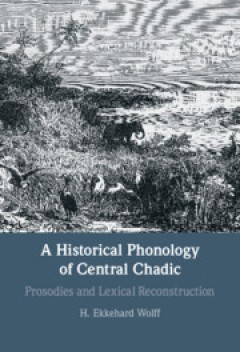
A Historical Phonology of Central Chadic
Of all of the African language families, the Chadic languages belonging to the Afroasiatic macro-family are highly internally diverse due to a long history and various scenarios of language contact. This pioneering study explores the development of the sound systems of the 'Central Chadic' languages, a major branch of the Chadic family. Drawing on and comparing field data from about 60 differen…
- Edition
- -
- ISBN/ISSN
- 9781009024310
- Collation
- -
- Series Title
- -
- Call Number
- -
Innovation in Language Learning and Teaching
This book investigates the ways in which new developments in areas of language teaching practice, such policymaking, planning, methodology and the use of educational technology spread globally and are adopted, rejected or adapted locally.
- Edition
- 1
- ISBN/ISSN
- 978-1-137-44975-7
- Collation
- Bahasa
- Series Title
- -
- Call Number
- 400
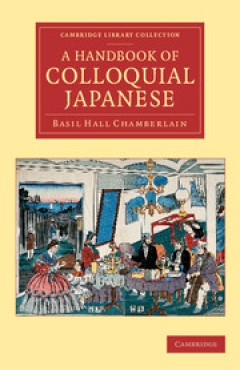
A Handbook of Colloquial Japanese
Travelling in order to recover from a nervous breakdown, Basil Hall Chamberlain (1850–1935) arrived in Yokohama, Japan, in May 1873. He was immediately fascinated by traditional Japanese culture. At the same time, the national drive for modernisation in the wake of the Meiji Restoration had created a demand for teachers of English. Chamberlain was taken on as a tutor in the Imperial Japanese …
- Edition
- -
- ISBN/ISSN
- 9781316134405
- Collation
- -
- Series Title
- -
- Call Number
- -
A Grammar of Semelai
Semelai is a previously undescribed and endangered Aslian (Mon-Khmer) language of the Malay Peninsula. This book - the first in-depth description of an Aslian language - provides a comprehensive reference grammar of Semelai. Semelai intertwines two types of morphological system: a concatenative system of prefixes, suffixes and a circumfix - acquired through extended contact with Malay - and a n…
- Edition
- -
- ISBN/ISSN
- 9780511550713
- Collation
- -
- Series Title
- Cambridge Grammatical Descriptions
- Call Number
- -

A Grammar of the Somali Language With Examples in Prose and Verse, and an Ac…
Somali is one of the Cushitic family of languages spoken in the horn of Africa and the official language of Somalia. This practical grammar, published in 1905, was prepared by J. W. C. Kirk, who first learnt to speak the language during his service with Somali troops during the British Empire's failed attempt in 1902–1904 to wrest control of the region from the Dervish state under Muhammad Ab…
- Edition
- -
- ISBN/ISSN
- 9780511708671
- Collation
- -
- Series Title
- Cambridge Library Collection - Linguistics
- Call Number
- -
A Grammar of Yidin
Professor Dixon's book The Dyirbal Language of North Queensland (CUP 1972) is acknowledge to be a classic study. His study of Yidin is directly comparable in importance. Yidin, which is also a dying language, is Dyirbal's northerly neighbour. Yet the two languages have striking and fundamental differences in each area of grammar (while still both belonging to the Australian language family). In…
- Edition
- -
- ISBN/ISSN
- 9781139085045
- Collation
- -
- Series Title
- Cambridge Studies in Linguistics (19)
- Call Number
- -

A Grammar of the Mahratta Language To Which Are Added Dialogues on Familiar …
Marathi, an official language of Maharashtra and Goa, is among the twenty most widely spoken languages in the world. The southernmost Indo-Aryan language, it is also spoken in Gujarat, Madhya Pradesh, Karnataka, and Daman and Diu, and is believed to be over 1,300 years old, with its origins in Sanskrit. First published in 1805, this grammar of Marathi (then known as Mahratta) was compiled by th…
- Edition
- -
- ISBN/ISSN
- 9781139519847
- Collation
- -
- Series Title
- Cambridge Library Collection - Perspectives from the Royal Asiatic Society
- Call Number
- -

A Grammar of the Sungskrit Language To Which Are Added Examples for the Exer…
The Indo-Aryan language of Sanskrit is the primary language of Hinduism and also a scholarly language of Buddhism. Dating back to the second millennium BCE, it is considered to be the parent of most modern languages of India, and remains central to work in Indo-European studies, philology and linguistics today. First published in 1806, this is a comprehensive grammar of Sanskrit, compiled by th…
- Edition
- -
- ISBN/ISSN
- 9781139507264
- Collation
- -
- Series Title
- Cambridge Library Collection - Perspectives from the Royal Asiatic Society
- Call Number
- -

A Grammar of the Mahratta Language To Which Are Added Dialogues on Familiar …
Marathi, an official language of Maharashtra and Goa, is among the twenty most widely spoken languages in the world. The southernmost Indo-Aryan language, it is also spoken in Gujarat, Madhya Pradesh, Karnataka, and Daman and Diu, and is believed to be over 1,300 years old, with its origins in Sanskrit. First published in 1805, this grammar of Marathi (then known as Mahratta) was compiled by th…
- Edition
- Ed. 1
- ISBN/ISSN
- 9781139519847
- Collation
- -
- Series Title
- -
- Call Number
- -

A Grammar of the High Dialect of the Tamil Language, Termed Shen-Tamil
Published in 1822, but completed in manuscript form almost 100 years earlier, this work was designed to accompany Beschi's earlier Grammar of Common Tamil. While the latter enabled the student to speak the language, this reissue offers a way into reading Tamil's classical literature with its complexity of thought and technique. One of the earliest and most distinguished pioneers in the field of…
- Edition
- -
- ISBN/ISSN
- 9781139505918
- Collation
- -
- Series Title
- Cambridge Library Collection - Perspectives from the Royal Asiatic Society
- Call Number
- -
 Computer Science, Information & General Works
  Philosophy & Psychology
  Religion
  Social Sciences
  Language
  Pure Science
  Applied Sciences
  Art & Recreation
  Literature
  History & Geography