Filter by
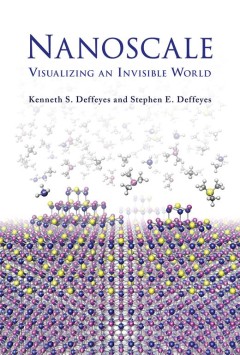
Nanoscale: Visualizing an Invisible World
The world is made up of structures too small to see with the naked eye, too small to see even with an electron microscope. Einstein established the reality of atoms and molecules in the early 1900s. How can we see a world measured in fractions of nanometers? (Most atoms are less than one nanometer, less than one-billionth of a meter, in diameter.) This beautiful and fascinating book gives us a …
- Edition
- -
- ISBN/ISSN
- 9780262322522
- Collation
- -
- Series Title
- -
- Call Number
- -

Artificial Chemistries
The field of Artificial life (ALife) is now firmly established in the scientific world, but it has yet to achieve one of its original goals: an understanding of the emergence of life on Earth. The new field of artificial chemistries draws from chemistry, biology, computer science, mathematics, and other disciplines to work toward that goal. For if, as it has been argued, life emerged from pirmi…
- Edition
- -
- ISBN/ISSN
- 9780262329460
- Collation
- 1 online resource (xv, 555 pages) :illustrations (some color)
- Series Title
- -
- Call Number
- -

Gene regulation and metabolism : postgenomic computational approaches
As exciting as the new field of genomics is, it has not yet produced a basic conceptual change in biology. The fundamental problems remain: the origin of life, cell organization, the pathways of differentiation, aging, and the molecular and cellular capabilities of the brain. What has occurred is an explosion of molecular information obtained by genomic sequences, which will soon be followed by…
- Edition
- -
- ISBN/ISSN
- 9780262270649
- Collation
- 1 online resource (x, 310 pages) : illustrations.
- Series Title
- -
- Call Number
- 570 GEN
Immunological bioinformatics
"This book offers a description of bioinformatics techniques as they are applied to immunology, including a succinct account of the main biological concepts for students and researchers with backgrounds in mathematics, statistics, and computer science as well as explanations of the new data-driven algorithms in the context of biological data that will be useful of immunologists, biologists, and…
- Edition
- -
- ISBN/ISSN
- 9780262323338
- Collation
- 1 online resource (xii, 296 pages, 24 unnumbered pages of plates) : illustrations (some color).
- Series Title
- Computational Molecular Biology
- Call Number
- 001 LUN i

Molecular computing
The next great change in computer science and information technology will come from mimicking the techniques by which biological organisms process information. To do this computer scientists must draw on expertise in subjects not usually associated with their field, including organic chemistry, molecular biology, bioengineering, and smart materials. This book provides an introduction to the int…
- Edition
- -
- ISBN/ISSN
- 9780262283632
- Collation
- 1 online resource (xvii, 257 pages) :illustrations
- Series Title
- -
- Call Number
- -

Molecular models of life :philosophical papers on molecular biology
"A Bradford book."Despite the transformation in biological practice and theory brought about by discoveries in molecular biology, until recently philosophy of biology continued to focus on evolutionary biology. When the Human Genome Project got underway in the late 1980s and early 1990s, philosophers of biology -- unlike historians and social scientists -- had little to add to the debate. In th…
- Edition
- -
- ISBN/ISSN
- 9780262302937
- Collation
- 1 online resource (352 pages).
- Series Title
- -
- Call Number
- -
Neurodevelopmental disorders
"Until recently, genetic, neuroanatomical, and psychological investigations on neurodevelopmental disorders were carried out independently. Now, tremendous advances across all disciplines have brought us toward a new scientific frontier: the integration of molecular genetics with a developmental cognitive neuroscience. The goal is to understand the basic mechanisms by which genes and environmen…
- Edition
- -
- ISBN/ISSN
- 9780262284653
- Collation
- 1 online resource (xii, 614 pages) :illustrations.
- Series Title
- -
- Call Number
- -
Computational Modeling of Genetic and Biochemical Networks
"A Bradford book."The advent of ever more sophisticated molecular manipulation techniques has made it clear that cellular systems are far more complex and dynamic than previously thought. At the same time, experimental techniques are providing an almost overwhelming amount of new data. It is increasingly apparent that linking molecular and cellular structure to function will require the use of …
- Edition
- -
- ISBN/ISSN
- 9780262269056
- Collation
- 1 online resource (xx, 336 pages, 18 unnumbered pages of plates) :illustrations (some color).
- Series Title
- -
- Call Number
- -

Computational Molecular Biology: An Algorithmic Approach
In one of the first major texts in the emerging field of computational molecular biology, Pavel Pevzner covers a broad range of algorithmic and combinatorial topics and shows how they are connected to molecular biology and to biotechnology. The book has a substantial "computational biology without formulas" component that presents the biological and computational ideas in a relatively simple ma…
- Edition
- -
- ISBN/ISSN
- 9780262281522
- Collation
- 1 online resource (xviii, 314 pages).
- Series Title
- -
- Call Number
- -

Integrative approaches to molecular biology
What are the main challenges of computational molecular biology once the genome projects are completed? Integrative Approaches to Molecular Biology focuses on molecular biology beyond sequences: from gene regulation to differentiation, a higher-level integration that will be a major theme in biology following conclusion of the genome program. It charts the course of the emerging discipline of i…
- Edition
- -
- ISBN/ISSN
- 026227065X
- Collation
- 1 online resource (358 pages)
- Series Title
- -
- Call Number
- -
 Computer Science, Information & General Works
  Philosophy & Psychology
  Religion
  Social Sciences
  Language
  Pure Science
  Applied Sciences
  Art & Recreation
  Literature
  History & Geography