Filter by

Smokestack diplomacy :cooperation and conflict in East-West environmental pol…
Many environmental problems cross national boundaries and can be addressed only through international cooperation. In this book Robert Darst examines transnational efforts to promote environmental protection in the USSR and in five of its successor states--Russia, Ukraine, and the Baltic republics of Estonia, Latvia, and Lithuania--from the late 1960s to the present. The core of the book is a c…
- Edition
- -
- ISBN/ISSN
- 9780262271196
- Collation
- 1 online resource (xii, 300 pages).
- Series Title
- -
- Call Number
- -
Phytocosmetics and Phytopharmaceuticals from African Medicinal Plants
- Edition
- -
- ISBN/ISSN
- 978-1-80356-020-5
- Collation
- -
- Series Title
- -
- Call Number
- -
Benefaction of Medicinal Plant Uraria picta
- Edition
- -
- ISBN/ISSN
- 978-1-83969-275-8
- Collation
- -
- Series Title
- -
- Call Number
- -
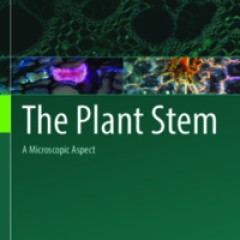
The Plant Stem : A Microscopic Aspect
This unique and attractive open access textbook combines the beauty of macroscopic pictures of plant stems with the corresponding colorfully stained images of anatomical micro-structures. In contrast to most botanical textbooks, it presents all the stem characteristics as photographs and shows the microscopic reality. The amount of text is reduced to a minimum, and the scientific information is…
- Edition
- -
- ISBN/ISSN
- 978-3-319-73524-5
- Collation
- VII, 207 halaman
- Series Title
- -
- Call Number
- 580 PLA
Plants, Society, and the Environment
Affordable Learning Georgia Grants Collections are intended to provide faculty with the frameworks to quickly implement or revise the same materials as a Textbook Transformation Grants team, along with the aims and lessons learned from project teams during the implementation process.
- Edition
- -
- ISBN/ISSN
- -
- Collation
- -
- Series Title
- -
- Call Number
- 580 HAR p
Edible Medicinal and Non-Medicinal Plants
Volume 10 is part of a multi compendium Edible Medicinal and Non-Medicinal Plants. This work is of significant interest to medical practitioners, pharmacologists, ethnobotanists, horticulturists, food nutritionists, botanists, agriculturists, conservationists and general public. 59 plant species with edible modified stems, roots and bulbs in the families Amaranthaceae, Cannaceae, Cibotiaceae, C…
- Edition
- 1
- ISBN/ISSN
- 978-94-017-7275-4
- Collation
- -
- Series Title
- -
- Call Number
- X, 659

Edible medicinal and non medicinal plants. Volume 11, Modified stems, roots, …
This book covers such plants with edible modified storage subterranean stems (corms, rhizomes, stem tubers) and unmodified subterranean stem stolons, above ground swollen stems and hypocotyls, storage roots (tap root, lateral roots, root tubers), and bulbs, that are eaten as conventional or functional food as vegetables and spices, as herbal teas, and may provide a source of food additive or ne…
- Edition
- -
- ISBN/ISSN
- 9783319260624
- Collation
- x, 392 pages
- Series Title
- -
- Call Number
- 581.632

Edible medicinal and non medicinal plants. Volume 10, Modified stems, roots, …
This book covers such plants with edible modified storage subterranean stems (corms, rhizomes, stem tubers) and unmodified subterranean stem stolons, above ground swollen stems and hypocotyls, storage roots (tap root, lateral roots, root tubers), and bulbs, that are eaten as conventional or functional food as vegetables and spices, as herbal teas, and may provide a source of food additive or ne…
- Edition
- -
- ISBN/ISSN
- 9783319260624
- Collation
- x, 392 pages
- Series Title
- -
- Call Number
- 581.632
Edible Medicinal and Non-Medicinal Plants
This book covers such plants with edible modified storage subterranean stems (corms, rhizomes, stem tubers) and unmodified subterranean stem stolons, above ground swollen stems and hypocotyls, storage roots (tap root, lateral roots, root tubers), and bulbs, that are eaten as conventional or functional food as vegetables and spices, as herbal teas, and may provide a source of food addi…
- Edition
- 1
- ISBN/ISSN
- 978-3-319-26064-8
- Collation
- -
- Series Title
- -
- Call Number
- X, 690
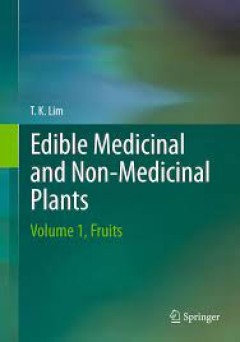
Edible Medicinal and Non-Medicinal Plants
This book covers such plants with edible modified storage subterranean stems (corms, rhizomes, stem tubers) and unmodified subterranean stem stolons, above ground swollen stems and hypocotyls, storage roots (tap root, lateral roots, root tubers), and bulbs, that are eaten as conventional or functional food as vegetables and spices, as herbal teas, and may provide a source of food additive o…
- Edition
- 1
- ISBN/ISSN
- 978-3-319-26061-7
- Collation
- -
- Series Title
- -
- Call Number
- X, 392
 Computer Science, Information & General Works
  Philosophy & Psychology
  Religion
  Social Sciences
  Language
  Pure Science
  Applied Sciences
  Art & Recreation
  Literature
  History & Geography