Filter by

There are no facts :attentive algorithms, extractive data practices, and the …
"There Are No Facts examines the uncommon ground we share in a post-truth world. It unpacks how attentive algorithms and extractive data practices are shaping space, influencing behavior and colonizing everyday life. Articulating post-truth territory as an architectural and infrastructural condition, it shows how these spatial architectures of attention and datamining are in turn situated withi…
- Edition
- -
- ISBN/ISSN
- 026237188X
- Collation
- 1 online resource.
- Series Title
- -
- Call Number
- -

Against facts
"In this book Arianna Betti argues that we have no good reason to accept facts in our catalog of the world, at least as they are described by the two major metaphysical theories of facts. She claims that neither of these theories is tenable--neither the theory according to which facts are special structured building blocks of reality nor the theory according to which facts are whatever is named…
- Edition
- -
- ISBN/ISSN
- 9780262329644
- Collation
- 1 online resource (xxvii, 296 pages) :illustrations
- Series Title
- -
- Call Number
- -

The environment :philosophy, science, and ethics
Philosophical reflections on the environment began with early philosophers' invocation of a cosmology that mixed natural and supernatural phenomena. Today, the central philosophical problem posed by the environment involves not what it can teach us about ourselves and our place in the cosmic order but rather how we can understand its workings in order to make better decisions about our own cond…
- Edition
- -
- ISBN/ISSN
- 9780262301770
- Collation
- 1 online resource (vi, 307 pages) :illustrations.
- Series Title
- -
- Call Number
- -

All for Nothing: Hamlet's Negativity
Hamlet as performed by philosophers, with supporting roles played by Kant, Nietzsche, and others. A specter is haunting philosophy—the specter of Hamlet. Why is this? Wherefore? What should we do? Entering from stage left: the philosopher's Hamlet. The philosopher's Hamlet is a conceptual character, played by philosophers rather than actors. He performs not in the theater but within the…
- Edition
- -
- ISBN/ISSN
- 9780262326049
- Collation
- -
- Series Title
- -
- Call Number
- 100 CUL a

How the mind explains behavior : folk explanations, meaning, and social inter…
"A Bradford book."In this provocative monograph, Bertram Malle describes behavior explanations as having a dual nature -- as being both cognitive and social acts -- and proposes a comprehensive theoretical model that integrates the two aspects. When people try to understand puzzling human behavior, they construct behavior explanations, which are a fundamental tool of social cognition. But, Mall…
- Edition
- -
- ISBN/ISSN
- 9780262278935
- Collation
- 1 online resource (viii, 314 pages).
- Series Title
- -
- Call Number
- 150 MAL h

Identity, character, and morality : essays in moral psychology
"[Some essays] were first presented at the conference Character and Morality held at Radcliffe College in April 1988"--Acknowledgements."A Bradford book."Many philosophers believe that normative ethics is in principle independent of psychology. By contrast, the authors of these essays explore the interconnections between psychology and moral theory. They investigate the psychological constraint…
- Edition
- -
- ISBN/ISSN
- 0262272768
- Collation
- 1 online resource (vii, 487 pages)
- Series Title
- -
- Call Number
- 150 IDE

In critical condition : polemical essays on cognitive science and the philoso…
"A Bradford book."Doing philosophy, according to Jerry Fodor, is like piloting: The trick is to find an object of known position and locate yourself with respect to it. In this book, Fodor contrasts his views about the mind with those of a number of well-known philosophers and cognitive scientists, including John McDowell, Christopher Peacocke, Paul Churchland, Daniel Dennett, Paul Smolensky, a…
- Edition
- -
- ISBN/ISSN
- 0585078092
- Collation
- 1 online resource (x, 219 pages).
- Series Title
- Representation And Mind Series
- Call Number
- 100 FOD c
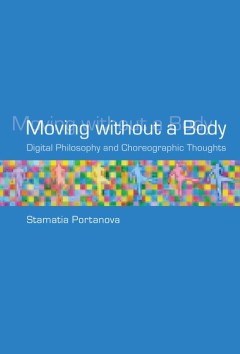
Moving without a body :digital philosophy and choreographic thoughts
Digital technologies offer the possibility of capturing, storing, and manipulating movement, abstracting it from the body and transforming it into numerical information. In Moving without a Body, Stamatia Portanova considers what really happens when the physicality of movement is translated into a numerical code by a technological system. Drawing on the radical empiricism of Gilles Deleuze and …
- Edition
- -
- ISBN/ISSN
- 9780262313858
- Collation
- 1 online resource (x, 179 pages) :illustrations.
- Series Title
- -
- Call Number
- -

Outside color :perceptual science and the puzzle of color in philosophy
"Is color real or illusory, mind independent or mind dependent? Does seeing in color give us a true picture of external reality? The metaphysical debate over color has gone on at least since the seventeenth century. In this book, M. Chirimuuta draws on contemporary perceptual science to address these questions. Her account integrates historical philosophical debates, contemporary work in the ph…
- Edition
- -
- ISBN/ISSN
- 9780262327435
- Collation
- 1 online resource :color illustrations
- Series Title
- -
- Call Number
- -

Naturalizing the mind
Naturalizing the Mind skillfully develops a representational theory of the qualitative, the phenomenal, the what-it-is-like aspects of the mind that have defied traditional forms of naturalism. Central to Dretske's approach is the claim that the phenomenal aspects of perceptual experiences are one and the same as external, real-world properties that experience represents objects as having. Comb…
- Edition
- -
- ISBN/ISSN
- 9780262271974
- Collation
- 1 online resource (xvi, 208 pages).
- Series Title
- -
- Call Number
- -
 Computer Science, Information & General Works
  Philosophy & Psychology
  Religion
  Social Sciences
  Language
  Pure Science
  Applied Sciences
  Art & Recreation
  Literature
  History & Geography