Filter by

Fiesco's Conspiracy at Genoa
Within two years of the success of his first play Die Räuber on the German stage in 1781, Schiller wrote a drama based on a rebellion in sixteenth century Italy, its title: The Conspiracy of Fiesco at Genoa. A Republican Tragedy. At the head of the conspiracy stood Gian Luigi de’ Fieschi (1524–1547), Schiller’s Count Fiesco, a clever, courageous and charismatic figure, an epicurean and u…
- Edition
- -
- ISBN/ISSN
- 9781783740444
- Collation
- 150 halaman
- Series Title
- Open Book Classics Volume: 2
- Call Number
- 800 SCH f

The Politics of Dating Apps: Gender, Sexuality, and Emergent Publics in Urban…
An examination of dating app culture in China, across user demographics—straight women, straight men, queer women, and queer men. In this exploration of dating app culture in China, Lik Sam Chan argues that these popular mobile apps are not merely a platform for personal relationships but also an emerging arena for gender and queer politics. Chan examines the opportunities dating apps pres…
- Edition
- -
- ISBN/ISSN
- 9780262363389
- Collation
- -
- Series Title
- -
- Call Number
- 305.3

Fictions of Legibility : The Human Face and Body in Modern German Novels from…
Gabriela Stoicea examines how the incidence and role of physical descriptions in German novels changed between 1771 and 1929 in response to developments in the study of the human face and body. As well as engaging the tools and methods of literary analysis, the study uses a cultural studies approach to offer a constellation of ideas and polemics surrounding the readability of the human body. By…
- Edition
- -
- ISBN/ISSN
- 9783839447208
- Collation
- 200 halaman
- Series Title
- -
- Call Number
- 800 STO f
The Constitution of Algorithms: Ground-Truthing, Programming, Formulating
A laboratory study that investigates how algorithms come into existence. Algorithms—often associated with the terms big data, machine learning, or artificial intelligence—underlie the technologies we use every day, and disputes over the consequences, actual or potential, of new algorithms arise regularly. In this book, Florian Jaton offers a new way to study computerized methods, providi…
- Edition
- -
- ISBN/ISSN
- 9780262363235
- Collation
- -
- Series Title
- -
- Call Number
- 005.1

Making & Doing: Activating STS through Knowledge Expression and Travel
How ten making & doing projects expand STS scholarship through a focus on knowledge expression and knowledge travel in addition to knowledge production. Making & doing projects expand STS scholarship to include the trajectories of STS knowledge flow beyond the boundaries of the field by actively interweaving knowledge expression and travel with knowledge production. In this edited volume, co…
- Edition
- -
- ISBN/ISSN
- 9780262366052
- Collation
- -
- Series Title
- -
- Call Number
- 507.2

Borders as Infrastructure: The Technopolitics of Border Control
An investigation of borders as moving entities that influence our notions of territory, authority, sovereignty, and jurisdiction. In Borders as Infrastructure, Huub Dijstelbloem brings science and technology studies, as well as the philosophy of technology, to the study of borders and international human mobility. Taking Europe's borders as a point of departure, he shows how borders can tran…
- Edition
- -
- ISBN/ISSN
- 9780262366380
- Collation
- -
- Series Title
- -
- Call Number
- 320.12

Didaktik and Curriculum in Ongoing Dialogue
Didaktik and Curriculum in Ongoing Dialogue revives the dialogue between the continental European Didaktik tradition and the Anglo-Saxon tradition of curriculum. It highlights important research findings that bridge cultural differences and argues for a mutual exchange and understanding of ideas. Through analyses of shared conditions and cultural differences, the book invites a critical stance …
- Edition
- -
- ISBN/ISSN
- 9781000395846
- Collation
- -
- Series Title
- -
- Call Number
- -
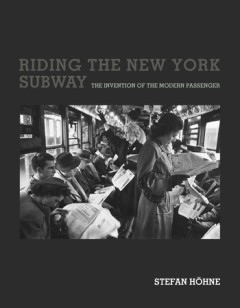
Riding the New York Subway: The Invention of the Modern Passenger
A history of New York subway passengers as they navigated the system's constraints while striving for individuality, or at least a smooth ride. When the subway first opened with much fanfare on October 27, 1904, New York became a city of underground passengers almost overnight. In this book, Stefan Höhne examines how the experiences of subway passengers in New York City were intertwined wit…
- Edition
- -
- ISBN/ISSN
- 9780262363259
- Collation
- -
- Series Title
- -
- Call Number
- 900 HOH r

The Biology of the First 1,000 Days
The first 1,000 days, from conception to two years of age, is a critical period of growth and development. Exposures to dietary, environmental, hormonal, and other stressors during this window have been associated with an increased risk of poor health outcomes, some of which are irreversible. The book addresses this crucial interval of early life across biological disciplines, linking concepts …
- Edition
- -
- ISBN/ISSN
- 9781315152950
- Collation
- -
- Series Title
- -
- Call Number
- -
Reckonings: Numerals, Cognition, and History
Insights from the history of numerical notation suggest that how humans write numbers is an active choice involving cognitive and social factors. Over the past 5,000 years, more than 100 methods of numerical notation—distinct ways of writing numbers—have been developed and used by specific communities. Most of these are barely known today; where they are known, they are often derided as …
- Edition
- -
- ISBN/ISSN
- 9780262360883
- Collation
- -
- Series Title
- -
- Call Number
- 900
 Computer Science, Information & General Works
 Philosophy & Psychology
 Religion
 Social Sciences
 Language
 Pure Science
 Applied Sciences
 Art & Recreation
 Literature
 History & Geography