Filter by

Madame Fontenoy:
AR away from the usual route of tourists, amid vineyards, rich meadows, and low sunny hills, and skirted by a broad sleepy river, stands the old town of Rheims in Champagne. So far away that few travellers
- Edition
- -
- ISBN/ISSN
- 330335326
- Collation
- 248 p. 17 cm
- Series Title
- -
- Call Number
- -

The magic casement : an anthology of fairy poetry
THE MAGIC CASEMENT A BOOK OF FAERY POEMS GIVING GLIMPSES OF THE WORLD BEYOND THE CASEMENT: SELECTED AND ARRANGED WITH INTRODUCTION AND NOTES BY ALFRED NOYES
- Edition
- -
- ISBN/ISSN
- 610832067
- Collation
- 391 p. : 20 cm
- Series Title
- -
- Call Number
- -

Hymn to Venus : an anthology in miniature of poems
A MEDITATION FOR HIS MISTRESS VOU are a tulip seen to-day, •*• But, dearest, of so short a stay That where you grew scarce men can say. You are a lovely July-flower, Yet one rude wind or ruffling shower Will force you hence, and in an hour.
- Edition
- -
- ISBN/ISSN
- -
- Collation
- 23 p. : 19 cm
- Series Title
- -
- Call Number
- -
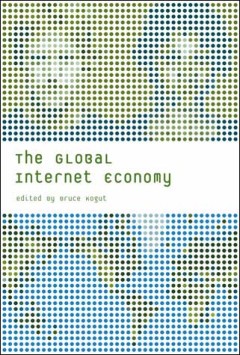
The global internet economy
By 2002, all but a handful of countries were connected to the Internet. The intertwining of the Internet and the globalization of finance, corporate governance, and trade raises questions about national models of technology development and property rights. The sudden ability of hundreds of millions of users to gain access to a global communication infrastructure spurred the creation of new firm…
- Edition
- -
- ISBN/ISSN
- 9780262277365
- Collation
- 1 online resource (xvi, 520 pages) : illustrations
- Series Title
- -
- Call Number
- 001 GLO

Global justice and transnational politics : essays on the moral and political…
If globalization is to be a benefit and not a burden to humankind, it must be governed by global institutions that are perceived by all people to be democratic and just. But before we can create such institutions, we must imagine them, and that requires a rethinking and extension of normative political theory. Global Justice and Transnational Politics encourages and advances that work.The book'…
- Edition
- -
- ISBN/ISSN
- 9780262271325
- Collation
- 1 online resource (vi, 320 pages).
- Series Title
- Studies in Contemporary German Social Thought
- Call Number
- 320 GLO
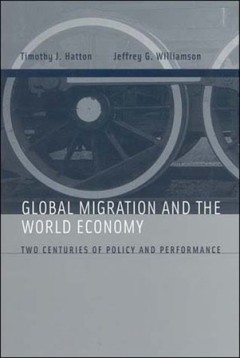
Global migration and the world economy : two centuries of policy and performance
World mass migration began in the early nineteenth century, when advances in transportation technology and industrial revolutions at home enabled increasing numbers of people to set off for other parts of the globe in search of a better life. Two centuries later, there is no distant African, Asian, or Latin American village that is not within reach of some high-wage OECD labor market. This book…
- Edition
- -
- ISBN/ISSN
- 9780262303118
- Collation
- 1 online resource (xi, 471 pages) :illustrations
- Series Title
- -
- Call Number
- 330 HAT g
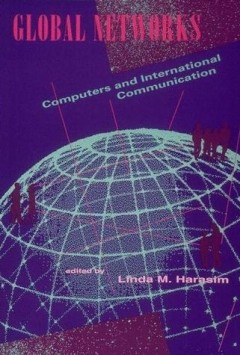
Global networks : computers and international communication
Global Networks takes up the host of issues raised by the new networking technology that now links individuals, groups, and organizations in different countries and on different continents. The twenty-one contributions focus on the implementation, application, and impact of computer-mediated communication in a global context. Previously limited to scientific research, global networks now have a…
- Edition
- -
- ISBN/ISSN
- 0585020361
- Collation
- 1 online resource (xii, 411 pages) :illustrations
- Series Title
- -
- Call Number
- 005 GLO
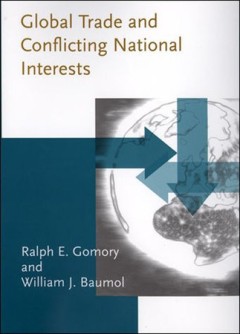
Global trade and conflicting national interests
Ralph Gomory and William Baumol adapt classical trade models to the modern world economy.In this book Ralph Gomory and William Baumol adapt classical trade models to the modern world economy. Trade today is dominated by manufactured goods, rapidly moving technology, and huge firms that benefit from economies of scale. This is very different from the largely agricultural world in which the class…
- Edition
- -
- ISBN/ISSN
- 9780262274050
- Collation
- 1 online resource (xvi, 199 pages) :illustrations.
- Series Title
- Lionel Robbins Lectures
- Call Number
- 380 GOM g

Globalization and History : the Evolution of a Nineteenth-Century Atlantic Ec…
Kevin O'Rourke and Jeffrey Williamson present a coherent picture of trade, migration, and international capital flows in the Atlantic economy in the century prior to 1914-the first great globalization boom, which anticipated the experience of the last fifty years.OCLC-licensed vendor bibliographic record.
- Edition
- -
- ISBN/ISSN
- 9780262294300
- Collation
- 1 online resource (346 pages)
- Series Title
- -
- Call Number
- 380 ORO g

Globalization and its enemies
A provocative argument that the frustrations of globalization stem from the gap between the expectations created and the lagging economic reality in poor countries.The enemies of globalization--whether they denounce the exploitation of poor countries by rich ones or the imposition of Western values on traditional cultures--see the new world economy as forcing a system on people who do not want …
- Edition
- First MIT Press paperback edition.
- ISBN/ISSN
- 9780262266628
- Collation
- 1 online resource
- Series Title
- -
- Call Number
- 330 COH g
 Computer Science, Information & General Works
  Philosophy & Psychology
  Religion
  Social Sciences
  Language
  Pure Science
  Applied Sciences
  Art & Recreation
  Literature
  History & Geography