Filter by
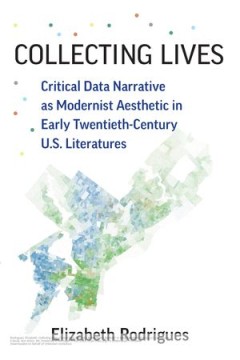
Collecting Lives: Critical Data Narrative as Modernist Aesthetic in Early Twe…
On a near-daily basis, data is being used to narrate our lives.
- Edition
- -
- ISBN/ISSN
- 9780472902637
- Collation
- -
- Series Title
- -
- Call Number
- 300 ROD c

Nipisat - a Saqqaq culture site in Sisimiut, central West Greenland (Vol. 331)
d on immature individuals caught primarily during their first summer on the breeding grounds. The inhabitants at Nipisat also hunted caribou on the mainland. The age structure and sex distribution of the caribou remains primarily reflect stalking. Selected body parts, especially the fore and hind legs and the heads, were transported to the island for raw material, meat filleting and further pro…
- Edition
- -
- ISBN/ISSN
- 9788763526265
- Collation
- -
- Series Title
- -
- Call Number
- -

The Power of the In-Between
"The Power of the In-Between: Intermediality as a Tool for Aesthetic Analysis and Critical Reflection gathers fourteen individual case studies where intermedial issues—issues concerning that which takes place in between media—are explored in relation to a range of different cultural objects and contexts, different methodological approaches, and different disciplinary perspectives. The cases…
- Edition
- -
- ISBN/ISSN
- 9789176350645
- Collation
- -
- Series Title
- -
- Call Number
- -

Political Discourses at the Extremes
"The authors of this edited volume focus on the emergence of populist discourses, coming from movements or parties from Romance-speaking countries in Europe and in Latin America. By combining linguistics, social and political sciences in a discourse analytical approach, the sixteen papers enlighten the mechanisms behind populist discourses yielding from different socio-cultural and political co…
- Edition
- -
- ISBN/ISSN
- 9789176350928
- Collation
- -
- Series Title
- -
- Call Number
- -
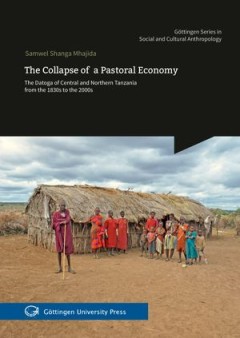
The Collapse of a Pastoral Economy - The Datoga of Central and Northern Tanza…
This research unravels the economic collapse of the Datoga pastoralists of central and northern Tanzania from the 1830s to the beginning of the 21st century.
- Edition
- -
- ISBN/ISSN
- 9783863954017
- Collation
- -
- Series Title
- -
- Call Number
- 300 MHA

The European Productivity Agency and Transatlantic Relations 1953-1961 (Vol. 4)
A study of European co-operation and transatlantic relations in the 1950s as well as on the changes these relations underwent during the early postwar period. The European Productivity Agency (EPA) was created in 1953 as a semi-autonomous organization within the framework of the Organisation for European Economic Co-operation (OEEC) and wound up eight years later, in 1961, when the United State…
- Edition
- -
- ISBN/ISSN
- 9788763502122
- Collation
- -
- Series Title
- -
- Call Number
- -
Collaborative Production in the Creative Industries
In recent years research into creative labour and cultural work has usually addressed the politics of production in these fields, but the sociotechnical and aesthetic dimensions of collaborative creative work have been somewhat overlooked.
- Edition
- -
- ISBN/ISSN
- 9781911534280
- Collation
- -
- Series Title
- -
- Call Number
- 302.4 GRA c

Collaborating Against Child Abuse; Exploring The Nordic Barnahus Model
Scandinavia; child protection; multi-agency working; criminology; policy
- Edition
- -
- ISBN/ISSN
- 9783319583877
- Collation
- -
- Series Title
- -
- Call Number
- 363.4 BAK c

Denmark-Greenland in the twentieth century (Vol. 341)
This book traces Danish-Greenlandic relations over 100 years and is the first publication to cover the period 1900-2000. The main trend is the development from a colonial situation in 1900 with a state owned company runnig nearly all business to an open economy with steadily growing selfgovernment for Greenland short of full independence. The Danish policy can be described as benevolent, but fi…
- Edition
- -
- ISBN/ISSN
- 9788763530705
- Collation
- -
- Series Title
- -
- Call Number
- -

Things in Culture, Culture in Things
This volume addresses the dynamics of materiality over time and space. In cross-cultural, multi-temporal and interdisciplinary studies the authors examine how things gain meaning and status, generate a multitude of emotions, and feed into the propagation of myths, narratives and discourses. The book is divided according to four themes: soft objects, stoic stories, consuming and the collectable,…
- Edition
- -
- ISBN/ISSN
- 9789949323944
- Collation
- -
- Series Title
- -
- Call Number
- -
 Computer Science, Information & General Works
  Philosophy & Psychology
  Religion
  Social Sciences
  Language
  Pure Science
  Applied Sciences
  Art & Recreation
  Literature
  History & Geography