Filter by
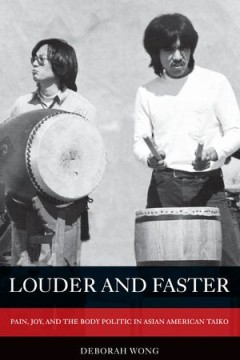
Louder and Faster
Louder and Faster is a study of taiko in California, focused on the play of sound, performance, identity, ethnicity, race, gender, and politics. Wong explores taiko as a music/dance art form that creates spaces in which memories of the WW2 Japanese American incarceration, Asian American identity, and a desire to be seen/heard intersect with global capitalism, the complications of mediation, and…
- Edition
- -
- ISBN/ISSN
- 9780520973152
- Collation
- -
- Series Title
- -
- Call Number
- 780
Keys to Play: Music as a Ludic Medium from Apollo to Nintendo
How do keyboards make music playable? Drawing on theories of media, systems, and cultural techniques, Keys to Play spans Greek myth and contemporary Japanese digital games to chart a genealogy of musical play and its animation via improvisation, performance, and recreation. As a paradigmatic digital interface, the keyboard forms a field of play on which the book’s diverse objects of inquiry 
- Edition
- -
- ISBN/ISSN
- 9780520965096
- Collation
- -
- Series Title
- -
- Call Number
- 780
Instruments for New Music: Sound, Technology, and Modernism
Player pianos, radio-electric circuits, gramophone records, and optical sound film—these were the cutting-edge acoustic technologies of the early twentieth century, and for many musicians and artists of the time, these devices were also the implements of a musical revolution. Instruments for New Music traces a diffuse network of cultural agents who shared the belief that a truly modern music …
- Edition
- -
- ISBN/ISSN
- 9780520963122
- Collation
- -
- Series Title
- -
- Call Number
- 780
Holy Hip Hop in the City of Angels
In the 1990s, Los Angeles was home to numerous radical social and environmental eruptions. In the face of several major earthquakes and floods, riots and economic insecurity, police brutality and mass incarceration, some young black Angelenos turned to holy hip hop—a movement merging Christianity and hip hop culture—to “save” themselves and the city. Converting street corners to open-ai…
- Edition
- -
- ISBN/ISSN
- 9780520296206
- Collation
- -
- Series Title
- -
- Call Number
- 780

Brought to Life by the Voice: Playback Singing and Cultural Politics in South…
To produce the song sequences that are central to Indian popular cinema, singers' voices are first recorded in the studio and then played back on the set to be lip-synced and danced to by actors and actresses as the visuals are filmed. Since the 1950s, playback singers have become revered celebrities in their own right. Brought to Life by the Voice explores the distinctive aesthetics and affect…
- Edition
- -
- ISBN/ISSN
- 9780520976399
- Collation
- -
- Series Title
- -
- Call Number
- 781
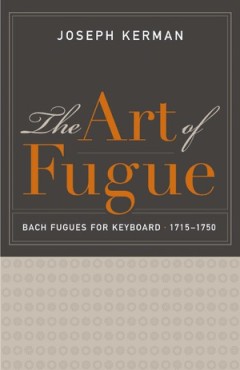
Art of Fugue: Bach Fugues for Keyboard, 1715–1750
Fugue for J. S. Bach was a natural language; he wrote fugues in organ toccatas and voluntaries, in masses and motets, in orchestral and chamber music, and even in his sonatas for violin solo. The more intimate fugues he wrote for keyboard are among the greatest, most infl uential, and best-loved works in all of Western music. They have long been the foundation of the keyboard repertory, played …
- Edition
- -
- ISBN/ISSN
- 9780520962590
- Collation
- -
- Series Title
- -
- Call Number
- 780
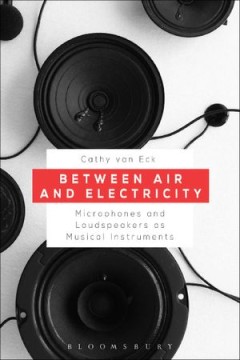
Between Air and Electricity: Microphones and Loudspeakers as Musical Instruments
After the sound reproduction industry had claimed “perfect high fidelity” for sound recordings already at the beginning of the twentieth century, composers and sound artists challenged this perfection by tweaking microphones and loudspeakers to make them act as a musical instrument instead of a mere sound reproduction device. This book explores the instrumental use of microphones and loudsp…
- Edition
- -
- ISBN/ISSN
- 9781501327605
- Collation
- -
- Series Title
- -
- Call Number
- 780.7
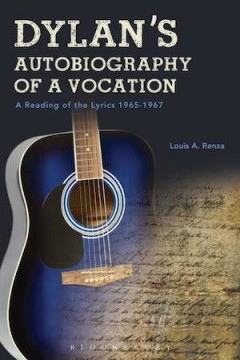
Dylan's Autobiography of a Vocation: A Reading of the Lyrics 1965-1967
Many critics have interpreted Bob Dylan’s lyrics, especially those composed during the middle to late 1960s, in the contexts of their relation to American folk, blues, and rock ‘n’ roll precedents; their discographical details and concert performances; their social, political and cultural relevance; and/or their status for discussion as “poems.” Dylan's Autobiography of a Vocation ins…
- Edition
- -
- ISBN/ISSN
- 9781501328541
- Collation
- -
- Series Title
- -
- Call Number
- 780
Digital Sound Studies
The digital turn has created new opportunities for scholars across disciplines to use sound in their scholarship. This volume's contributors provide a blueprint for making sound central to research, teaching, and dissemination. They show how digital sound studies has the potential to transform silent, text-centric cultures of communication in the humanities into rich, multisensory experiences t…
- Edition
- -
- ISBN/ISSN
- 9781478091011
- Collation
- -
- Series Title
- -
- Call Number
- 780.9
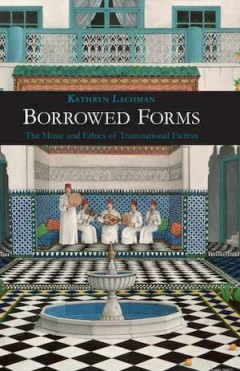
Borrowed Forms: The Music and Ethics of Transnational Fiction
Borrowed Forms examines the use of music by contemporary novelists and critics from across the Francophone, Anglophone, and Hispanophone worlds. Through readings of Nancy Huston, Maryse Condé, J. M. Coetzee, Assia Djebar, Julio Cortázar, and other late twentieth-century novelists, the book shows how writers deploy musical strategies to expand the possibilities of the novel in response to …
- Edition
- -
- ISBN/ISSN
- 9781781380307
- Collation
- -
- Series Title
- -
- Call Number
- -
 Computer Science, Information & General Works
  Philosophy & Psychology
  Religion
  Social Sciences
  Language
  Pure Science
  Applied Sciences
  Art & Recreation
  Literature
  History & Geography