Filter by
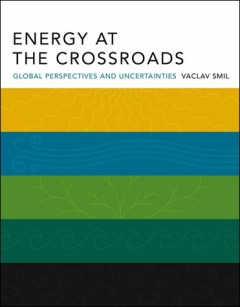
Energy at the Crossroads: Global Perspectives and Uncertainties
In Energy at the Crossroads, Vaclav Smil considers the twenty-first century's crucial question: how to reconcile the modern world's unceasing demand for energy with the absolute necessity to preserve the integrity of the biosphere. With this book he offers a comprehensive, accessible guide to today's complex energy issues -- how to think clearly and logically about what is possible and what is …
- Edition
- -
- ISBN/ISSN
- 9780262283847
- Collation
- 1 online resource (xiv, 427 pages) :illustrations, maps
- Series Title
- -
- Call Number
- -

Renewables :the politics of a global energy transition
A comprehensive political analysis of the rapid growth in renewable wind and solar power, mapping an energy transition through theory, case studies, and policy.OCLC-licensed vendor bibliographic record.
- Edition
- -
- ISBN/ISSN
- 9780262344609
- Collation
- 1 online resource
- Series Title
- -
- Call Number
- -

Climate Policy and Nonrenewable Resources: The Green Paradox and Beyond
Too rapidly rising carbon taxes or the introduction of subsidies for renewable energies induce owners of fossil fuel reserves to increase their extraction rates for fear of their reserves becoming worthless. Fossil fuel use is thus brought forward. The resulting acceleration of global warming and counter-productivity of well-intended climate policy has been coined the Green Paradox. This volume…
- Edition
- -
- ISBN/ISSN
- 9780262319836
- Collation
- 1 online resource :illustrations.
- Series Title
- -
- Call Number
- -

Linkages of sustainability
In this book, experts discuss the multiple components of sustainability, the constraints imposed by their linkages, and the necessity of taking a comprehensive view.OCLC-licensed vendor bibliographic record.
- Edition
- -
- ISBN/ISSN
- 9780262258845
- Collation
- 1 online resource (xiii, 532 pages) :illustrations (some color), maps (some color).
- Series Title
- -
- Call Number
- -

Living through the end of nature :the future of American environmentalism
"Environmentalists have always worked to protect the wildness of nature but now must find a new direction. We have so tamed, colonized, and contaminated the natural world that safeguarding it from humans is no longer an option. Humanity's imprint is now every where and all efforts to "preserve" nature require extensive human intervention. At the same time, we are repeatedly told that there is n…
- Edition
- -
- ISBN/ISSN
- 9780262266000
- Collation
- 1 online resource (xii, 252 pages) :illustrations
- Series Title
- -
- Call Number
- -
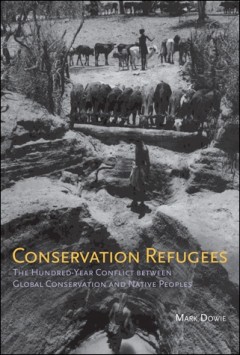
Conservation refugees The Hundred-Year Conflict between Global Conservation a…
How native people--from the Miwoks of Yosemite to the Maasai of eastern Africa--have been displaced from their lands in the name of conservation. Since 1900, more than 108,000 officially protected conservation areas have been established worldwide, largely at the urging of five international conservation organizations. About half of these areas were occupied or regularly used by indigenous peop…
- Edition
- -
- ISBN/ISSN
- -
- Collation
- 1 online resource (376 pages).
- Series Title
- -
- Call Number
- -
The natural resources trap :private investment without public commitment
Volatility in commodity prices has been accompanied by perpetual renegotiation of contracts between private investors in natural resource production and the governments of states with mineral and energy wealth. When prices skyrocket, governments want a larger share of revenues, sometimes to the point of nationalization or expropriation; when prices fall, larger state participation becomes a bur…
- Edition
- -
- ISBN/ISSN
- 9780262275538
- Collation
- 1 online resource (xiv, 519 pages) :illustrations
- Series Title
- -
- Call Number
- -
Uncertain archives :critical keywords for big data
"The ambition of this book is to examine in close detail the whole range of epistemological, political and ethical uncertainties that are being raised by big data in our time"--OCLC-licensed vendor bibliographic record.
- Edition
- -
- ISBN/ISSN
- 0262361280
- Collation
- 1 online resource.
- Series Title
- -
- Call Number
- -
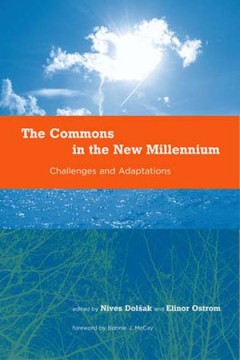
The Commons in the New Millennium: Challenges and Adaptation
Based on papers given at the 2000 conference held in Bloomington, Indiana.Globalization, population growth, and resource depletion are drawing increased attention to the importance of common resources such as forests, water resources, and fisheries. It is critical that these resources be governed in an equitable and sustainable way. The Commons in the New Millennium presents cutting-edge resear…
- Edition
- -
- ISBN/ISSN
- 9780262271868
- Collation
- 1 online resource (xxiv, 369 pages) :illustrations, map.
- Series Title
- -
- Call Number
- -
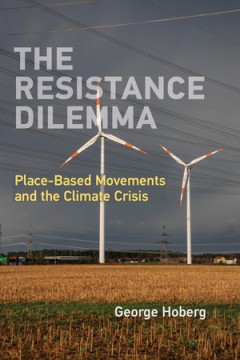
The resistance dilemma :place-based movements and the climate crisis
"The book focuses on a strategic choice by the North American wing of the global climate movement: to ally themselves with place-based interests, including Indigenous groups, to block new coal plants, coal port expansion, fracking, and more recently, oil sands pipelines. The strategy by climate activists to target fossil fuel infrastructure has been effective at movement building and driving po…
- Edition
- -
- ISBN/ISSN
- 9780262367158
- Collation
- 1 online resource.
- Series Title
- -
- Call Number
- -
 Computer Science, Information & General Works
  Philosophy & Psychology
  Religion
  Social Sciences
  Language
  Pure Science
  Applied Sciences
  Art & Recreation
  Literature
  History & Geography