Filter by

Radiobiology Textbook
This open access textbook focuses on the various aspects of radiobiology. The goal of radiobiological research is to better understand the effects of radiation exposure at the cellular and molecular levels in order to determine the impact on health. This book offers a unique perspective, by covering not only radiation biology but also radiation physics, radiation oncology, radiotherapy, radioch…
- Edition
- -
- ISBN/ISSN
- 978-3-031-18809-1
- Collation
- XXVII, 667
- Series Title
- -
- Call Number
- -

A Practical Guide for Pediatric Nuclear Medicine
This open access book will provide a foundation for the understanding of, and knowledge for a successful routine use of diagnostic Nuclear Medicine procedures in children through expertise and cases provided by representative busy pediatric nuclear medicine facilities. The book highlights important aspects of nuclear medicine in children and the differences between adult and pediatric practice …
- Edition
- -
- ISBN/ISSN
- 978-3-662-67630-1
- Collation
- XVIII, 231
- Series Title
- -
- Call Number
- -
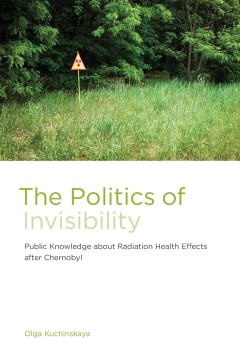
The Politics of Invisibility: Public Knowledge about Radiation Health Effects…
Before Fukushima, the most notorious large-scale nuclear accident the world had seen was Chernobyl in 1986. The fallout from Chernobyl covered vast areas in the Northern Hemisphere, especially in Europe. Belarus, at the time a Soviet republic, suffered heavily: nearly a quarter of its territory was covered with long-lasting radionuclides. Yet the damage from the massive fallout was largely impe…
- Edition
- -
- ISBN/ISSN
- 9780262325417
- Collation
- 1 online resource (xii, 249 pages).
- Series Title
- -
- Call Number
- -
Why nuclear disarmament matters /
From the former UN head weapons inspector in Iraq, a plea for a renewed global disarmament movement.
- Edition
- -
- ISBN/ISSN
- -
- Collation
- 1 online resource (95 pages).
- Series Title
- -
- Call Number
- -

The Radiance of France: Nuclear Power and National Identity after World War II
How it happened that technological prowess and national glory (or "radiance," which also means "radiation" in French) became synonymous in France as nowhere else.
- Edition
- -
- ISBN/ISSN
- -
- Collation
- 1 online resource (xxviii, 461 pages) : illustrations, map.
- Series Title
- -
- Call Number
- -

Tritium on Ice: The Dangerous New Alliance of Nuclear Weapons and Nuclear Power
The dangers of a United States government plan to abandon its fifty-year policy of keeping civilian and military uses of nuclear technology separate.In December 1998, Energy Secretary Bill Richardson announced that the U.S. planned to begin producing tritium for its nuclear weapons in commercial nuclear power plants. This decision overturned a fifty-year policy of keeping civilian and military …
- Edition
- -
- ISBN/ISSN
- 9780262268233
- Collation
- 1 online resource (x, 234 pages) :illustrations
- Series Title
- -
- Call Number
- -

Our own worst enemy? :institutional interests and the proliferation of nuclea…
An examination of the effectiveness of knowledge nonproliferation programs implemented by the United States after the fall of the Soviet Union.OCLC-licensed vendor bibliographic record.
- Edition
- -
- ISBN/ISSN
- 9780262295970
- Collation
- 1 online resource (xiii, 358 pages) :maps.
- Series Title
- -
- Call Number
- -

Unmaking the Bomb: A Fissile Material Approach to Nuclear Disarmament and Non…
The global stockpile, continued production and use of plutonium and highly enriched uranium facilitates proliferation, increases the risk of nuclear terrorism and is an obstacle to achieving irreversible nuclear disarmament. The book explains how these materials are used, describes the histories of fissile material production for weapons, provides an overview of the current global stockpile of …
- Edition
- -
- ISBN/ISSN
- 9780262319188
- Collation
- 1 online resource (x, 277 pages) :illustrations, map
- Series Title
- -
- Call Number
- -

Producing power :the pre-Chernobyl history of the Soviet nuclear industry
An examination of how the technical choices, social hierarchies, economic structures, and political dynamics shaped the Soviet nuclear industry leading up to Chernobyl.OCLC-licensed vendor bibliographic record.
- Edition
- -
- ISBN/ISSN
- 9780262321792
- Collation
- 1 online resource (xxxi, 362 pages) :illustrations.
- Series Title
- -
- Call Number
- -
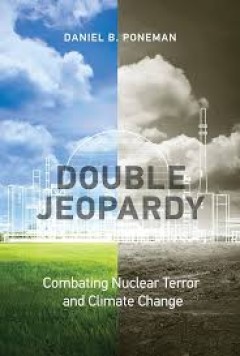
Double jeopardy :combating nuclear terror and climate change
Making the case that we can use nuclear power to combat climate change even as we reduce the risks of nuclear terror. Humanity faces two existential threats: nuclear annihilation and catastrophic climate change. Both have human origins, and both are linked to the use of nuclear energy. Inherent in the use of atomic fission is the risk that the technology and materials can be diverted to terrori…
- Edition
- -
- ISBN/ISSN
- 9780262353687
- Collation
- 1 online resource (288 pages) :illustrations.
- Series Title
- -
- Call Number
- -
 Computer Science, Information & General Works
  Philosophy & Psychology
  Religion
  Social Sciences
  Language
  Pure Science
  Applied Sciences
  Art & Recreation
  Literature
  History & Geography