Filter by
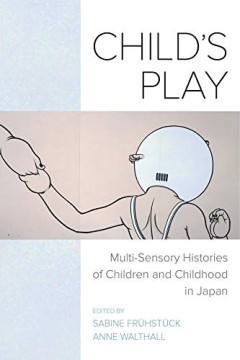
Child’s Play : Multi-Sensory Histories of Children and Childhood in Japan
Few things make Japanese adults feel quite as anxious today as the phenomenon called the “child crisis.” Various media teem with intense debates about bullying in schools, child poverty, child suicides, violent crimes committed by children, the rise of socially withdrawn youngsters, and forceful moves by the government to introduce a more conservative educational curriculum. These issues ha…
- Edition
- -
- ISBN/ISSN
- 9780520296275
- Collation
- -
- Series Title
- -
- Call Number
- 372 CHI

Economic Activities Under the Japanese Colonial Empire
The main focus of this edited volume is an examination of dynamic relationships among Japan, Taiwan, Korea, and the northeastern region of China, and the economic development of each area in East Asia from the 1910s to the end of World War II. The development of foreign trade in East Asia, the relations between industrialization and consumption in Korea, the transactions in fertilizers and the …
- Edition
- 1
- ISBN/ISSN
- 978-4-431-55925-2
- Collation
- -
- Series Title
- -
- Call Number
- X, 154
Micro-Performance During Postwar Japan’s High-Growth Era
The aim of this book is to analyze Japan's high-growth economy, in particular to clarify the kinds of changes in people’s lives that were generated by high growth. The present volume focuses not on the macro-economic mechanisms that expanded the scale of the economy, but on the micro-economic changes that were effected in everyday life. The emergence of a mass consumption society as a result …
- Edition
- 1
- ISBN/ISSN
- 978-981-10-0708-8
- Collation
- XII, 160
- Series Title
- Monograph Series of the Socio-Economic History Society, Japan
- Call Number
- -

Micro-Performance During Postwar Japan’s High-Growth Era
The aim of this book is to analyze Japan's high-growth economy, in particular to clarify the kinds of changes in people’s lives that were generated by high growth. The present volume focuses not on the macro-economic mechanisms that expanded the scale of the economy, but on the micro-economic changes that were effected in everyday life. The emergence of a mass consumption society as a result …
- Edition
- 1
- ISBN/ISSN
- 978-981-10-0708-8
- Collation
- XII, 160
- Series Title
- Monograph Series of the Socio-Economic History Society, Japan
- Call Number
- -

Micro-Performance During Postwar Japan’s High-Growth Era
The aim of this book is to analyze Japan's high-growth economy, in particular to clarify the kinds of changes in people’s lives that were generated by high growth. The present volume focuses not on the macro-economic mechanisms that expanded the scale of the economy, but on the micro-economic changes that were effected in everyday life. The emergence of a mass consumption society as a result …
- Edition
- 1
- ISBN/ISSN
- 978-981-10-0708-8
- Collation
- XII, 160
- Series Title
- Monograph Series of the Socio-Economic History Society, Japan
- Call Number
- -

The Linguistic Turn in Contemporary Japanese Literary Studies : Politics, Lan…
The 1970s and 1980s saw a revolution in Japanese literary criticism. A new generation of scholars and critics, many of them veterans of 1960s political activism, arose in revolt against the largely positivistic methodologies that had hitherto dominated postwar literary studies. Creatively refashioning approaches taken from the field of linguistics, the new scholarship challenged orthodox interp…
- Edition
- -
- ISBN/ISSN
- 9780472901432
- Collation
- -
- Series Title
- -
- Call Number
- 895.609 382 LIN
Anti-Japan The Politics of Sentiment in Postcolonial East Asia
Although the Japanese empire rapidly dissolved following the end of World War II, the memories, mourning, and trauma of the nation's imperial exploits continue to haunt Korea, China, and Taiwan. In Anti-Japan Leo T. S. Ching traces the complex dynamics that shape persisting negative attitudes toward Japan throughout East Asia. Drawing on a mix of literature, film, testimonies, and popular cultu…
- Edition
- -
- ISBN/ISSN
- 9781478001881
- Collation
- -
- Series Title
- -
- Call Number
- -

Going to Court to Change Japan : Social Movements and the Law in Contemporary…
Going to Court to Change Japan takes us inside movements dealing with causes as disparate as death by overwork, the rights of the deaf, access to prisoners on death row, consumer product safety, workers whose companies go bankrupt, and persons convicted of crimes they did not commit. Each of the six fascinating case studies stands on its own as a detailed account of how a social movement has pe…
- Edition
- -
- ISBN/ISSN
- 978-1-929280-84-1
- Collation
- -
- Series Title
- Michigan monograph series in japanese studies ; no. 77
- Call Number
- 340.309 52 GOI

A Proximate Remove: Queering Intimacy and Loss in The Tale of Genji
A free ebook version of this title is available through Luminos, University of California Press's Open Access publishing program. Visit www.luminosoa.org to learn more. How might queer theory transform our interpretations of medieval Japanese literature and how might this literature reorient the assumptions, priorities, and critical practices of queer theory? Through a close reading of The Tale…
- Edition
- -
- ISBN/ISSN
- 9780520382558
- Collation
- -
- Series Title
- -
- Call Number
- -

The Other Women's Lib: Gender and Body in Japanese Women's Fiction
The Other Women's Lib provides the first systematic analysis of Japanese literary feminist discourse of the 1960s - a full decade before the "women's lib" movement emerged in Japan. It highlights the work of three well-known female writers of avant-garde fiction from this generation: Kono Taeko, Takahashi Takako, and Kurahashi Yumiko. Focusing on four tropes persistently employed by these write…
- Edition
- -
- ISBN/ISSN
- 9780824833879
- Collation
- -
- Series Title
- -
- Call Number
- -
 Computer Science, Information & General Works
  Philosophy & Psychology
  Religion
  Social Sciences
  Language
  Pure Science
  Applied Sciences
  Art & Recreation
  Literature
  History & Geography