Filter by

Emil du Bois-Reymond: Neuroscience, Self, and Society in Nineteenth-Century G…
A biography of an important but largely forgotten nineteenth-century scientist whose work helped lay the foundation of modern neuroscience.Emil du Bois-Reymond is the most important forgotten intellectual of the nineteenth century. In his own time (1818-1896) du Bois-Reymond grew famous in his native Germany and beyond for his groundbreaking research in neuroscience and his provocative addresse…
- Edition
- -
- ISBN/ISSN
- 9781461950325
- Collation
- 1 online resource.
- Series Title
- -
- Call Number
- -

Thinking like a Mall: Environmental Philosophy after the End of Nature
A provocative argument that environmental thinking would be better off if it dropped the concept of ""nature"" altogether and spoke instead of the built environment.OCLC-licensed vendor bibliographic record.
- Edition
- -
- ISBN/ISSN
- 9780262326988
- Collation
- 1 online resource (x, 283 pages) :illustrations
- Series Title
- -
- Call Number
- -
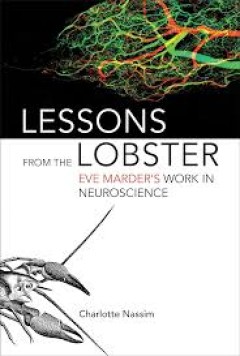
Lessons from the Lobster: Eve Marder's Work in Neuroscience
How forty years of research on thirty neurons in the stomach of a lobster has yielded valuable insights for the study of the human brain.OCLC-licensed vendor bibliographic record.
- Edition
- -
- ISBN/ISSN
- 9780262346016
- Collation
- 1 online resource
- Series Title
- -
- Call Number
- -

The Moral Brain: A Multidisciplinary Perspective
"Over the past decade, an explosion of empirical research in a variety of fields has allowed us to understand human moral sensibility as a sophisticated integration of cognitive, emotional, and motivational mechanisms shaped through evolution, development, and culture. Evolutionary biologists have shown that moral cognition evolved to aid cooperation; developmental psychologists have demonstrat…
- Edition
- -
- ISBN/ISSN
- 9780262327589
- Collation
- 1 online resource (x, 327 pages) :illustrations.
- Series Title
- -
- Call Number
- -
Foundations in Social Neuroscience
"A Bradford book."Annotation A full understanding of the biology and behavior of humans cannot be complete without the collective contributions of the social sciences, cognitive sciences, and neurosciences. This book collects eighty-two of the foundational articles in the emerging discipline of social neuroscience. The book addresses five main areas of research: multilevel integrative analyses …
- Edition
- -
- ISBN/ISSN
- 9780262269674
- Collation
- 1 online resource (xii, 1345 pages) :illustrations.
- Series Title
- -
- Call Number
- -

The paradox of scale :how NGOs build, maintain, and lose authority in environ…
An examination of why NGOs often experience difficulty creating lasting change, with case studies of transnational conservation organizations in Southeast Asia and the Pacific.OCLC-licensed vendor bibliographic record.
- Edition
- -
- ISBN/ISSN
- 9780262349246
- Collation
- 1 online resource (xi, 240 pages)
- Series Title
- -
- Call Number
- -

Methuselah's Zoo: What Nature Can Teach Us about Living Longer, Healthier Lives
Stories of long-lived animal species—from thousand-year-old tubeworms to 400-year-old sharks—and what they might teach us about human health and longevity. Opossums in the wild don't make it to the age of three; our pet cats can live for a decade and a half; cicadas live for seventeen years (spending most of them underground). Whales, however, can live for two centuries and tubeworms for s…
- Edition
- -
- ISBN/ISSN
- 9780262370592
- Collation
- -
- Series Title
- -
- Call Number
- -

What Is Health?: Allostasis and the Evolution of Human Design
An argument that health is optimal responsiveness and is often best treated at the system level. Medical education centers on the venerable “no-fault” concept of homeostasis, whereby local mechanisms impose constancy by correcting errors, and the brain serves mainly for emergencies. Yet, it turns out that most parameters are not constant; moreover, despite the importance of local mechanism…
- Edition
- -
- ISBN/ISSN
- 9780262356299
- Collation
- -
- Series Title
- -
- Call Number
- -
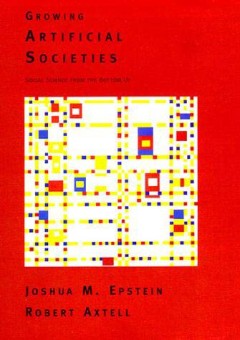
Growing artificial societies :social science from the bottom up
"A product of the 2050 Project, a collaborative effort of the Brookings Institution, the Santa Fe Institute and the World Resources Institute."How do social structures and group behaviors arise from the interaction of individuals? Growing Artificial Societies approaches this question with cutting-edge computer simulation techniques. Fundamental collective behaviors such as group formation, cult…
- Edition
- -
- ISBN/ISSN
- 9780262272360
- Collation
- 1 online resource (xv, 208 pages) : color illustrations.
- Series Title
- Complex Adaptive Systems
- Call Number
- -

Research in History and Philosophy of Mathematics
This volume contains thirteen papers that were presented at the 2014 Annual Meeting of the Canadian Society for History and Philosophy of Mathematics/La Société Canadienne d’Histoire et de Philosophie des Mathématiques, held on the campus of Brock University in St. Catharines, Ontario, Canada. It contains rigorously reviewed modern scholarship on general topics in the history and philosoph…
- Edition
- Ed. 1
- ISBN/ISSN
- 978-3-319-22258-5
- Collation
- -
- Series Title
- -
- Call Number
- -
 Computer Science, Information & General Works
  Philosophy & Psychology
  Religion
  Social Sciences
  Language
  Pure Science
  Applied Sciences
  Art & Recreation
  Literature
  History & Geography