Filter by

Elementary Mechanics Using Matlab A Modern Course Combining Analytical and N…
This book – specifically developed as a novel textbook on elementary classical mechanics – shows how analytical and numerical methods can be seamlessly integrated to solve physics problems. This approach allows students to solve more advanced and applied problems at an earlier stage and equips them to deal with real-world examples well beyond the typical special cases treated in standard te…
- Edition
- 1
- ISBN/ISSN
- 978-3-319-19587-2
- Collation
- 77 b/w illustrations, 178 illustrations in colour
- Series Title
- -
- Call Number
- -
Elementary Mechanics Using Python A Modern Course Combining Analytical and N…
This book – specifically developed as a novel textbook on elementary classical mechanics – shows how analytical and numerical methods can be seamlessly integrated to solve physics problems. This approach allows students to solve more advanced and applied problems at an earlier stage and equips them to deal with real-world examples well beyond the typical special cases treated in standard te…
- Edition
- 2
- ISBN/ISSN
- 978-3-319-19596-4
- Collation
- 76 b/w illustrations, 180 illustrations in colour
- Series Title
- -
- Call Number
- -
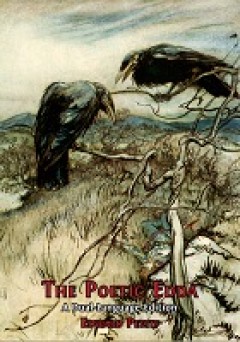
The Poetic Edda: A Dual-Language Edition
This book is an edition and translation of one of the most important and celebrated sources of Old Norse-Icelandic mythology and heroic legend, namely the medieval poems now known collectively as the Poetic Edda or Elder Edda. Included are thirty-six texts, which are mostly preserved in medieval manuscripts, especially the thirteenth-century Icelandic codex traditionally known as the Codex Regi…
- Edition
- Ed. 1
- ISBN/ISSN
- 9781800647725, 9781800647732
- Collation
- 894
- Series Title
- -
- Call Number
- 801 PET p

A Historical and Topographical Guide to the Geography of Strabo
Strabo's Geography, completed in the early first century AD, is the primary source for the history of Greek geography. This Guide provides the first English analysis of and commentary on this long and difficult text, and serves as a companion to the author's The Geography of Strabo, the first English translation of the work in many years. It thoroughly analyzes each of the seventeen books and p…
- Edition
- -
- ISBN/ISSN
- 9781316848203
- Collation
- -
- Series Title
- -
- Call Number
- -
Language Between God and the Poet : Ma‘na in the Eleventh Century
How does language work? How does language produce truth and beauty? Eleventh-century Arabic scholarship has detailed answers to these universal questions. Language Between God and the Poets reads the theory of four major scholars and asks how the conceptual vocabulary they shared enabled them to create theory in lexicography, theology, logic, and poetics. Their ideas engaged God and poetry at t…
- Edition
- -
- ISBN/ISSN
- 9780520970144
- Collation
- 322 halaman
- Series Title
- Berkeley Series in Postclassical Islamic Scholarship
- Call Number
- 800 KEY l
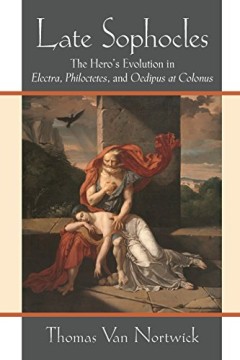
Late Sophocles : The Hero's Evolution in Electra, Philoctetes, and Oedipus at…
Only a few plays by Sophocles—one of the great tragic playwrights from Classical Athens—have survived, and each of them dramatizes events from the rich store of myths that framed literature and art. Sophocles' treatment evokes issues that were vividly contemporary for Athenian audiences of the Periclean age: How could the Athenians incorporate older, aristocratic ideas about human…
- Edition
- -
- ISBN/ISSN
- 9780472119561
- Collation
- 160 halaman
- Series Title
- -
- Call Number
- 800 VAN l
Second Report on the Excavations of the Roman Fort at Richborough, Kent
This is the second account of the excavations of the Roman fort at Richborough (Rutupiae), Kent, in southern England, which took place in 1924. Included are descriptions of artefacts such as pottery, coins, buildings and metalwork, together with an account of the methodology used to unearth these.
- Edition
- Ed. 1
- ISBN/ISSN
- -
- Collation
- 288
- Series Title
- Reports of the Research Committee of the Society of Antiquaries of London, VII
- Call Number
- 930.1 BUS s
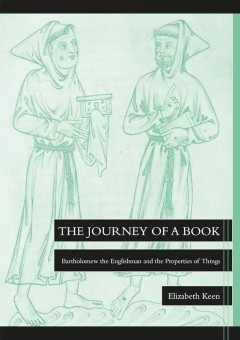
The Journey of a Book : Bartholomew the Englishman and the Properties of Things
De proprietatibus rerum, ‘On the properties of things’, has long been referred to by scholars as a medieval encyclopedia, but evidence suggests that it has been many things to many people. The sheer number of extant manuscript copies and printed editions, along with translations, adaptations, and mentions in poems and sermons, testify to its continuous significance for Europeans of all esta…
- Edition
- -
- ISBN/ISSN
- 9781921313073
- Collation
- -
- Series Title
- -
- Call Number
- 800 KEE j
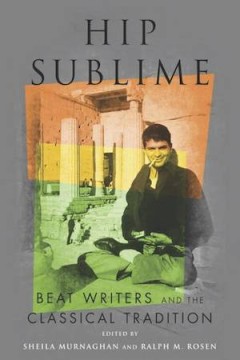
Hip Sublime : Beat Writers and the Classical Tradition
In their continual attempt to transcend what they perceived as the superficiality, commercialism, and precariousness of life in post-World War II America, the Beat writers turned to the classical authors who provided, on the one hand, a discourse of sublimity to help them articulate their desire for a purity of experience, and, on the other, a venerable literary heritage. This volume examines f…
- Edition
- -
- ISBN/ISSN
- 9780814213551
- Collation
- -
- Series Title
- -
- Call Number
- 800 MUR h
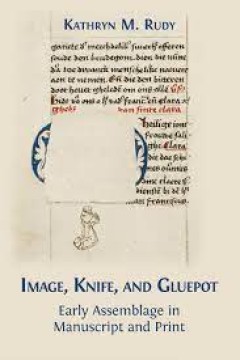
Image, Knife, and Gluepot : Early Assemblage in Manuscript and Print
"In this ingenious study, Kathryn Rudy takes the reader on a journey to trace the birth, life and afterlife of a Netherlandish book of hours made in 1500. Image, Knife, and Gluepot painstakingly reconstructs the process by which this manuscript was created and discusses its significance as a text at the forefront of fifteenth-century book production, when the invention of mechanically-produced …
- Edition
- -
- ISBN/ISSN
- 9781783745180
- Collation
- 366 halaman
- Series Title
- -
- Call Number
- 800 RUD i
 Computer Science, Information & General Works
  Philosophy & Psychology
  Religion
  Social Sciences
  Language
  Pure Science
  Applied Sciences
  Art & Recreation
  Literature
  History & Geography