Filter by
The Politics of Contaminated Sites Management
In the opening chapter, the authors describe the influences of politics and the power relationships between actors involved in decision-making in contaminated sites management, which they term a “wicked problem.” Chapter Two offers a theoretical framework for understanding institutions and the environmental management of contaminated sites. The next five chapters present a detailed case stu…
- Edition
- -
- ISBN/ISSN
- 978-3-319-11307-4
- Collation
- XIX, 159
- Series Title
- -
- Call Number
- -

Radionuclide and Metal Sorption on Cement and Concrete
Cementitious materials are being widely used as solidification/stabilisation and barrier materials for a variety of chemical and radioactive wastes, primarily due to their favourable retention properties for metals, radionuclides and other contaminants. The retention properties result from various mineral phases in hydrated cement that possess a high density and diversity of reactive sites for …
- Edition
- -
- ISBN/ISSN
- 978-3-319-23651-3
- Collation
- -
- Series Title
- -
- Call Number
- -
Radioactive Waste Engineering and Management
This book describes essential and effective management for reliably ensuring public safety from radioactive wastes in Japan. This is the first book to cover many aspects of wastes from the nuclear fuel cycle to research and medical use, allowing readers to understand the characterization, treatment and final disposal of generated wastes, performance assessment, institutional systems, and social…
- Edition
- -
- ISBN/ISSN
- 978-4-431-55417-2
- Collation
- -
- Series Title
- -
- Call Number
- -
Nitrification in Fixed Bed Reactors Treating Saline Wastewater
Two fixed bed reactors for nitrification with either polyethylene/clay sinter lamellas (FBR A) or porous ceramic rings (FBR B) were continously run for treating synthetic saline wastewater. Seawater from Hafen Büsum was used as an inoculums. The performance of the system was evaluated under different operating conditions. A better overall nitrification without nitrite accumulation was observed…
- Edition
- -
- ISBN/ISSN
- 978-3-86644-691-5
- Collation
- -
- Series Title
- -
- Call Number
- 628.168 SUD n
Water Pricing Experiences and Innovations
Water pricing to achieve conservation in scarce water resources is a major policy challenge. This book provides credible evidence from water pricing experiences in various countries around the world. The book chapters, written by experts in water pricing from various countries, documents the past 10 to 15 years of water pricing experiences in Australia, Brazil, Canada, China, Colombia, France, …
- Edition
- -
- ISBN/ISSN
- 978-3-319-16465-6
- Collation
- XXV, 471
- Series Title
- -
- Call Number
- -
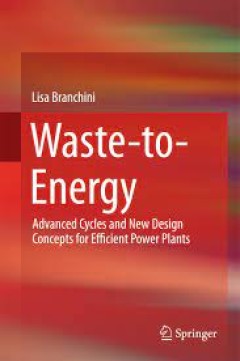
Waste-to-Energy Advanced Cycles and New Design Concepts for Efficient Power …
This book provides an overview of state-of-the-art technologies for energy conversion from waste, as well as a much-needed guide to new and advanced strategies to increase Waste-to-Energy (WTE) plant efficiency. Beginning with an overview of municipal solid waste production and disposal, basic concepts related to Waste-To-Energy conversion processes are described, highlighting the most relevant…
- Edition
- -
- ISBN/ISSN
- 978-3-319-13608-0
- Collation
- XVII, 143
- Series Title
- -
- Call Number
- -

Urban Mining Systems
This book focuses on the fundamental concept of and current endeavors in “urban mining” among those who are interested in both metal resources and ecology. Systems for recycling and reusing precious metals and rare-earth minerals contained in used and discarded electronics are introduced in this book. The target audience is not academic researchers in the resource management and ecology fie…
- Edition
- -
- ISBN/ISSN
- 978-4-431-55075-4
- Collation
- 10 b/w illustrations, 26 illustrations in colour
- Series Title
- -
- Call Number
- -
Sustainable Practices for Landfill Design and Operation
Solid waste management is a global concern, and landfilling remains the predominant management method in most areas of the world. This book provides a comprehensive view of state-of-the-art methods to manage landfills more sustainably, drawing upon more than two decades of research, design, and operational experiences at operating sites across the world. Sustainable landfills implement one or…
- Edition
- -
- ISBN/ISSN
- 978-1-4939-2662-6
- Collation
- XIX, 472
- Series Title
- Waste Management Principles and Practice
- Call Number
- -
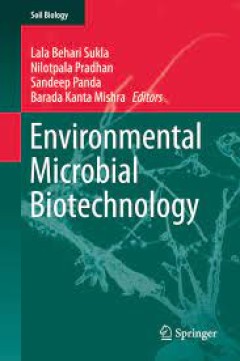
Environmental Microbial Biotechnology
This book provides a timely review of strategies for coping with polluted ecosystems by employing bacteria, fungi and algae. It presents the vast variety of microbial technologies currently applied in the bioremediation of a variety of anthropogenic toxic chemicals, mining and industrial wastes and other pollutants. Topics covered include: microbe-mineral interactions, biosensors in environm…
- Edition
- -
- ISBN/ISSN
- 978-3-319-19018-1
- Collation
- 36 b/w illustrations, 5 illustrations in colour
- Series Title
- -
- Call Number
- -
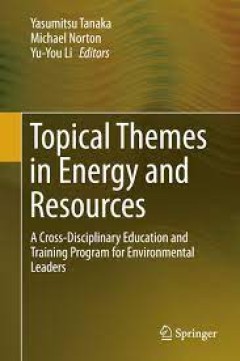
Topical Themes in Energy and Resources
This book combines issues several critical ones in the energy field (low-energy technologies, renewable energies such as the hydrogen economy, and geothermal energy). Moving towards a more sustainable world requires a complete revolution in the way we manage energy and resources. However, from an academic perspective, this theme is so broad that most educators and researchers tend to focus o…
- Edition
- -
- ISBN/ISSN
- 978-4-431-55309-0
- Collation
- 45 b/w illustrations, 118 illustrations in colour
- Series Title
- -
- Call Number
- -
 Computer Science, Information & General Works
 Philosophy & Psychology
 Religion
 Social Sciences
 Language
 Pure Science
 Applied Sciences
 Art & Recreation
 Literature
 History & Geography