Filter by

The Social Effects of Native Title: Recognition, Translation, Coexistence
The papers in this collection reflect on the various social effects of native title. In particular, the authors consider the ways in which the implementation of the Native Title Act 1993 (Cwlth), and the native title process for which this Act legislates, allow for the recognition and translation of Aboriginal law and custom, and facilitate particular kinds of coexistence between Aboriginal tit…
- Edition
- -
- ISBN/ISSN
- 9781921313523
- Collation
- -
- Series Title
- -
- Call Number
- 301 SMI s

Skin, Kin and Clan: The dynamics of social categories in Indigenous Australia
Australia is unique in the world for its diverse and interlocking systems of Indigenous social organisation. On no other continent do we see such an array of complex and contrasting social arrangements, coordinated through a principle of ‘universal kinship’ whereby two strangers meeting for the first time can recognise one another as kin. For some time, Australian kinship studies suffered f…
- Edition
- -
- ISBN/ISSN
- 9781760461638
- Collation
- -
- Series Title
- -
- Call Number
- 301 SKI s

Sinuous Objects: Revaluing Women’s Wealth in the Contemporary Pacific
Some 40 years ago, Pacific anthropology was dominated by debates about ‘women’s wealth’. These exchanges were generated by Annette Weiner’s (1976) critical reappraisal of Bronisław Malinowski’s classic work on the Trobriand Islands, and her observations that women’s production of ‘wealth’ (banana leaf bundles and skirts) for elaborate transactions in mortuary rituals occupied a…
- Edition
- -
- ISBN/ISSN
- -
- Collation
- -
- Series Title
- -
- Call Number
- 300 SIN s

The Promise of Prosperity: Visions of the Future in Timor-Leste
For the people of Timor-Leste, independence promised a fundamental transformation from foreign occupation to self-rule, from brutality to respect for basic rights, and from poverty to prosperity. In the eyes of the country’s political leaders, revenue from the country’s oil and gas reserves is the means by which that transformation could be effected. Over the past decade, they have formulat…
- Edition
- -
- ISBN/ISSN
- 9781760462529
- Collation
- -
- Series Title
- -
- Call Number
- 301 PRO p
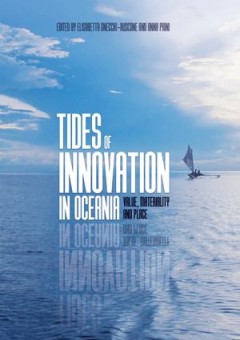
Tides of Innovation in Oceania Value, materiality and place
Tides of Innovation in Oceania is directly inspired by Epeli Hau‘ofa’s vision of the Pacific as a ‘Sea of Islands’; the image of tides recalls the cyclical movement of waves, with its unpredictable consequences. The authors propose tides of innovation as a fluid concept, unbound and open to many directions. This perspective is explored through ethnographic case studies centred on deeply…
- Edition
- -
- ISBN/ISSN
- 9781760460921
- Collation
- -
- Series Title
- -
- Call Number
- -
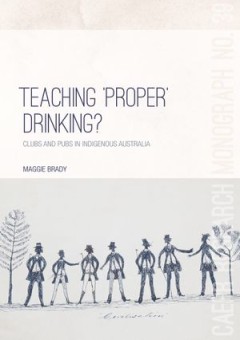
Teaching ‘Proper’ Drinking? Clubs and pubs in Indigenous Australia
"In Teaching ‘Proper’ Drinking?, the author brings together three fields of scholarship: socio-historical studies of alcohol, Australian Indigenous policy history and social enterprise studies. The case studies in the book offer the first detailed surveys of efforts to teach responsible drinking practices to Aboriginal people by installing canteens in remote communities, and of the purchase…
- Edition
- -
- ISBN/ISSN
- 9781760461577
- Collation
- -
- Series Title
- -
- Call Number
- -

Navigating the Future: An Ethnography of Change in Papua New Guinea
Navigating the Future draws on long-term ethnographic fieldwork with Kubo people and their neighbours, in a remote area of Papua New Guinea, to explore how worlds are reconfigured as people become increasingly conscious of, and seek to draw into their own lives, wealth and power that had previously lain beyond their horizons. In the context of a major resource extraction project—the Papua New…
- Edition
- -
- ISBN/ISSN
- 9781760461232
- Collation
- -
- Series Title
- -
- Call Number
- 306 MIN n

Media Infrastructures and the Politics of Digital Time Essays on Hardwired T…
Digital media everyday inscribe new patterns of time, promising instant communication, synchronous collaboration, intricate time management, and profound new advantages in speed. The essays in this volume reconsider these outward interfaces of convenience by calling attention to their supporting infrastructures, the networks of digital time that exert pressures of conformity and standardization…
- Edition
- -
- ISBN/ISSN
- 9789048550753
- Collation
- -
- Series Title
- -
- Call Number
- -

Media, Erotics, and Transnational Asia
Drawing on methods and approaches from anthropology, media studies, film theory, and cultural studies, the contributors to Media, Erotics, and Transnational Asia examine how mediated eroticism and sexuality circulating across Asia and Asian diasporas both reflect and shape the social practices of their producers and consumers. The essays in this volume cover a wide geographic and thematic range…
- Edition
- -
- ISBN/ISSN
- 9781478091431
- Collation
- -
- Series Title
- -
- Call Number
- -

Island Rivers: Fresh Water and Place in Oceania
Anthropologists have written a great deal about the coastal adaptations and seafaring traditions of Pacific Islanders, but have had much less to say about the significance of rivers for Pacific island culture, livelihood and identity. The authors of this collection seek to fill that gap in the ethnographic record by drawing attention to the deep historical attachments of island communities to r…
- Edition
- -
- ISBN/ISSN
- -
- Collation
- -
- Series Title
- -
- Call Number
- 301 ISL i
 Computer Science, Information & General Works
 Philosophy & Psychology
 Religion
 Social Sciences
 Language
 Pure Science
 Applied Sciences
 Art & Recreation
 Literature
 History & Geography