Filter by

The Nivison Annals
In his last essay just weeks before his death at the age of 91, David S. Nivison says, "Breaking into a formal system - such as a chronology - must be like breaking into a code. If you are successful, success will show right off." Since the late 1970's Nivison has focused his scholarship on breaking the code of Three Dynasties (Xia, Shang, Zhou) chronology by establishing an innovative methodol…
- Edition
- -
- ISBN/ISSN
- 9781501505393
- Collation
- -
- Series Title
- -
- Call Number
- -
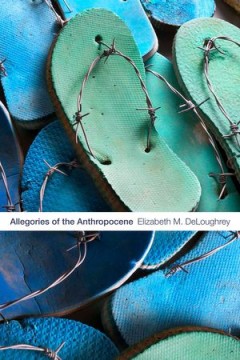
Allegories of the Anthropocene
In Allegories of the Anthropocene Elizabeth M. DeLoughrey traces how indigenous and postcolonial peoples in the Caribbean and Pacific Islands grapple with the enormity of colonialism and anthropogenic climate change through art, poetry, and literature. In these works, authors and artists use allegory as a means to understand the multiscalar complexities of the Anthropocene and to critique the v…
- Edition
- -
- ISBN/ISSN
- 9781478004103
- Collation
- -
- Series Title
- -
- Call Number
- -
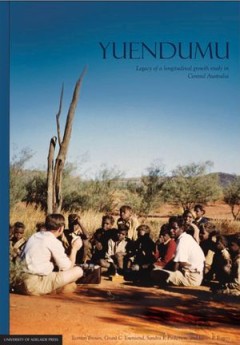
Yuendumu: Legacy of a Longitudinal Growth Study in Central Australia
This book provides a comprehensive account of a unique pioneering longitudinal study of human growth that continues to contribute to our knowledge and raise new questions 60 years after it commenced. Although over 200 scientific publications have arisen from the study, this book describes, in a single volume, the key researchers involved, the Australian Aboriginal people from Yuendumu who parti…
- Edition
- -
- ISBN/ISSN
- 9780987073006
- Collation
- -
- Series Title
- -
- Call Number
- 993 YUE y
Belonging and Becoming in a Multicultural World : Refugee Youth and the Pursu…
Children and youth are front and center in the context of global mass migration and the social discord around questions of multicultural inclusion that it often ignites. It is young people at the forefront of navigating the complexities of cultural and ethnic diversity in their everyday lives. Imprecise portrayals of their inclination to either embrace diversity or to incite racism are used to …
- Edition
- -
- ISBN/ISSN
- 9781978803077
- Collation
- -
- Series Title
- Rutgers series in childhood studies
- Call Number
- 305.235 086 MOR b
Assessing the evidence on Indigenous socioeconomic outcomes : A focus on the…
This monograph presents the refereed, and peer-reviewed, edited proceedingsof the conference on Indigenous Socioeconomic Outcomes: Assessing RecentEvidence. The conference was organised by the Centre for Aboriginal EconomicPolicy Research and held at the Shine Dome, the Australian National University(ANU) in Canberra on 11 and 12 August 2005. The conference aimed to presentthe latest …
- Edition
- -
- ISBN/ISSN
- 9209426 4 5
- Collation
- -
- Series Title
- Research monograph (Australian National University. Centre for Aboriginal Economic Policy Research)
- Call Number
- 362.849 915 ASS
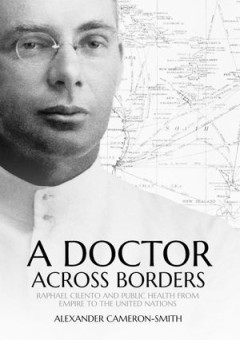
A Doctor Across Borders : Raphael Cilento and public health from empire to th…
In his day, Raphael Cilento was one of the most prominent and controversial figures in Australian medicine. As a senior medical officer in the Commonwealth and Queensland governments, he was an active participant in public health reform during the inter-war years and is best known for his vocal engagement with public discourse on the relationship between hygiene, race and Australian nationhood.…
- Edition
- -
- ISBN/ISSN
- 9781760462642
- Collation
- -
- Series Title
- -
- Call Number
- -
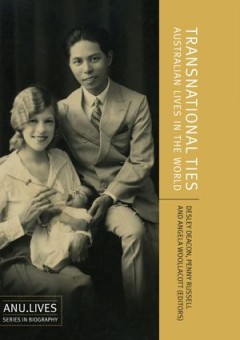
Transnational Ties : Australian Lives in the World
Australian lives are intricately enmeshed with the world, bound by ties of allegiance and affinity, intellect and imagination. In Transnational Ties: Australian Lives in the World, an eclectic mix of scholars—historians, literary critics, and museologists—trace the flow of people that helped shape Australia’s distinctive character and the flow of ideas that connected Australians to a glob…
- Edition
- -
- ISBN/ISSN
- 9781921536212
- Collation
- -
- Series Title
- ANU Lives
- Call Number
- 306.409 94 TRA
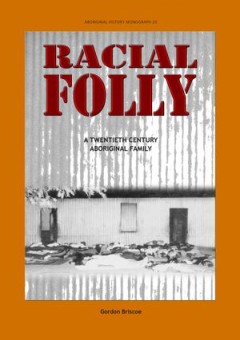
Racial Folly : A Twentieth-Centrury Aboriginal Family
Briscoe’s grandmother remembered stories about the first white men coming to the Northern Territory. This extraordinary memoir shows us the history of an Aboriginal family who lived under the race laws, practices and policies of Australia in the twentieth century. It tells the story of a people trapped in ideological folly spawned to solve ‘the half-caste problem’. It gives life to those …
- Edition
- -
- ISBN/ISSN
- 9781921666216
- Collation
- -
- Series Title
- Aboriginal history monograph ; 20
- Call Number
- 994.007 202 BRI r
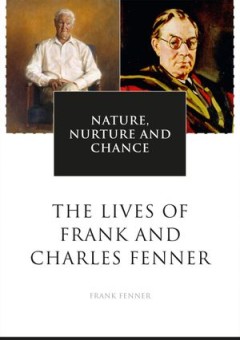
Nature, nurture and chance : the lives of Frank and Charles Fenner
Frank Fenner’s life, as it unfolds in these pages, marks a significant piece of thehistory of Australian science. His chapters are studded with the names of manyof the major players in pathology, microbiology and the rising field of virologywith whose lives he interconnected, and his mode of inserting boxed informationon these participants throughout his text provides valuable biograp…
- Edition
- -
- ISBN/ISSN
- 1 920942 63 7
- Collation
- -
- Series Title
- -
- Call Number
- 579.092 FEN n
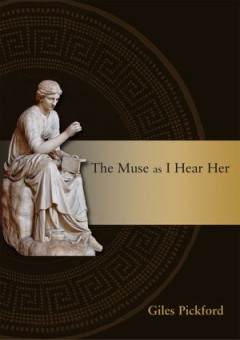
The Muse as I Hear Her
This volume, The Muse as I Hear Her, has been compiled at the urging of ANU Emeritus Faculty to honour Giles Pickford, an admired colleague of long standing. Giles began his appointment in the ANU Public Affairs Division on the 21st of November 1988 and retired on the 8th of May 1998. At that time, a group of colleagues had formed an association that was to become the ANU Emeritus Faculty. From…
- Edition
- -
- ISBN/ISSN
- 9781921934148
- Collation
- -
- Series Title
- -
- Call Number
- 821.4 PIC m
 Computer Science, Information & General Works
  Philosophy & Psychology
  Religion
  Social Sciences
  Language
  Pure Science
  Applied Sciences
  Art & Recreation
  Literature
  History & Geography